Loading…
🧵 Ways to Use Costume Merchandise in a Small Business
By weirdtoo·May 18, 2026·14 min read
Practical ways small businesses can use costume merchandise—uniforms, seasonal outfits, mascots, photo zones, events, merch sales, and limited drops.
🧵 Ways to Use Costume Merchandise in a Small Business
Costume merchandise is an affordable and lasting way for small businesses to promote their brand. From staff uniforms to seasonal costumes, these items help create a strong identity, engage customers, and even generate extra income. Here's a quick breakdown of the key ideas:
- Staff Uniforms: Custom designs and high-quality materials make your team stand out and leave a lasting impression.
- Seasonal Costumes: Switch themes for holidays to keep things fresh and attract attention.
- Costume-Themed Events: Host events or promotions to boost foot traffic and online buzz.
- Mascots: Use mascots to add personality and connect with your audience.
- Photo Zones: Turn your space into a social media hotspot with themed backdrops and props.
- Merchandise Sales: Sell branded items like T-shirts or hats to create walking advertisements and earn extra revenue.
- Limited Editions: Offer exclusive items to create urgency and excitement.
These strategies combine branding, customer engagement, and marketing into practical, year-round tools for growth.
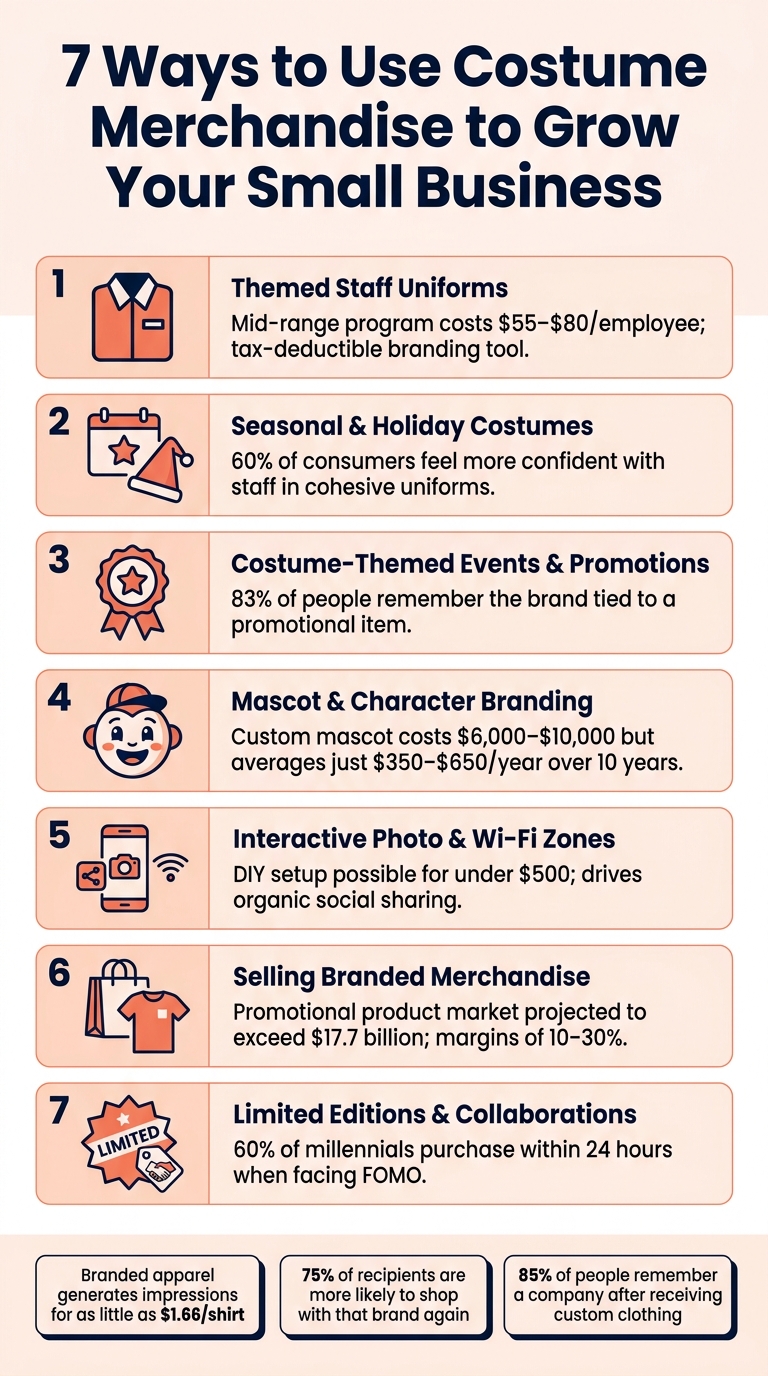
7 Ways to Use Costume Merchandise to Grow Your Small Business
How to Run a Successful Costume Shop
sbb-itb-342b8b2
1. Themed Staff Uniforms to Reinforce Brand Identity
Your staff is often the first impression customers get when they step into your business. A well-designed uniform does more than meet a dress code - it tells a story about your brand.
To stand out, think beyond the basics. Default options like plain navy or black polos are easy to overlook. Instead, incorporate secondary brand colors into elements like collars, cuffs, or plackets. Position your logo creatively - on a sleeve, the back of the neck, or even the back panel - rather than sticking to the standard left-chest placement. These small but intentional details can create a look that feels unmistakably yours. As Staffwear2, experts in uniform branding, explain:
"Thinking creatively about your uniforms can transform them from a simple requirement into a powerful branding tool." [3]
The design, however, is only part of the equation. Fabric and fit are equally important. Opt for performance materials like moisture-wicking or stretch fabrics to keep your team comfortable while maintaining a polished appearance. Accessories like branded hats, aprons, or quarter-zip pullovers can elevate the overall look without requiring a full wardrobe overhaul.
Cost-wise, a mid-range uniform program - such as two screen-printed tees and one embroidered polo - typically costs between $55 and $80 per employee. For customer-facing roles, embroidery is worth the added expense. It not only looks more professional but also withstands repeated washing. Screen printing, on the other hand, is a practical choice for casual shirts or back-of-house staff. To avoid last-minute hassles, plan to order 10–15% extra to cover new hires or replacements.
Custom uniforms also provide an added financial benefit: they’re generally tax-deductible as a business expense, helping to offset the upfront costs. Partner with a printing company that stores your artwork and digitizing files. This way, you can skip setup fees on future small-batch orders, making reordering simple as your team grows.
2. Rotating Seasonal and Holiday Costumes
Switching up costumes for different seasons and holidays keeps customers engaged and excited. Think spooky Halloween vibes in October, warm winter themes in December, or a patriotic twist for the Fourth of July. These changes show your business is not only active but also fun and attentive. Plus, 60% of consumers say they feel more confident in a business where staff wear cohesive uniforms [6]. Adding seasonal rotations to the mix can enhance that confidence while keeping things fresh and interesting.
The secret to pulling this off smoothly? Planning ahead. If your supplier takes six weeks to fulfill an order, make sure you’re placing your December holiday costume orders by mid-October at the latest [5]. It’s also smart to order 20–30% extra to account for unexpected demand or delays [5]. During slower months, take the time to clean, repair, and store costumes so they’re ready for the next season [4].
Here’s a quick breakdown of costs: basic custom T-shirts typically run $5–$8 each when ordered in bulk (100 units), while hooded sweatshirts cost $15–$20. To avoid a financial crunch, spread these expenses out over several months [6].
"A sound way to budget for irregular expenses is to average out what you need to set aside each month to cover them so that when the bill is due, you're not scrambling to come up with the money." - Bond Street [7]
Seasonal costumes aren’t just about appearances - they’re also a great way to boost customer engagement. For example, you could offer a "spooky discount" of 13% to customers who show up in costume on Halloween, encouraging foot traffic and sparking organic social media buzz [8]. Pair these costume changes with limited-time products or promotions to create a "loyalty loop" that keeps customers coming back for more [6].
3. Hosting Costume-Themed Events and Promotions
A well-thought-out costume event can turn slow business days into bustling ones. The key? Create experiences that customers want to talk about and revisit. Don’t just settle for a basic Halloween sale. Instead, think outside the box: host a DIY costume workshop at your craft store, organize a themed tea party at your café, or try a "Mystery Discount Draw" where costumed customers draw a surprise discount code from a hat. These kinds of interactive events leave a lasting impression.
Take inspiration from the trick-or-treat model. While kids enjoy candy, hand parents promotional samples or coupons. This simple gesture puts your products directly in the hands of decision-makers. Plus, it’s a budget-friendly way to combine tangible engagement with your online marketing efforts.
For online buzz, consider running a costume contest. Ask participants to tag your business and use a branded hashtag. This approach generates user-generated content (UGC), keeping your brand in the spotlight long after the event ends. It also encourages a sense of community around your business, all without requiring a hefty advertising budget.
Here's why these strategies work: 83% of people remember the brand associated with a promotional item, and 79% are more likely to do business with that brand again [10]. For instance, a $5 custom item used weekly over a year costs less than $0.10 per impression - making it far more cost-effective than most digital ads [10]. However, quality matters. Low-grade giveaways can hurt your reputation, so start small with a batch of about 50 units to gauge interest.
"Promotional products aren't just giveaways. They're brand anchors, conversation starters, and loyalty builders." - Pataskala Customs [10]
Timing is everything. Many shoppers start planning for costume-related events weeks in advance. If your marketing efforts begin too late, you risk missing out on their attention entirely [9]. Start early to make the most of the season!
4. Using Mascots and Character Branding
Mascots can bring your brand to life in a way that a logo simply can't. They add a personality that customers can connect with on a deeper level, making your brand feel more approachable and engaging. This is especially effective for businesses targeting families or kids, such as those in the food or entertainment industries.
The secret to a successful mascot lies in consistency. Your mascot's design - whether on packaging, social media, or physical costumes - needs to match seamlessly. Any discrepancies between the digital and physical versions can confuse customers and weaken brand recognition. As Jay Ungar, Associate Art Director at NJI, explains:
"Your mascot should feel like an organic part of your brand ecosystem, translating the culture and ethos of the organization into a recognizable face." [12]
Designing a Mascot That Works
A well-designed mascot is simple yet distinctive. Stick to 4–6 solid colors, avoid intricate details, and ensure it has a clear, recognizable silhouette - even at a small scale. A quick test? Print the design at just 1 inch wide in solid black. If it’s hard to identify, the design is likely too complicated to translate into a costume. [11]
Budgeting for a Mascot
Creating a custom mascot is an investment, but it can pay off over time. A professionally crafted mascot costume typically costs $6,000–$10,000+, and the accompanying identity design system can range from $1,250–$6,500. Spread across a 10-year lifespan, this averages out to $350–$650 per year - a manageable cost for the long-term value it provides. As Mash Bonigala, Founder & CEO of School Branding Agency, puts it:
"A great mascot is an investment, not an expense. It's a 10-year identity system that builds pride, drives enrollment, and creates lasting memories." [14]
For those on a tighter budget, stock molds offer a cost-effective alternative. These can be customized with your brand's colors and details, allowing you to achieve a similar effect without the higher price tag. [13]
Incorporating a mascot into your branding strategy can create a lasting impression, turning your brand into something people remember - and love.
5. Creating Interactive Photo and Wi-Fi Zones
A costume-themed photo area can turn your venue into a promotional hotspot. Picture this: a corner decked out with a themed backdrop, costume props, and great lighting. Guests will naturally want to snap photos, and every image they share online becomes free promotion for your brand.
Lighting is everything. As Simple Booth explains:
"Lighting is the single most important factor separating amateur setups from luxury, high-end photo booths." [15]
Skip the cheap RGB ring lights. Instead, go for continuous LED lighting that surrounds the camera lens. This setup produces soft, flattering images that people are excited to share. Pair it with an 8x8' fabric backdrop that complements your brand's costume theme, and you’ve got a professional-looking photo zone ready to impress.
Here’s where it gets even better: connect your photo zone to guest Wi-Fi. Guests can instantly receive their branded photos via text or email, making it easy for them to share on social media. Use your Wi-Fi portal to display a branded landing page before granting access. This is your chance to promote a hashtag, run a contest, or highlight a loyalty program. What starts as a simple photo op becomes a tool for engagement and data collection.
The best part? You don’t need a huge budget. A DIY setup can be surprisingly affordable. For example, you can get started with:
- A second-hand iPad for $150
- A ring light kit for $130
- A backdrop stand for $80
- Photo booth software for $20/month
Altogether, that’s under $500 for a functional setup. If you’re looking for something more polished, professional booths range from $3,000 to $8,000 upfront with minimal ongoing costs. [16] [17]
Want to encourage even more sharing? Run a contest where guests who post their photo with your branded hashtag are entered to win a prize. It’s easy to organize, costs almost nothing, and generates organic reach that traditional ads just can’t deliver. These interactive zones don’t just engage your customers - they strengthen your brand’s connection to the community and create memorable experiences that keep people coming back. [2]
6. Selling Branded Costume Merchandise
Selling branded costume merchandise is a smart way to extend your brand's reach beyond your store while generating extra income. When customers sport your branded items - like hoodies or tote bags - they’re essentially becoming walking billboards for your business. The demand for promotional products is huge, with the market projected to exceed $17.7 billion in size[21].
Take Hi - Lo Liquor Market as an example. They started with simple branded T-shirts, which quickly became a hit. Alvin Haruthunian, their operations manager, shared:
"We started selling T-shirts and people loved them and were proud to wear a Hi - Lo T-shirt around the neighborhood."[20]
Building on that success, they expanded their offerings to include hats, sweatshirts, mugs, and coolers. Their branded beanies turned into bestsellers, and strategically placing red koozies near the store's entrance encouraged impulse purchases[20].
Producing branded merchandise doesn’t have to be complicated. Print-on-demand services allow you to sell products without the hassle of upfront inventory costs. This approach is perfect for testing designs to see what resonates with your audience. Once you find a winner, bulk ordering can significantly reduce costs per item. For instance, while a rush order of five T-shirts might cost around $230 ($46 per shirt)[18], ordering in larger quantities brings the price down substantially.
Profit margins for branded merchandise typically range between 10% and 30%[19]. By incorporating everyday items with appealing designs and placing affordable products like keychains near the checkout, you can turn your merchandise into a steady source of income.
7. Offering Limited Editions and Collaborations
Limited editions can add a spark of excitement and urgency to your brand strategy, especially when combined with engaging costume events and merchandise.
Once your core merchandise is in place, introducing limited-edition items can create a sense of urgency that drives action. Scarcity plays a big role here - 60% of millennials make a purchase within 24 hours when faced with FOMO (fear of missing out) [22].
Keep these drops exclusive by limiting production to 50–500 units per style [23]. Adding special touches like edition numbers or custom embroidery not only increases the item's collectability but also allows for a higher price point [23]. Branding expert Kate Hankinson explains it perfectly:
"Selling out quickly is a branding move, not a supply chain failure. When customers see that your limited editions are gone in hours - or minutes - it amplifies desirability and urgency for future drops." [24]
Timing is everything. Start teasing the collection two weeks before launch, reveal the theme a week in advance, and give email subscribers early access three days before the public release [23]. On launch day, emphasize exclusivity with phrases like "only 100 made" or "never restocking." This strategy not only enhances your brand's allure but also strengthens ties with your community, aligning seamlessly with your overall merchandise approach.
Collaborations can also expand your reach. Partnering with a local café or bakery, for example, offers a great way to tap into a fresh audience. A cross-promotion like "buy a costume piece, get 10% off at [local partner]" introduces your brand to new customers without requiring paid ads [2][8]. As Tailored Vibes highlights, "Special designs for members, early supporters, or event participants can make people feel like they're part of something special" [1]. That feeling of belonging can turn casual buyers into loyal, repeat customers.
Key Considerations Before Getting Started
Choosing where to source your merchandise is a crucial first step because the quality of your products directly impacts how customers perceive your brand. As Tailored Vibes emphasizes:
"Quality should never be compromised. Cheap, uncomfortable merchandise that falls apart after a few washes does more harm than good, creating negative associations with your brand." [1]
Look for suppliers that don’t require minimum order quantities. This allows you to test a design with a small batch - around 50 units - before committing to larger production runs. It’s a smart way to manage your budget while gauging customer interest. Additionally, align your sourcing choices with your brand’s identity. For example, a high-end boutique might focus on trendy, premium-quality pieces, whereas a service-focused business might prioritize durable, professional-looking apparel.
When budgeting, keep costs straightforward. Basic cotton T-shirts typically range from $5 to $8 per unit when purchased in bulk, while hooded sweatshirts cost between $15 and $20. Adding screen printing or embroidery can increase the price by $25 to $50 per color [6].
Use your point-of-sale system to track merchandise sales and sync the data with your bookkeeping software. Encourage customers to tag your business or use a branded hashtag when wearing your merchandise. This tactic boosts organic promotion, and it’s highly effective - 85% of people remember a company after receiving custom clothing, which is a stronger recall rate than most traditional advertising methods [6].
Make sure your merchandise is not only well-made but also practical for everyday wear. Items that customers use regularly act as walking advertisements for your brand. A thoughtfully designed piece can generate anywhere from 500 to 5,000 impressions over its lifetime, transforming a single purchase into ongoing visibility. Focus on creating designs that people will want to keep, rather than fleeting trends.
Conclusion
Costume merchandise gives small businesses a practical way to stand out. From themed staff uniforms that enhance trust to seasonal costumes that encourage social sharing, the possibilities are endless. Mascot branding boosts recognition, while limited-edition drops create urgency. These strategies work well individually but pack an even bigger punch when combined consistently.
The long-term advantages are clear. For example, branded apparel can generate impressions for as little as $1.66 per shirt when ordered in bulk [6]. Plus, 75% of people who receive branded items are more likely to shop with that brand again [6]. Even basic uniform programs can make a difference, as many consumers feel more confident when staff wear themed uniforms.
For businesses in rural or underserved areas, combining costume merchandise with managed guest Wi-Fi can add extra value. A themed photo zone can bring in more foot traffic, while a Wi-Fi splash page could offer instant-win coupons for branded items. Emails collected during login can later be used to promote limited-edition drops. This approach blends physical and digital strategies, ensuring your brand feels consistent across all customer interactions.
"Custom shirts for small businesses offer a tangible way to build identity, foster loyalty, and drive growth." - Custom Tees Now [6]
FAQs
How do I pick the best costume merchandise for my brand?
When choosing costume merchandise, it's important to pick items that truly reflect your brand's identity while connecting with your target audience. Opt for high-quality, comfortable pieces like T-shirts, hoodies, or caps. These are not just practical but also act as walking advertisements for your business.
Make sure the merchandise matches your branding theme. For example, consider designs or colors that resonate with your local community or tie in with upcoming seasonal events or holidays. The goal is to create items that people will want to wear repeatedly, ensuring your brand gets maximum visibility. Well-designed, durable merchandise can leave a lasting impression and keep your brand top of mind.
What’s the cheapest way to start without buying lots of inventory?
Dropshipping costume merchandise is a budget-friendly way to start a business without the hassle of managing inventory. With this approach, suppliers take care of storing and shipping the products, so you can focus on selling.
Here’s how it works:
- Find reliable dropshipping suppliers that specialize in costumes. Look for ones with a good reputation and a wide variety of products.
- Create an online store to display the costumes. This could be through an e-commerce platform or your own website.
- Process customer orders seamlessly. When someone makes a purchase, the supplier ships the costume directly to the customer. This eliminates the need for upfront inventory investments and minimizes financial risk.
This model allows you to test the waters of costume retail without significant overhead.
How can I measure if costumes and merch are boosting sales?
To figure out if costumes and merchandise are driving sales, keep an eye on inventory and sales data specifically for these items. Use tracking tools to see how many costume-related products are sold over time. Pay attention to customer engagement metrics, like higher foot traffic in stores or more online activity during promotions. Sales tracking systems or POS data can also help identify if sales spikes align with costume and merchandise promotions, offering a clear picture of their influence on overall sales.
Current contact path
Need Weird Network WiFi, custom apparel, or scoped help?
Use the contact form; removed product, checkout, research, and newsletter funnels stay offline.