Loading…
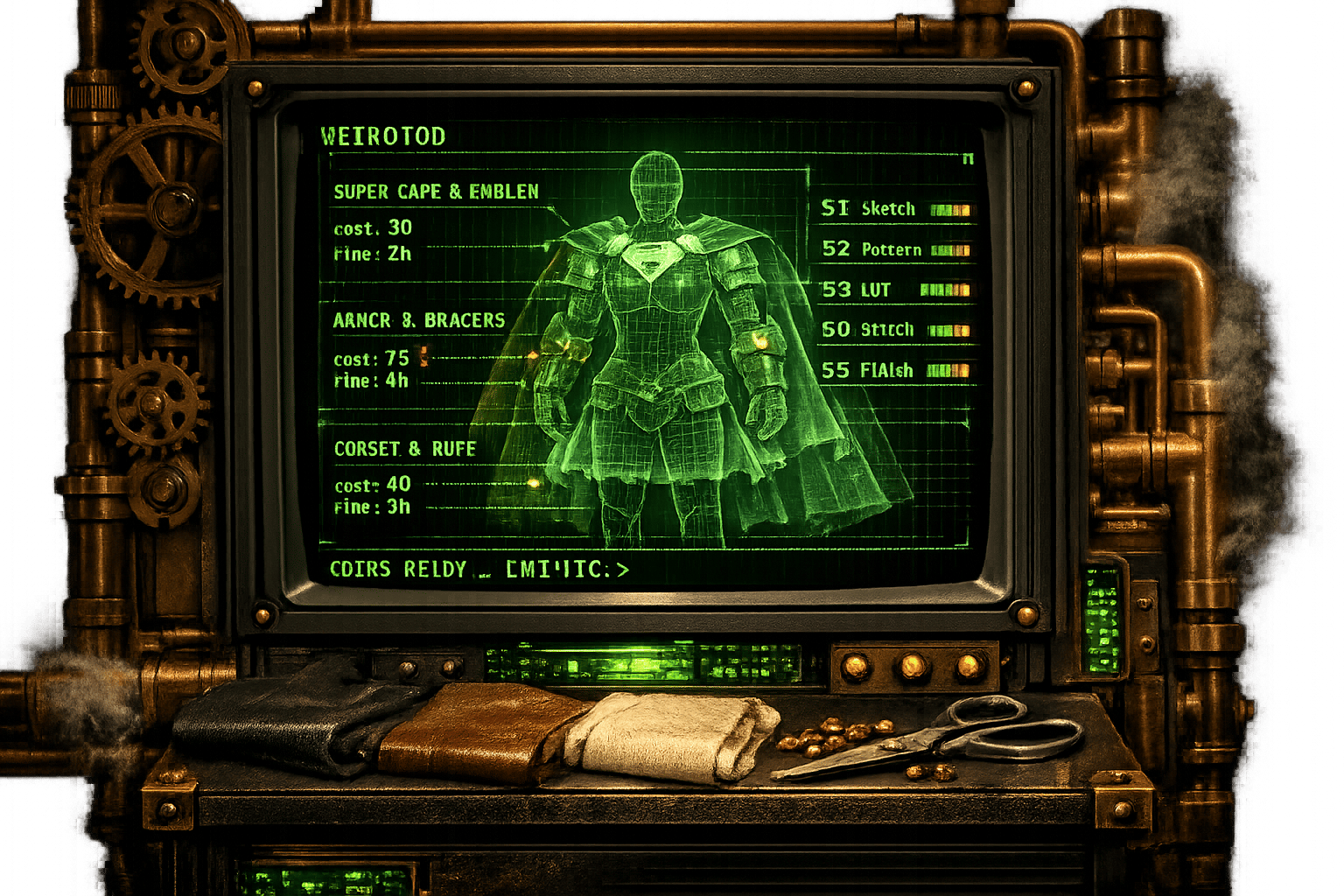
“Unleash Your Alter Ego with Custom Costumes”
By weirdtoo·March 27, 2026·6 min read
Guide to designing and building custom costumes—superhero, fantasy, and historical—costs, timelines, materials, and DIY tips.
“Unleash Your Alter Ego with Custom Costumes”
Creating custom costumes lets you step into a character that feels personal and distinct. Whether for cosplay, themed parties, or Halloween, these outfits go beyond store-bought designs by focusing on tailored details, fit, and durability. You can mix styles - like combining medieval armor with steampunk elements - or reimagine classic looks with your own twist.
Highlights include:
- Superhero Costumes: Design original heroes or reinvent familiar ones with custom emblems, glowing elements, or street-inspired aesthetics.
- Fantasy Costumes: Dive into magical worlds with knights, mages, or royalty, blending fabrics and accessories to create timeless looks.
- Historical Costumes: Recreate iconic figures from the past with attention to period-accurate details and high-quality materials.
The process takes 3–6 weeks and involves collaboration with expert makers or DIY efforts. Costs range from $50 for thrift-based creations to thousands for professionally crafted pieces. Custom costumes are more than just clothing - they're wearable expressions of your imagination.
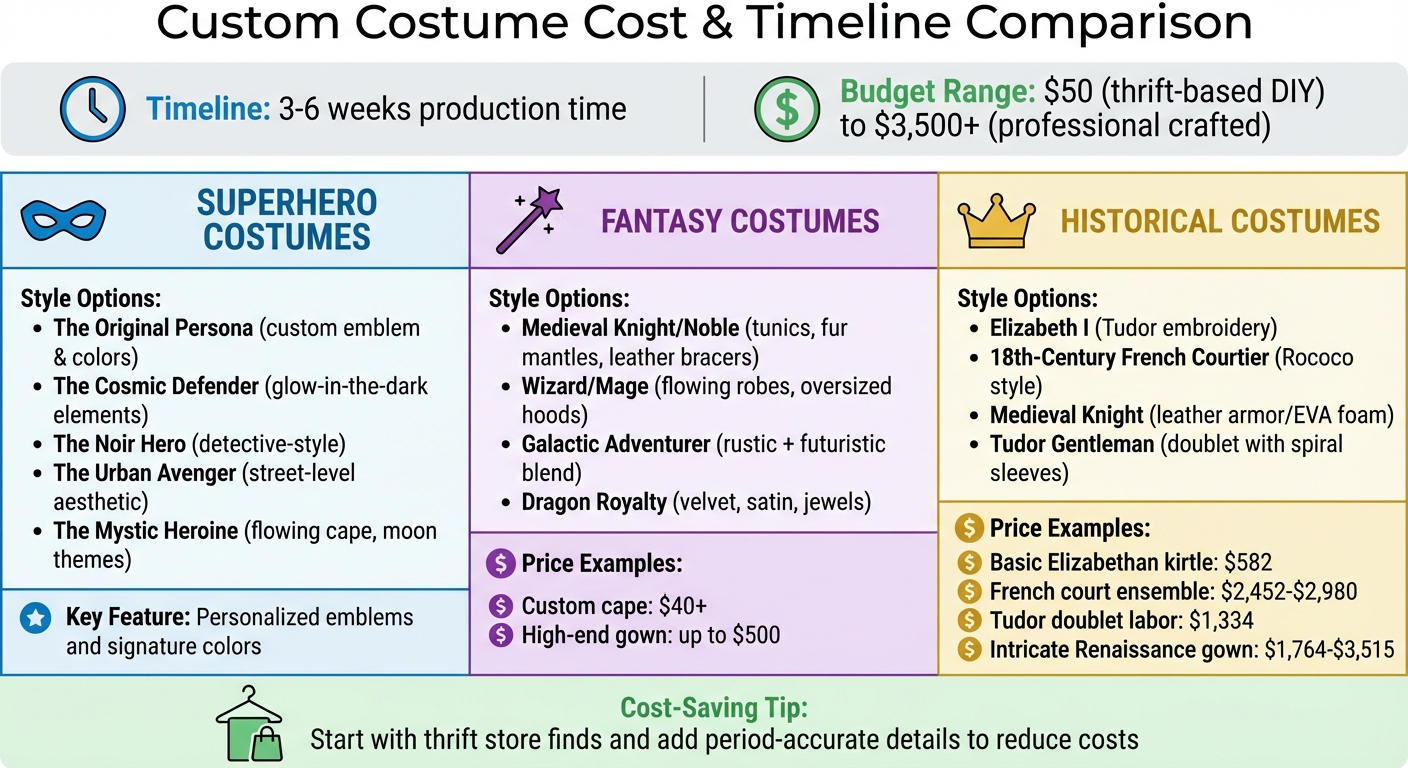
Custom Costume Cost Guide: Budget to Professional Options
How to Pattern Cosplay Armor & Clothing || Cosplay Tutorial
sbb-itb-342b8b2
1. Superhero Costumes
Superhero costumes give you the chance to bring your inner hero to life by focusing on every detail - powers, colors, and even a signature emblem. Here are some superhero concepts to inspire your creativity:
The Original Persona: Design a hero entirely from scratch. Pick powers, create a harmonious color scheme, and add a personalized emblem - like a lightning bolt symbolizing speed or a shield representing protection [3]. As Everfan puts it:
"The mask is what separates the superhero from their alter ego and can add an air of mystery and intrigue to your character" [6].
The Cosmic Defender: Go for a galaxy-inspired bodysuit with glow-in-the-dark elements to channel the energy of the cosmos [3].
The Noir Hero: Embrace a darker, detective-style vibe with a black trench coat, goggles, and painted gloves for a gritty yet functional superhero look [3].
The Urban Avenger: Opt for a street-level hero aesthetic with everyday items - black hoodies, DIY masks, and foam weapons - perfect for blending in until it’s time to act [3].
The Mystic Heroine: Add a touch of magic with a flowing cape, moon-themed designs, and glowing accessories to complete your supernatural persona [3].
2. Fantasy Costumes
Fantasy costumes open the door to magical worlds, blending elements of mythology and adventure. As OuterRim Creatives puts it:
"We don't approach cosplay as replication. We approach it as translation - taking characters built in digital worlds and mythology-heavy franchises and figuring out how they actually exist on a human body." [7]
Here are some fantasy-inspired personas to help spark your imagination:
The Medieval Knight or Noble:
Channel strength and honor with a medieval-inspired look. Start with detailed tunics, fur mantles, and leather bracers. Add boots and belts as base pieces, then customize them with paint or fabric scraps for an authentic touch.
The Wizard or Mage:
Craft the classic spellcaster vibe with flowing, layered robes and oversized hoods. Turn old blankets into weathered garments and create a wand using a stick or PVC pipe. To give your costume a worn, magical feel, use dry brushing techniques with acrylic paint.
The Galactic Adventurer:
Blend ancient and futuristic styles by pairing a rustic gown with a structured leather corset belt. This hybrid approach works beautifully for characters that feel timeless yet otherworldly.
The Dragon Royalty:
Embrace regal elegance with fabrics like velvet or satin. Add small embellishments - like jewels, rivets, or handmade leather pouches - to exude mythical royalty. A custom cape can start at around $40.00, while high-end gowns might reach up to $500.00 [5][7].
3. Historical Costumes
Historical costumes allow you to step into the shoes of iconic figures from the past, offering a chance to recreate the elegance, drama, or grandeur of different eras. Unlike the ready-made options often found on mainstream platforms, achieving an authentic period look requires meticulous attention to detail and high-quality materials [4][1]. Each historical figure presents unique challenges, but they also open doors to crafting a personalized and accurate representation.
Elizabeth I (Elizabethan Era):
Channel the regal presence of Elizabeth I with a custom three-piece kirtle adorned with Tudor-style embroidery. A basic Elizabethan linen kirtle can cost around $582.00, while more intricate Renaissance-style gowns can reach between $1,764.03 and $3,515.00, with labor alone accounting for much of the expense [4].
18th-Century French Courtier:
For Rococo extravagance, consider a complete 1780s French court ensemble. A custom-made outfit, including a tailored coat, waistcoat, and breeches, typically costs between $2,452.00 and $2,980.00 [4]. To save money, you can start with thrift store finds and enhance them with period-accurate details [1][2].
Medieval Knight:
For a battle-ready look, combine detailed tunics with custom leather armor. Alternatively, you can use EVA foam, shaped with a heat gun and sealed with Plasti Dip, to create lightweight replicas of metal armor [1].
Tudor Gentleman:
Step into the role of a 16th-century nobleman with a Tudor doublet featuring spiral-paneled sleeves and a matching cape. Labor costs for a custom doublet average around $1,334, not including the cost of fabric [4]. Breaking down these intricate outfits into smaller components - such as base clothing, armor, and accessories - can make the construction process more manageable [1].
Conclusion
Custom designs go beyond mere clothing - they serve as a canvas for self-expression, allowing you to step into your alter ego or explore a bolder version of yourself. Crafting your own costume transforms your passion into wearable art, sharpening skills like sewing, painting, and crafting while delivering something that’s entirely your own.
"Putting on a costume allows you to become someone else for a while - or maybe just a truer, bolder version of yourself." - HolyClothing [8]
Creating personalized costumes doesn’t have to break the bank. With as little as $50.00 [9], you can bring your vision to life by repurposing thrift store finds or everyday clothing. For those seeking perfection, investing in professional materials can result in a masterpiece worthy of the screen. Each custom costume tells a story, reflecting your creativity and the journey from concept to completion. It’s a celebration of imagination and the magic of turning ideas into reality.
FAQs
Should I DIY or hire a custom costume maker?
Deciding whether to go the DIY route or hire a custom costume maker comes down to your skills, time, and what you're aiming to achieve. If you love crafting, have a vision for a one-of-a-kind design, and feel confident in your abilities, DIY could be a rewarding choice. On the other hand, if you're after a polished, professional finish or tackling a more intricate design, working with a custom costume maker might be the smarter option. It all boils down to what matters most to you - creative control or expert craftsmanship - and how much time and effort you're ready to invest.
How do I get accurate measurements for a custom fit?
For precise measurements, grab a soft, flexible tape measure and wear underwear or form-fitting clothing. Pay attention to key areas like the bust, waist, and hips. Measure the fullest parts of these areas, keeping the tape flat and snug - but not too tight. For added precision, you can use a string to mark the measurement and then compare it against a ruler. Make sure the tape stays parallel to the floor throughout.
What materials work best for comfort and durability?
For a comfortable yet durable custom costume, choose breathable, stretchy fabrics to allow for easy movement. To add structure and maintain the costume's shape, use stiff interfacing or fabric stiffeners like Pellon. This combination ensures your costume offers both flexibility and longevity, making it practical and enjoyable to wear.
Current contact path
Need custom apparel or scoped help?
Use the contact form; removed product, checkout, research, and newsletter funnels stay offline.