Loading…
Ultimate Guide to On-Demand Printing for Beginners
By weirdtoo·December 23, 2025·12 min read
On-demand printing lets creators launch low-risk, inventory-free stores by outsourcing production, fulfillment and shipping.
Ultimate Guide to On-Demand Printing for Beginners
Print on demand (POD) is a low-risk way to sell custom products like T-shirts, mugs, or posters without holding inventory. Here's how it works:
- How It Works: When a customer orders from your online store, the POD provider prints, packages, and ships the item directly to them. You earn the difference between the selling price and the provider’s base cost.
- Why It’s Beginner-Friendly: With minimal upfront costs (under $100 for a domain, store setup, and marketing), no need for inventory, and automated fulfillment, POD is ideal for starting small and scaling over time.
- Getting Started:
- Key Tips: Use high-quality designs (300 DPI), test products by ordering samples, and focus on a specific niche to better connect with your audience.
POD makes it easy to test ideas and launch a store with minimal risk, giving you the flexibility to grow at your own pace.
Full Print On-Demand Tutorial For Beginners (2026 Version)
How On-Demand Printing Works
On-demand printing (POD) turns your creative ideas into products without requiring inventory or upfront costs. It’s a straightforward process, making it a great option for beginners in the U.S. Here’s how it works:
Step 1: Create Your Designs
The first step is crafting designs that people will want to wear, use, or display. Tools like Canva are beginner-friendly, offering drag-and-drop templates and pre-made graphics. If you need more control, consider free software like GIMP or mobile apps like Procreate, which are great for detailed work.
Pay attention to technical details. Save your designs at 300 DPI for high-quality printing. Use PNG files for transparency or SVG files for scalable designs like logos.
Originality is key. Make sure your designs, fonts, and slogans are either 100% your own or properly licensed for commercial use. This not only protects your business legally but also helps build a distinct, recognizable brand.
Once your designs are ready, the next step is to turn them into actual products.
Step 2: Pick Your Products and Platform
Choose products that align with your target audience and profit goals. For instance, wholesale T-shirts typically cost between $7 and $15, and you can sell them for around $24.99, leaving room for a solid profit margin. Ceramic mugs, another popular option, range from $4 to $9 wholesale. You can expand your line by applying your designs to hoodies, tote bags, posters, and more.
Next, select a POD platform. Here are a few options:
- Printify: Offers over 1,000 customizable products [1].
- Printful: Features more than 430 products [1].
- Gelato: Uses 140+ print partners in over 30 countries, which can speed up delivery and lower shipping distances [1].
Many of these platforms integrate seamlessly with Shopify, Etsy, WooCommerce, and eBay, automating the order process [2]. Before committing, invest $20 to $40 in ordering product samples. This helps you verify print quality, color accuracy, and the feel of the materials - an important step to avoid customer complaints later [3].
Once your products and platform are set, the focus shifts to selling and fulfilling orders.
Step 3: List Products and Manage Fulfillment
Creating strong product listings and streamlining fulfillment are critical for connecting your designs with satisfied customers. Start by crafting detailed, keyword-rich titles like “Vintage Mountain Hiking T-Shirt | Unisex Cotton Tee” instead of generic names. In your descriptions, include material details, sizing information, care instructions, and naturally integrate search terms your audience might use.
Most POD platforms come with mockup generators, so you can showcase your designs on realistic product images without needing professional photography. When setting your prices, add a profit margin (typically 20% to 40%) to the wholesale cost.
Once a customer places an order, fulfillment happens automatically if you’ve enabled it. Here’s what goes on behind the scenes:
- The platform charges your payment method for the wholesale cost.
- The item is printed using methods like Direct-to-Garment (DTG) or sublimation.
- It’s packaged in neutral, unbranded packaging and shipped directly to the customer.
- A tracking number is synced to your store and emailed to the buyer.
Setting your POD operations to "Automatic" mode ensures this process runs smoothly without requiring manual approval for each order.
While the POD provider handles production and shipping, you’ll still need to stay on top of things. This includes monitoring orders, answering customer questions about shipping, and addressing occasional returns or quality concerns. Keeping these processes in check ensures your customers remain happy and your business runs efficiently.
Picking the Right On-Demand Printing Platform
Print on Demand Platform Comparison: Pricing, Shipping & Features
Choosing the right platform is a crucial step in building a successful on-demand printing business. The wrong choice can lead to issues like slow shipping, inconsistent print quality, or inaccurate mockups. On the other hand, selecting a reliable platform ensures smooth production and fulfillment, giving you the freedom to focus on creating designs and marketing your products.
Features to Look For
Once you’ve decided on the products you want to sell, finding the right platform becomes your next priority.
Transparent pricing is a must. Look for platforms that clearly outline base costs and shipping fees upfront so you can protect your profit margins. Most platforms operate on a pay-per-sale basis without monthly fees, but some offer premium subscriptions (typically $25 to $30 per month) that reduce base costs for high-volume sellers.
Fast U.S. shipping plays a big role in keeping customers happy. Platforms with domestic fulfillment centers that can deliver orders in 3 to 7 business days are ideal. For example, Gelato works with over 140 print partners across 30+ countries, enabling local production to minimize shipping delays [1].
Seamless ecommerce integrations can save you a lot of time. The platform you choose should connect with major storefronts like Shopify, Etsy, WooCommerce, or eBay. This integration automates tasks like syncing orders, updating inventory, and sending tracking information. Test out a free account first to confirm the platform’s integration works smoothly with your chosen storefront.
Built-in design tools and mockup generators are also worth considering. These features allow you to create professional product images quickly and visualize your designs on the items you plan to sell. Before committing to a platform, order discounted samples to check the print quality and overall experience.
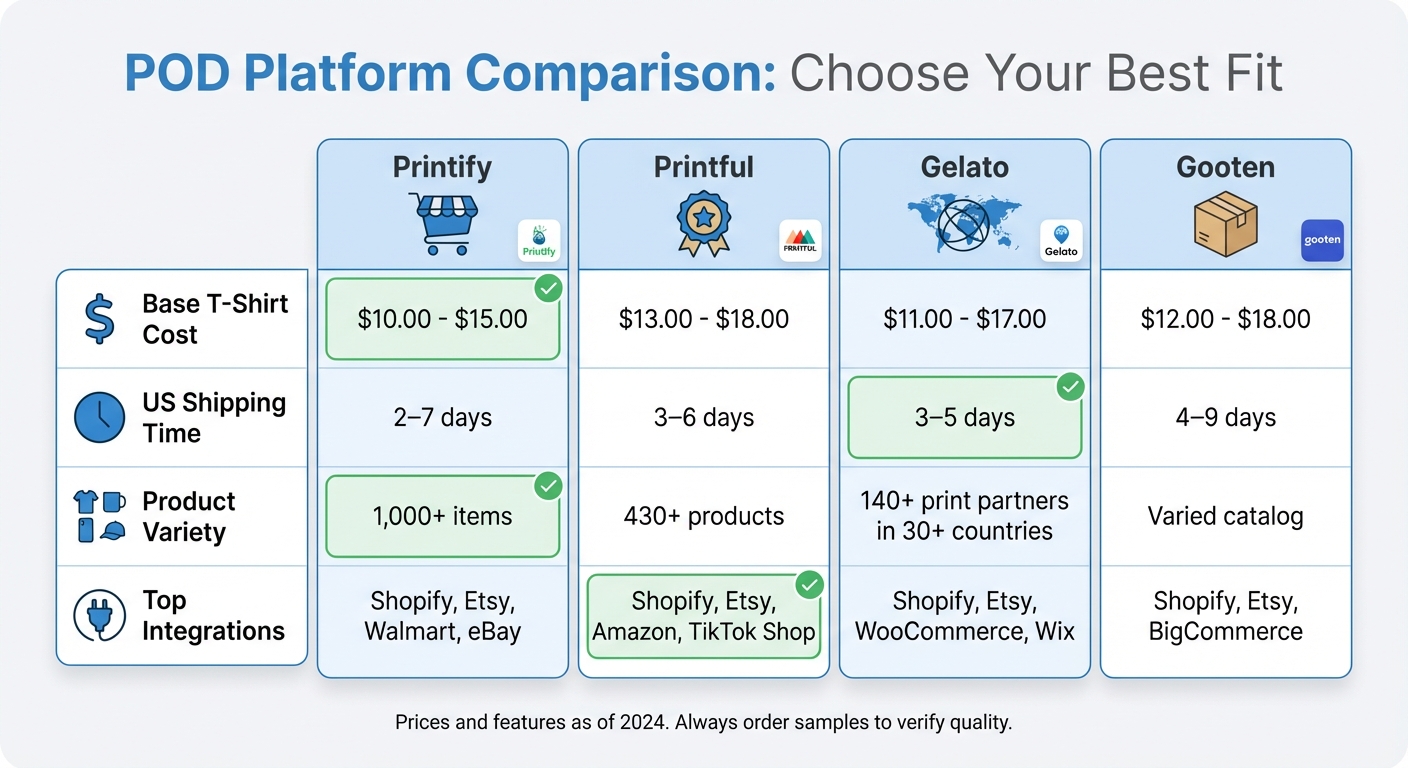
Here’s a breakdown of key metrics to help you compare leading platforms:
Platform Comparison by Key Metrics
| Platform | Base T-Shirt Cost | US Shipping Time | Product Variety | Top Integrations |
|---|---|---|---|---|
| Printify | $10.00 - $15.00 | 2–7 days | 1,000+ items | Shopify, Etsy, Walmart, eBay |
| Printful | $13.00 - $18.00 | 3–6 days | 430+ products | Shopify, Etsy, Amazon, TikTok Shop |
| Gelato | $11.00 - $17.00 | 3–5 days | 140+ print partners | Shopify, Etsy, WooCommerce, Wix |
| Gooten | $12.00 - $18.00 | 4–9 days | Varied catalog | Shopify, Etsy, BigCommerce |
Printify is a strong choice if you’re looking for competitive pricing and a wide variety of products. Gelato’s network of local print partners offers an advantage for reducing shipping distances, particularly if you’re targeting international markets. Printful, while pricier, is known for its high-quality products.
Ultimately, your decision should balance cost, shipping speed, and product quality to align with your target audience. If your focus is on U.S. customers or expanding your product line, make sure the platform supports the specific items you plan to offer, whether it’s tote bags, hoodies, or other unique products.
sbb-itb-342b8b2
Design and Branding Tips for Beginners
Using Basic Design Tools
You don’t need fancy software or years of training to create designs people want to buy. Tools like Canva and Adobe Express offer free versions with easy drag-and-drop interfaces and pre-made templates for T-shirts, mugs, and more. They handle technical details like resolution and file formats, so you can focus on being creative.
For those looking for more control, GIMP is a free, open-source option. While it has a steeper learning curve than Canva or Adobe Express, it’s packed with features like advanced layering and image manipulation - all without a subscription. If you want to see how your designs look on actual products, Printify provides a simple design tool with product previews [1]. Gelato goes a step further by giving users free access to millions of Shutterstock images and graphics, which is perfect for testing niche ideas or developing a cohesive visual style [1].
When designing, keep it simple and clear. Focus on readability and balance - bold, clean fonts that remain readable even at smaller sizes are a safe bet. A design that looks great on your computer might lose its charm on a tiny phone case. Stick to two or three colors and leave plenty of whitespace around key elements so your design doesn’t feel overcrowded when printed.
Building Your Brand Identity
Once you’re comfortable with your design tools, it’s time to develop your brand identity. This goes beyond just a logo - it’s about the personality that defines your products. Start by identifying your target audience and what they care about. Are you creating sarcastic T-shirts for overworked teachers? Or quirky pet-themed apparel for dog lovers? The more specific your niche, the easier it becomes to connect with your audience on a personal level.
Take WEIRDTOO as an example. Their brand thrives on offbeat, humorous designs and unique, multi-purpose products. By focusing on quirky, playful themes, they attract customers who value individuality and humor. Instead of trying to appeal to everyone, they’ve built a loyal following by staying true to their unconventional style. Every design aligns with their brand’s tone, creating a sense of consistency that fosters trust and keeps customers coming back. A clear, distinct personality in your brand makes it easier for people to connect with your products - and that connection is what drives loyalty over time.
Increasing Sales and Avoiding Common Mistakes
Pricing and Marketing Methods
When setting prices, aim for a markup of 30%–50% over production costs, while accounting for hidden fees and processing charges. For instance, if producing and shipping a T-shirt costs $12, pricing it between $15.60 and $18 allows you to cover expenses without alienating potential buyers. Most platforms offer built-in pricing calculators, and A/B testing can help fine-tune your pricing strategy to find the sweet spot.
Instead of targeting broad audiences, focus on micro-niches. For example, rather than marketing generic "dog lover T-shirts", narrow your scope to designs for retired greyhound owners or corgi enthusiasts. This approach makes it easier to connect with your audience through niche-specific social media groups, hashtags, or themed Pinterest boards. Platforms like TikTok and Instagram Reels are ideal for creating short videos that showcase your designs in everyday settings, helping to make them more relatable. Additionally, encouraging customers to share photos of their purchases can foster trust and provide authentic, user-generated content.
To encourage repeat purchases, leverage email automation. Set up sequences like a welcome email for new subscribers, a follow-up after their first purchase, and periodic promotions for returning customers. These automated touchpoints can increase your average order value without requiring constant manual effort.
Once you've established your pricing and marketing strategies, it's important to steer clear of common mistakes that could derail your efforts.
Common Mistakes and How to Fix Them
Even with solid designs and fulfillment processes in place, certain mistakes can hurt your product quality and profitability. Addressing these issues early on is crucial to your success.
One major error is using low-resolution artwork. Images created at 72 DPI might look fine on a screen but often turn out blurry or pixelated when printed. Always use 300 DPI images and follow the print-ready templates provided by your platform. These templates include bleed lines and safe zones to ensure your designs are properly aligned and not cropped during printing.
Overly complex designs can also cause problems. Simple, bold typography and high-contrast graphics tend to print more reliably and appeal to modern consumers better than cluttered illustrations. Stick to clean, minimalist designs and test their print quality by ordering samples before expanding your offerings.
Another common pitfall involves overlooking hidden costs. Many online marketplaces charge transaction fees of around 6.5%, while payment processors typically add another 2–3%. Shipping costs can also vary widely depending on the destination. Be sure to account for these fees in your pricing. Additionally, avoid chasing generic niches; competing in broad categories often means going head-to-head with well-established brands with massive marketing budgets. Instead, focus on highly specific sub-niches where you can build genuine connections with passionate, underserved audiences.
Getting Started with On-Demand Printing
Ready to dive into on-demand printing? Start by picking a platform that fits your budget and goals. Focus on creating designs that truly connect with your audience, and begin with a small batch of 5–10 test products to see what resonates. Many platforms offer an impressive variety of customizable items - some even list over 1,000 options - along with transparent provider ratings. Others boast networks of print partners across multiple countries, which can mean quicker local shipping for your customers [1]. The best part? Most services are free to join, with costs only incurred when you make a sale, making it a low-risk way to get started.
When you're just beginning, prioritize quality over quantity. Use the quality standards and testing tips mentioned earlier, and focus on a niche you’re passionate about. Narrowing your focus can help you connect with a specific group, whether it’s retired greyhound owners, outdoor enthusiasts in Wyoming, or fans of quirky, offbeat humor. A targeted approach not only makes marketing easier but also helps your products stand out. Take WEIRDTOO, for example. This brand ties its on-demand products to a community-driven mission. Their made-to-order clothing and versatile items are aligned with their efforts to provide affordable internet services to underserved communities in Wyoming, including trailer parks. By using a made-to-order model, they avoid inventory risks, reduce waste, and offer more product variety - all while staying true to their mission.
Once you've nailed down quality and found your niche, it’s time to launch. Price your products to cover costs and generate profit, connect with major online marketplaces to tap into existing traffic, and promote your designs on social media platforms where your audience hangs out. On-demand printing’s low-risk setup allows you to experiment, gather feedback, and refine your approach without breaking the bank. Start small, stay focused, and let your creativity connect with the people who’ll love it most.
FAQs
What should I look for when selecting a print-on-demand platform?
When selecting a print-on-demand platform, start by looking at customization features, user-friendliness, and how seamlessly it connects with your current tools or online store. Production and shipping times are another key factor, particularly if you’re targeting specific regions or niche audiences. For areas that often face limited service options, choosing a platform that understands local needs and delivers dependable support can be a game-changer.
If you’re new to this, focus on platforms that offer easy-to-follow instructions and a supportive community to guide you through the setup process with ease.
How do I make sure my designs are legally safe for print-on-demand?
When creating designs for print-on-demand, it's crucial to ensure they are legally compliant. Start by focusing on original artwork or materials you have full rights to use. Steer clear of incorporating copyrighted images, logos, or trademarks unless you have explicit permission to do so. If you plan to use third-party content, confirm that you have the proper licenses or that the material belongs to the public domain.
If you're uncertain about your rights, it's wise to consult legal resources or seek advice from a professional. These precautions can help safeguard your business and ensure your designs are free from potential legal complications.
How can I boost sales in a specialized market?
To increase sales in a niche market, it’s essential to address the specific needs of your audience. Think about offering customized options, like affordable on-demand services or products that reflect local values. This approach helps create a meaningful connection with your customers.
Highlight what makes your business different - whether it’s a strong community focus or branding that feels genuine. Trust plays a big role too. Providing personalized customer support and staying actively involved in the community can build loyalty. Plus, happy customers are more likely to spread the word, giving your business a natural boost in growth.
Current contact path
Need Weird Network WiFi, custom apparel, or scoped help?
Use the contact form; removed product, checkout, research, and newsletter funnels stay offline.