Loading…

“Renaissance Faire Must-Haves”
By weirdtoo·April 13, 2026·18 min read
Pack for immersion: comfy boots, period garb, hydration, props and weather-ready layers to fully enjoy a Renaissance Faire.
“Renaissance Faire Must-Haves”
Renaissance Faires are immersive events where history meets fantasy, and preparation is key to enjoying the experience. Whether you're a first-timer or a seasoned attendee, here are the essentials to make your day magical:
- Comfortable Shoes: Opt for leather boots with added insoles or modern reproductions for all-day comfort on uneven terrain. Break them in before attending.
- Costume: Choose outfits made of natural fabrics like linen or wool. Add accessories like belts, pouches, and headwear to complete the look.
- Hydration: Bring a reusable water bottle or flask. Attach it to your belt for easy access while keeping the period theme intact.
- Portable Seat: Lightweight folding stools or medieval-style trunks provide comfort during long performances.
- Cash: Bring small bills for tips and purchases, as not all vendors accept cards.
- Jewelry and Props: Enhance your outfit with simple or ornate accessories based on your character. Props like goblets or scrolls add flair.
- Sun Protection: Use mineral-based sunscreen and wear period-appropriate hats. Insect repellent is also a must.
- Weather Gear: A wool or velvet cloak protects against rain and adds to your outfit. Treat it for water resistance.
- Snacks and Tote Bags: Pack dry snacks and carry essentials in a period-style bag.
- Event Map: Download or grab a fair map to plan your day and avoid missing key attractions.
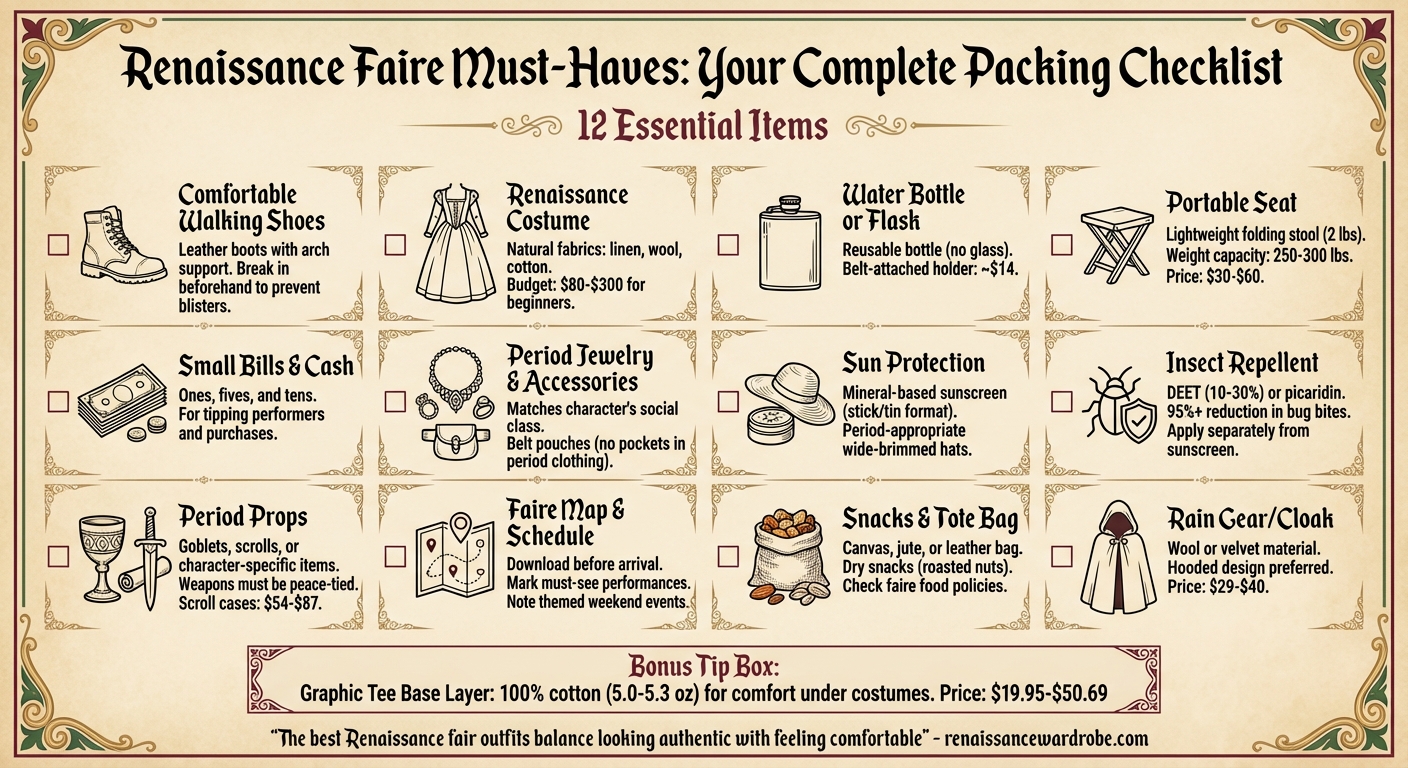
Renaissance Faire Essentials Checklist: 12 Must-Have Items
Must Haves for Renaissance Faire Newbies! ⚔️
sbb-itb-342b8b2
1. Comfortable Walking Shoes
Renaissance Faires often mean hours of walking on uneven surfaces like dirt, mulch, or mud. Wearing the wrong shoes can quickly ruin the experience, so picking the right footwear is key.
Leather boots are a classic option for these events. Ankle or knee-high styles not only add an authentic flair to your outfit but also shield your feet from rough terrain and mud. However, many historically accurate boots fall short when it comes to modern comfort. As Odingaard, Manufacturer/Vendor at SBG Sword Forum, explains:
"The highest quality historically-accurate boots are not that expensive, but they lack good insoles, arch support, or durable soles for all day walking - and they grow uncomfortable fairly quickly walking throughout the day." [4]
To address this, look for modern reproductions with hidden arch support and moisture-wicking linings that still maintain a period-appropriate appearance. Alternatively, you can add gel insoles to traditional boots for extra cushioning.
Avoid wearing brand-new shoes to the faire. Breaking them in beforehand will help prevent blisters and highlight any areas that might cause discomfort. Pair your boots with moisture-wicking socks to reduce chafing, and carry blister pads for quick relief if needed.
For warmer weather, breathable options like moccasins or strappy sandals can be a good choice, though they offer less protection from rocks and mud. Ballet flats are another lightweight alternative, but you might need gel inserts for added comfort. If you're attending a multi-day event, switching between different pairs of shoes can help prevent foot fatigue.
If you're on a budget, plain leather work boots (without zippers or steel toes) can work well. With a few low-cost accessories like spurs (under $20) and spur straps (around $10) [4], you can give them a historical look. After the event, clean and condition your leather footwear to keep them in good shape and extend their lifespan.
These tips will help ensure your footwear keeps you comfortable as you enjoy the faire to its fullest.
2. Renaissance Costume or Outfit
Your outfit is a big part of how you present yourself at a Renaissance faire. In fact, what you wear - often called "garb" - is all about capturing the essence of historical fashion. As Renaissance Wardrobe puts it:
"Garb is characterized by authenticity and adherence to the nuanced details of bygone fashion" [5].
For most attendees, the goal is to find a balance between staying true to historical details and feeling comfortable. A good approach is to combine period-appropriate elements with modern practicality.
Fabric and Color Choices
Stick to natural materials like linen, wool, and cotton for a more authentic look, but consider silk blends if you're aiming for something more luxurious. The colors you choose can also reflect social class. For example:
- Peasants: Earthy tones like brown, gray, and green.
- Merchants: Richer shades such as navy, maroon, or forest green.
- Nobility: Deep reds, royal blues, and black, often in velvet or brocade.
Keep in mind that during the Renaissance, sumptuary laws dictated who could wear certain colors and fabrics. For instance, royal purple was reserved for monarchy [5]. Avoid synthetic fabrics or neon colors - they can break the historical vibe.
Accessories and Practical Details
Headwear is a must for an authentic look. Women might wear French or gable hoods and circlets, while men can opt for flat caps, muffin caps, or feathered hats [1].
Since Renaissance clothing didn’t include pockets, a leather belt with pouches is both practical and historically accurate. It’s a great way to carry your phone, wallet, and other essentials without compromising your outfit [5].
Budgeting for Your Costume
If you’re new to Renaissance fairs, you can put together a basic outfit for $80–$300 [6]. Start with the essentials - like a tunic or blouse, belt, pouch, and headwear - and gradually add accessories or even armor as you go. Many fairs embrace a blend of historical accuracy and fantasy, so don’t stress about perfection. Focus on enjoying the experience while looking the part.
3. Water Bottle or Flask
Renaissance faires can stretch on for hours under the open sky, so staying hydrated is a must. Most events allow you to bring either one factory-sealed bottle or an empty reusable one for refilling [7]. Just remember, glass containers are a no-go - stick to plastic or metal.
Hands-Free Carrying
Since Renaissance outfits don’t come with pockets, you’ll need a way to carry your bottle. A great solution is attaching it to your belt. You can find specialized holders, often designed to look like potion bottle carriers, for around $14. These come with a snap loop that fits belts up to 1.5 inches wide [8]. As Renaissance Wardrobe aptly puts it:
"Don't forget to bring a small drinking vessel that attaches to your belt so you can stay hydrated throughout the day" [1].
This way, you can keep your hands free while maintaining your look.
Maintaining the Period Look
To blend practicality with the faire’s theme, consider using a tankard or leather-wrapped flask for your water. Many vendor stalls offer handmade pottery and leather goods that fit the era. If you prefer the convenience of a modern insulated bottle, you can disguise it by slipping it into a leather pouch. This keeps your hydration practical while still fitting the historical vibe.
Finding Refill Stations
Most faires provide drinking fountains or refill stations throughout the grounds. For instance, the New York Renaissance Faire has fountains conveniently located near spots like the Village Bakery and the Fortune Stage [7]. Take note of these locations early on so you can plan your hydration breaks without wandering aimlessly.
4. Folding Stool or Portable Seat
Once you've sorted out your outfit and hydration, a portable seat becomes a must-have for those long hours at the faire.
Renaissance fairs often run from 10 a.m. to 7 p.m. [11], and navigating uneven terrain can take a toll [1]. Having a portable seat means you can rest comfortably while enjoying performances without the hassle of finding a dry spot on the ground.
Picking the Best Seat
Focus on finding something lightweight and easy to carry. Ultralight options like the Trekology Yizi Go weigh just 2 pounds yet can support up to 300 pounds [9]. Basic folding chairs typically cost between $30 and $50, while ultralight models are priced slightly higher, around $40–$60 [9]. Look for chairs that fold to under 6 inches thick, making them simple to transport [9]. For fairs with uneven ground, prioritize seats with sturdy steel or aluminum frames and a weight capacity of at least 250–300 pounds [9]. Make sure to check the hinges and joints for durability. If you want extra ease when getting up, consider models with armrests.
Keeping the Period Look
While modern folding chairs are practical, you can give them a medieval touch by covering them with linen or other heavy fabrics [10]. Some fairgoers even use wooden chests or trunks, doubling as both seating and prop storage [10][1]. This approach not only keeps you comfortable but also helps maintain the immersive atmosphere of the event. A portable, stable seat ensures you can relax and enjoy the day without compromising the fair's historical vibe.
5. Small Bills and Cash
Bring plenty of small-denomination cash for tipping and making purchases. This will make it easier to tip performers and grab unique items without hassle.
Why Cash Is Important
At Renaissance fairs, many performers rely heavily on tips for their income. Jousters, musicians, and interactive entertainers, for example, depend on audience contributions to keep their acts going [2]. Having small bills ready is a thoughtful way to show your support. Beyond that, artisans offer handmade goods like pottery, jewelry, and leather items, while vendors provide food and fun activities like archery or axe throwing [2]. While some vendors might accept cards, having cash ensures you won't miss out on any part of the experience.
Keeping Your Money Secure
Since Renaissance costumes often lack pockets, you'll need a secure way to carry your cash. A good option is a belt pouch or satchel made from leather, wool, or linen, ideally with a secure closure like a drawstring or toggle [1]. For larger events, consider wearing a hidden money belt for your bigger bills, while keeping smaller denominations in a more accessible pouch. This setup keeps your money safe and organized as you navigate the crowds.
Set a Spending Plan
Before heading to the fair, decide on a budget for food, drinks, and souvenirs [2]. This helps you enjoy the event without overspending. Make sure to carry enough ones, fives, and tens to cover tips, quick purchases, and activities without needing to hunt for change.
6. Jewelry or Period Accessories
The right jewelry and accessories are essential for completing a Renaissance look. During the Renaissance, jewelry wasn't just for decoration - it was a clear indicator of wealth and social standing[1]. Keeping these historical details in mind can help you pick pieces that not only enhance your costume but also deepen your character's story.
Selecting Accessories to Match Your Character
Your choice of jewelry should reflect your character's social class. If you're portraying a noble, go for elaborate pieces like multi-strand pearl necklaces, bold pendants with semi-precious stones, or matching sets known as "parures." Men of high status might wear heavy gold chains or ornate rings engraved with family crests. On the other hand, if your character is a peasant or part of the working class, stick to simpler options like leather cord pendants, modest religious symbols, or plain wedding bands made from inexpensive metals[1].
Practical Accessories That Fit the Era
Once you've chosen jewelry that suits your character, think about functional accessories. Since Renaissance clothing didn't include pockets, items like belts and pouches were crucial. Women often wore decorative girdles to hold pouches or keys, which can also be adapted to discreetly carry modern essentials like phones or credit cards. Brooches and pins were not only decorative but also practical for securing cloaks or heavy garments. To stay comfortable at an outdoor fair, consider lightweight or adjustable options that won't weigh you down over the course of the day[1][3].
7. Sunscreen and Insect Repellent
Renaissance Faires usually run from spring through summer, meaning you'll spend long hours outdoors under the sun while dealing with pesky insects like mosquitoes, ticks, and gnats. Using DEET can reduce the chance of bug bites by more than 95% [13]. However, when you're dressed in an elaborate costume, picking the right sunscreen and repellent becomes a bit more tricky. The key is to choose products that work without clashing with your period-appropriate vibe.
For sunscreen, stick and tin formats are a game-changer. Brands like Badger, Raw Elements, and Babo Botanicals offer compact, mess-free options that fit perfectly in your pouch or attach to your belt. These are great alternatives to lotions, especially when you're in costume [12]. Look for mineral-based formulas with zinc oxide, ideally labeled "Sport" or "Water Sport", as they tend to last longer during physical activity. Many modern formulations also meet strict health and transparency standards [12].
When it comes to insect repellents, skip the combo products that mix sunscreen and repellent. The CDC and EPA advise against them since sunscreen needs frequent, generous reapplication, while repellents should be applied sparingly [14]. As Stephanie from PK Safety explains, sunscreen absorbs into the skin, whereas repellent stays on the surface [14]. To get it right, apply sunscreen first, let it absorb for about 15 minutes, and then layer the repellent on top.
If your costume includes synthetic fabrics, opt for picaridin-based repellents, as DEET can degrade materials like spandex and plastics [13]. Another smart move is treating your costume with permethrin beforehand. This treatment kills ticks and mosquitoes on contact without harming your outfit [13]. However, wearable repellent devices aren't the best choice. Dan Markowski, Technical Advisor for the American Mosquito Control Association, explains:
"When there's a strong gust of wind, or even when you walk too fast, the cloud of repellent around the product doesn't follow, leaving you unprotected" [13].
To stay safe and comfortable, stick to these tried-and-true methods.
For DEET, the EPA recommends concentrations between 10% and 30%, as anything above 50% offers little additional benefit [13]. Finally, supplement your sunscreen with some period-appropriate shade. Wide-brimmed straw hats work perfectly for peasant characters, while felt hats suit nobility. Not only do they add to your costume, but they also provide extra sun protection for your face [1].
8. Period Props (Goblet, Lute, or Similar)
Once you've sorted out your costume and comfort essentials, it's time to think about props. These little details can breathe life into your character, turning a basic outfit into something truly memorable. Props often attract compliments and can even earn you some fun interactions with performers and vendors. As Renaissance Wardrobe explains:
"The right accessories can turn a simple costume into something that looks like it came straight out of a history book!" [1]
Props not only complete your look but also deepen your immersion in the experience.
When picking props, consider your character's social standing. For example:
- Nobles might carry decorative fans or ornate pomanders.
- Commoners might stick to simple wooden mugs or basic tools.
- Bards often choose lutes or scrolls.
- Wizards benefit from leather scroll cases (typically priced between $54 and $87).
- Alchemists can carry potion bottles in specialized holders (around $38) [15].
Drinking vessels are some of the most practical props you can bring. A tankard or goblet attached to your belt with a leather holder (around $22) not only looks authentic but also keeps you hydrated without resorting to modern plastic bottles [15].
If you're considering weapons like swords or shields, be sure to check the rules of the faire. Most require props to be "peace-tied", meaning they must be secured to prevent drawing. As stated by the Original Renaissance Pleasure Faire:
"Costume weapons must be sheathed and peace-tied" [11].
Foam weapons are often preferred for safety, especially if you plan to engage in activities, while heavier metal props are usually limited to display purposes.
Lastly, avoid carrying anything too heavy or cumbersome. Lightweight props like maps, feather quills, or small pouches are both practical and visually appealing. For added convenience, consider period-style pouches with hidden compartments - they look authentic while offering modern functionality.
9. Faire Map or Event Schedule
Renaissance fairs transform sprawling fairgrounds into lively medieval villages, complete with period-inspired architecture. While this adds to the charm, it can also make navigating the grounds tricky [2]. Without a map or schedule, you might find yourself wandering aimlessly, potentially missing key attractions like jousting tournaments, live theater, or interactive shows that rely on audience participation [2]. Having a plan ensures you make the most of your day while staying immersed in the experience.
Before heading out, download the map and schedule from the fair’s official website. This way, you’ll have offline access in case cell service is spotty. Many fairs also provide real-time updates through their apps or websites. Prefer a physical map? Arrive early to grab a program at the entrance - this guarantees you won’t miss major performances [2].
Use the map to prioritize must-see events like jousts, theatrical performances, or interactive acts. It’s also handy for locating merchants offering handmade goods like pottery, jewelry, leather items, or period clothing [2]. Don’t forget to mark practical spots like food stalls and service areas for quick access during the day.
Some fairs feature themed weekends, such as Pirate Day or Highland celebrations. Be sure to check the specific schedule for your chosen day, as performances and activities often align with the theme [2][3]. If you’re attending with friends or family, coordinating through the schedule can help everyone participate in group activities like contests, dances, or parades.
For an added touch of immersion, carry your map in a leather pouch or roll it like a scroll to match your costume. If you’re relying on a digital version, store your smartphone in a period-style pouch. This keeps your day organized while maintaining the event’s medieval vibe, ensuring you enjoy every moment without breaking character.
10. Snacks and Tote Bag
To round out your Renaissance faire preparation, a sturdy tote bag is a must. Since traditional Renaissance attire doesn’t include pockets, a well-chosen bag helps you blend historical charm with modern practicality.
Before you pack, double-check the fair’s rules about outside food and drink - some events may have restrictions. If allowed, go for dry, easy-to-carry snacks like roasted nuts, which are not only convenient but also fit the fair’s theme. Steer clear of messy foods like soups or stews that could spill and ruin your outfit. And while turkey legs are a classic, they can be greasy and tricky to handle, especially if you’re in elaborate garb.
Opt for a bag made of canvas, jute, or leather for durability and a period-appropriate appearance. Look for comfortable straps that won’t dig into your shoulder as you wander through the fair all day. Your bag will hold essentials like water bottles, sunscreen, small bills for shopping, maps, and any treasures you pick up along the way. For quick access to smaller items, consider attaching a small leather pouch to your belt.
With a period-style bag, you can keep your modern necessities close without breaking the immersive experience.
11. Rain Gear or Cloak
Weather at Renaissance faires can be unpredictable, so having a cloak on hand is a smart way to stay dry while keeping your outfit period-appropriate. Wool is the go-to material for authentic rain protection - it was widely used in the later Medieval and Renaissance periods because it stays warm even when wet. Plus, if the wool is minimally processed, it retains lanolin, a natural oil from sheep that makes the fabric resistant to water.
For those portraying commoners or working-class characters, a simple wool or heavy linen cloak is ideal. On the other hand, if you're stepping into the role of nobility, a velvet cloak with a fur lining not only adds a touch of elegance but also keeps you warm on chilly, rainy days. Custom cloaks usually start around $29.00 to $40.00 [16]. Opt for a hooded design to protect your head and neck, eliminating the need for modern umbrellas, which can block the view of performances.
To improve water resistance, consider applying a waterproof spray to your cloak and boots. Pair your cloak with sturdy leather boots and wool socks to make walking on muddy paths more comfortable. If the weather takes a turn for the worse, you can discreetly wear a lightweight, modern rain shell underneath your cloak to stay dry while keeping your outer appearance true to the period.
Fasten your cloak with a brooch or pin to ensure it stays secure throughout the day. For added convenience, protect valuables like your phone or spare socks by storing them in a water-resistant bag tucked inside your period-style tote. This way, you'll be prepared for anything the weather throws your way while enjoying the faire in style.
12. Graphic Tee for Under Your Costume
Wearing a graphic tee as a base layer under your Renaissance costume can make a big difference in comfort while keeping your outfit consistent. Heavy costume fabrics like velvet, wool, or fur can trap heat and cause discomfort, especially during long outdoor events. A lightweight cotton tee acts as a breathable layer, helping to absorb sweat and reduce irritation [3].
For the best results, go with a tee made from 100% combed ringspun cotton (around 5.0–5.3 oz). This type of fabric offers a good mix of durability and breathability. Look for features like a taped neck and shoulders to minimize chafing and a tearaway label to avoid skin irritation when worn under corsets, doublets, or armor [18]. A regular fit is your best bet - oversized shirts can bunch up under costume layers, making them uncomfortable [18].
When picking a design, think about your character or the fair’s theme. Historical art prints like "The Accolade" or "Lady of the Lake" are great for portraying noble characters, while Celtic skulls or Viking-inspired designs suit knights and warriors. For something more playful, opt for humorous prints like "This Is My Renaissance Faire Costume" or "Will Joust for Beer," which can spark fun conversations [17]. Prices for standard graphic tees typically range from $19.95 to $20.99, while premium artist designs can cost between $32.95 and $50.69 [17].
"Choose breathable fabrics for day and add layers for evenings." - Creed Leather [3]
To keep your graphic tee in good shape for future fairs, wash it inside out in warm water and tumble dry on medium heat [18]. For summer events, stick with short-sleeve cotton tees. For cooler spring or autumn fairs, try a long-sleeve version or layer a short-sleeve tee over a thermal [18].
Conclusion
The right gear can turn your Renaissance Faire visit into an unforgettable experience. From comfortable footwear to weather-appropriate clothing and character-specific accessories, being prepared ensures you can enjoy the day from the opening gates to the final joust. Often, the difference between a magical day and an uncomfortable one comes down to thoughtful planning.
"The best Renaissance fair outfits balance looking authentic with feeling comfortable, ensuring you can fully immerse yourself in the festivities without discomfort." - renaissancewardrobe.com [1]
Let’s recap the essentials: Your packing list should reflect both your character and the event’s unique demands. For example, a summer faire in July calls for lightweight fabrics, hand fans, and plenty of sunscreen, while an autumn gathering might require woolen layers and a sturdy cloak. If you're portraying a noble, think statement jewelry and velvet headwear, while a peasant character might favor leather pouches and practical tools. Breaking in your footwear ahead of time and opting for neutral-toned, versatile accessories can help you stay comfortable without sacrificing historical charm.
"Theatricality and tapping into one's imagination is the foundation of Ren Faire style." - Anthony Scott, Axe-thrower [19]
Above all, embrace the spirit of the event. Being well-prepared allows you to fully enjoy the performers, explore artisan booths, and dive into the living history around you. Whether it’s your first time or you’re a seasoned attendee, having the right essentials ensures you can focus on the fun - without worrying about blisters, dehydration, or missing out on the action.
FAQs
How do I choose a costume that’s both comfortable and looks authentic?
To choose a costume that feels good to wear and looks right for a Renaissance Faire, aim for a mix of practicality and historical flair. Look for adaptable accessories like hats, belts, pouches, and shoes that match your character’s social status and work well for outdoor settings. Pay attention to the weather - layer or adjust your outfit as needed to stay comfortable while keeping the look period-appropriate. The key is to strike a balance between comfort and staying true to the era, so you can fully immerse yourself in the experience.
What should I pack if the weather changes during the faire?
To handle unpredictable weather at the Renaissance Faire, bring a lightweight, waterproof jacket or a cloak to stay dry during rain or protected from the wind. Pack an extra layer, like a shawl or scarf, to stay warm if temperatures drop. A wide-brimmed hat can shield you from the sun or sudden weather changes. Don’t forget comfortable shoes for walking and, if rain is in the forecast, a small umbrella to stay prepared for anything.
Are prop weapons allowed, and what does “peace-tied” mean?
Prop weapons are generally a no-go at Renaissance fairs. If you hear the term peace-tied, it means any props or weapons must be clearly visible and secured to ensure safety. Metal prop weapons are almost always off-limits, and fairs have their own specific rules that can differ from event to event. To avoid any hiccups, it’s best to review the fair's guidelines ahead of time.
Current contact path
Need custom apparel or scoped help?
Use the contact form; removed product, checkout, research, and newsletter funnels stay offline.