Loading…
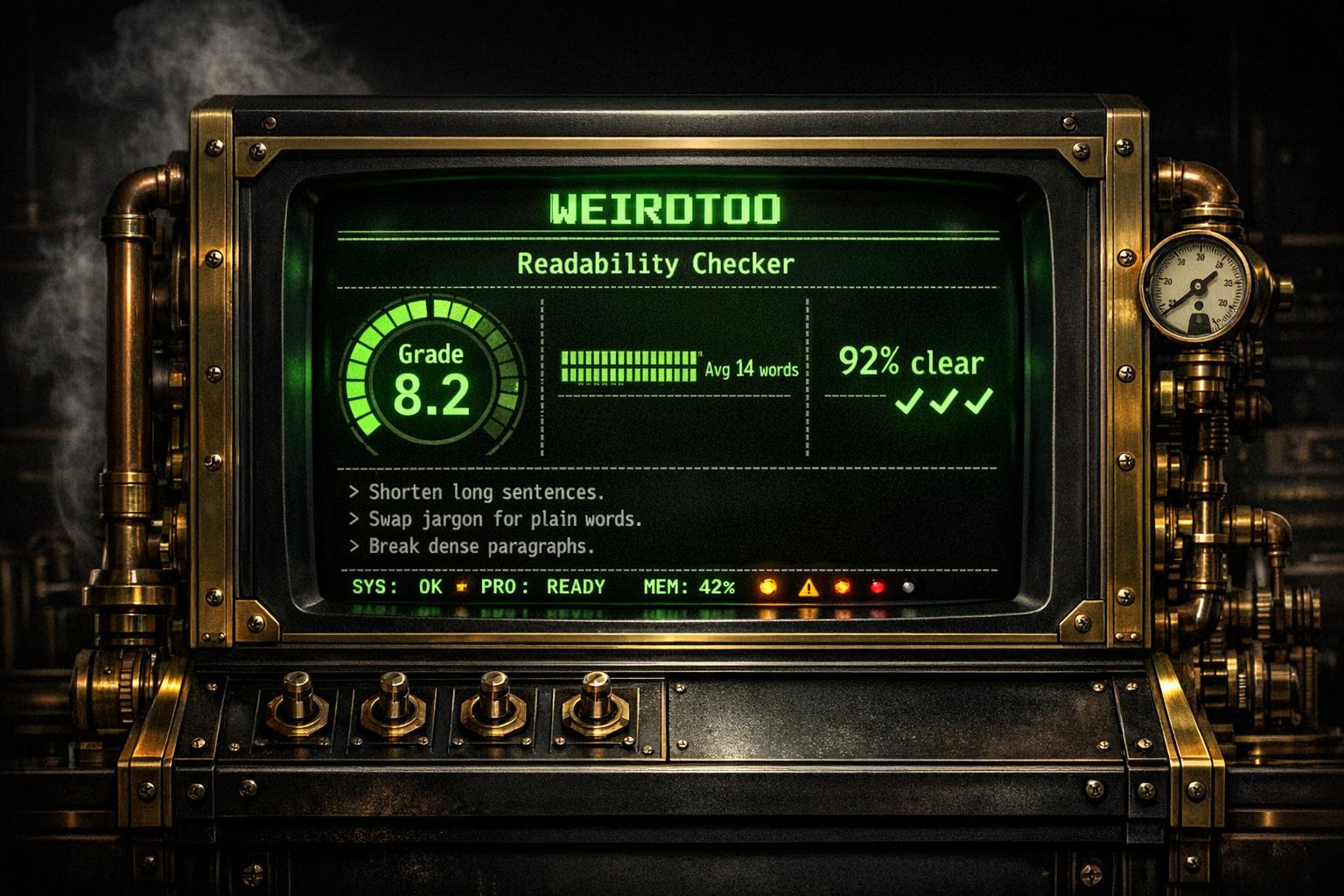
Readability Checker
By weirdtoo·June 8, 2026·2 min read
Paste your text to check readability, reading grade, sentence length, and writing quality with clear scores and practical suggestions.
Readability Checker
Write More Clearly With a Readability Checker
Clear writing keeps people engaged. Whether you're working on a blog post, school assignment, product page, or business email, it helps to know if your text feels simple, standard, or overly dense. A readability checker gives you that snapshot fast by analyzing sentence length, paragraph structure, reading time, and common scoring formulas.
What This Tool Looks For
This web-based analyzer reviews the basics that shape readability: total words, sentence count, paragraph count, and average words per sentence. It also estimates how demanding the text may be for readers using well-known measures like Flesch Reading Ease and Flesch-Kincaid Grade Level. Beyond the numbers, it flags patterns that often reduce clarity, including long sentences, heavy paragraphs, repeated sentence openings, and possible passive construction.
Why It Matters
A strong reading level analyzer helps you match your writing to your audience. If a passage feels harder than it needs to be, small edits can make a big difference. Breaking up dense sections, choosing simpler words, and varying sentence structure can improve flow without weakening your message. Use this readability checker to turn rough drafts into cleaner, more approachable writing that people can move through with less effort.
FAQs
What does a readability checker actually measure?
A readability checker looks at how easy your writing is to read based on patterns in the text. That usually includes sentence length, word count, paragraph size, and formulas such as Flesch Reading Ease or Flesch-Kincaid Grade Level. It doesn’t judge whether your ideas are good or bad—it shows how demanding the writing may feel for an average reader.
Are readability scores enough to judge writing quality?
Not by themselves. A strong readability score is helpful, but good writing also depends on tone, structure, accuracy, and whether it fits your audience. For example, technical writing may naturally score as more difficult than a casual blog post. The best way to use these scores is as guidance, not as a strict rule.
Can this tool help me improve difficult writing?
Yes. The tool is designed to do more than give you numbers. It also points out common issues that make text harder to follow, such as very long sentences, bulky paragraphs, repeated sentence starts, and possible passive voice. From there, you can revise with a clearer goal—shorten where needed, simplify wording, and break ideas into more readable sections.
Related Weird Too links
Keep following this lane
Current contact path
Need custom apparel or scoped help?
Use the contact form; removed product, checkout, research, and newsletter funnels stay offline.