Loading…

“Quick-Change Costumes for Performers”
By weirdtoo·May 11, 2026·8 min read
Practical tips on designing, prepping, and rehearsing quick-change costumes using magnets, snaps, layering, and dresser coordination.
“Quick-Change Costumes for Performers”
Performers often need to switch costumes in seconds during live shows, and quick-change costumes make this possible. These outfits combine clever design - like false layering and fasteners such as magnets, Velcro, or snaps - to create seamless transitions. Here's what you need to know:
- Why They Matter: Quick changes keep performances smooth and engaging, allowing for dramatic onstage transformations like instant ballgown reveals.
- Challenges: Time constraints, noisy fasteners, and material issues (like pleather sticking to sweaty skin) can complicate quick changes.
- Preparation Tips: Organize costumes in order, use under-dressing techniques, and rehearse changes with dressers for flawless execution.
- Design Features: Modular designs, layered outfits, and fasteners like magnet tape simplify changes while maintaining safety.
- Accessories and Shoes: Magnetic wigs, slip-on shoes, and consistent backstage placement speed up transitions.
To master quick changes, focus on preparation, smart costume design, and teamwork. Rehearse thoroughly, plan every detail, and ensure all tools and costumes are performance-ready.
Pre-Show Preparation for Quick Changes
How to Organize Costumes
Backstage organization can make or break a quick change. Costumes should be arranged in the exact order they’ll be worn during the performance and placed within easy reach backstage. Attach accessories directly to the costumes or keep them nearby to avoid scrambling for them at the last second.
Quick changes are a team effort, with the performer and their dresser - their backstage assistant - working in sync. A great trick is under-dressing, where the performer wears a lightweight base costume beneath a bulkier outfit. For instance, you might layer a suit under a priest’s robe or a mini skirt beneath a nightgown. Techniques like false layering can also speed things up, allowing for smooth transitions between costumes.
Once costumes are set, it’s time to gather the tools that will make these quick changes even more efficient.
Tools You'll Need for Preparation
Your quick-change kit should include fasteners that are silent and easy to secure, like Velcro, snaps, and magnet tape. If you go with magnetic fasteners, double-check that they’re safe for the performer (especially if they have a pacemaker) and won’t be affected by nearby metal props or scenery. Baby powder can be a lifesaver for costumes made of tight or pleather materials. A light dusting on the inside of these garments can prevent them from sticking to sweaty skin, making them easier to slide on.
For dramatic onstage transformations - like a dress that changes shape mid-performance - use invisible thread. Just make sure the wardrobe team rigs these costumes fresh before every show to avoid mishaps.
With tools in hand, the final step is to rehearse until the quick-change routine feels second nature.
Rehearsing Quick Changes
Practice isn’t optional - it’s essential. The performer and their dresser need to rehearse the change multiple times to build muscle memory and perfect their timing. Costume designer Christianne Bakewell highlights the importance of preparation:
"The more familiar the actors are with the change technique, the more comfortable they are and the quicker the change goes" [1].
Collaboration with the director and choreographer is also key. The quick change should flow naturally with the performance, so discussing the process in advance helps ensure everything runs smoothly. Bakewell also offers this advice:
"Above all, keep calm and make sure you have a conversation with your actor about the quick change. This will keep both of you level headed during the race. The calmer you are, the quicker you both will move" [1].
Finally, assign clear backstage roles so everyone knows their job and there’s no confusion when it’s time to make the switch.
sbb-itb-342b8b2
How to Create a Quick-change Costume with Travis Halsey (Part One)
Costume Design Techniques for Quick Changes
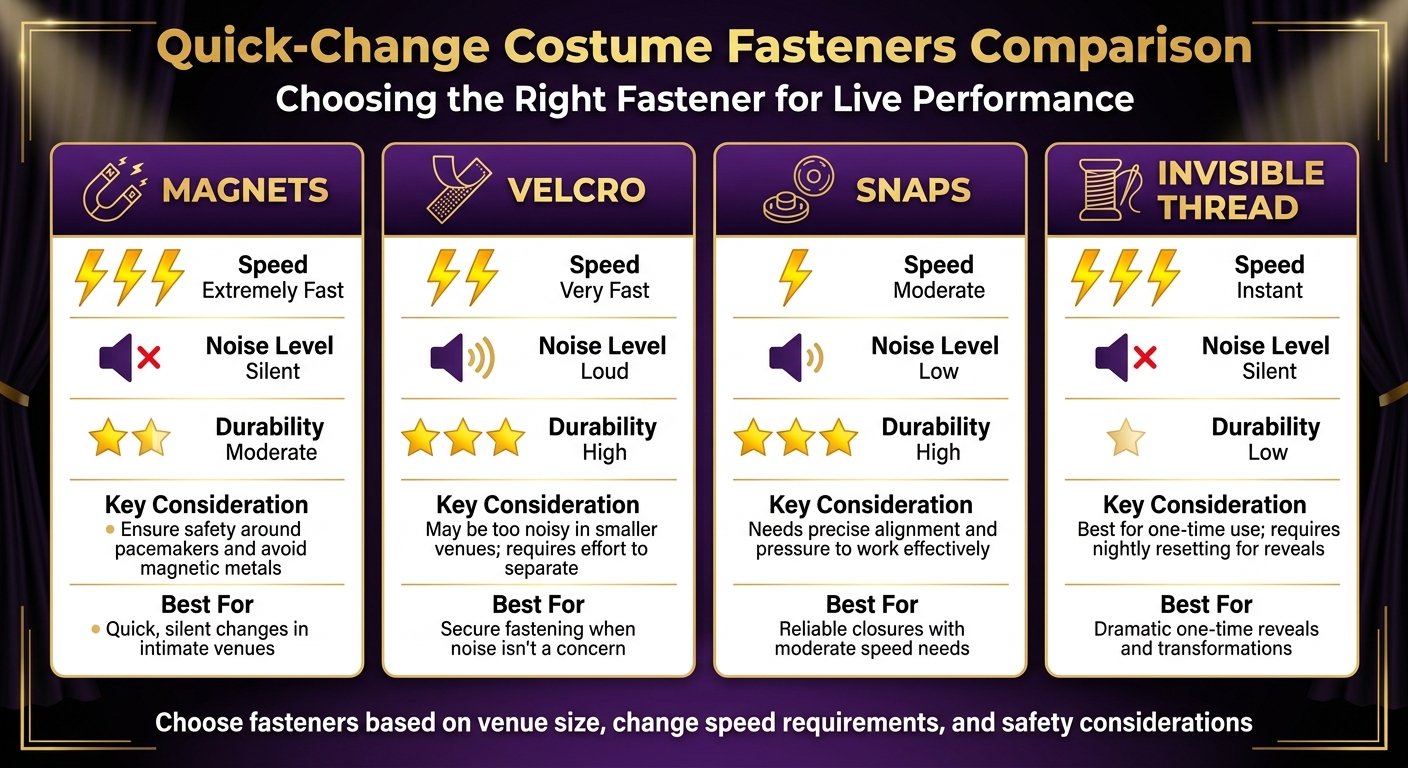
Quick-Change Costume Fastener Comparison Chart
Modular Costume Designs
When it comes to speeding up onstage costume changes, clever design is everything. Modular costumes are a game-changer, combining multiple garments - like a shirt, waistcoat, and bow tie - into a single piece. These designs often rely on quick-release fasteners such as magnets or snaps, making transitions almost seamless. Tear-away panels and pre-set invisible thread can also create dramatic reveals in seconds.
The type of fastener used can make or break the process. Magnet tape, for example, is highly effective because it aligns itself automatically and closes silently. Christianne Bakewell highlights this advantage:
"Velcro tends to make a sound and need more force behind it... I'd probably go with magnet tape, which is magnets sewn into bias or twill tape" [1].
However, safety is key. Magnets should be avoided if performers use pacemakers or if magnetic metals are present on stage.
Layering Techniques
Layering is another way to simplify costume changes. This involves pairing a bulky outer garment with a lightweight inner layer, allowing the performer to quickly remove the outer piece. Reversible costumes or slip-on overlays can also create entirely new looks in a snap. To make these techniques effective, the choice of fasteners becomes critical.
Comparing Fastener Types
Each fastener type comes with its own strengths and limitations. Here’s a quick breakdown:
| Fastener Type | Speed | Noise Level | Durability | Key Consideration |
|---|---|---|---|---|
| Magnets | Extremely Fast | Silent | Moderate | Ensure safety around pacemakers and avoid magnetic metals. |
| Velcro | Very Fast | Loud | High | May be too noisy in smaller venues; requires effort to separate. |
| Snaps | Moderate | Low | High | Needs precise alignment and pressure to work effectively. |
| Invisible Thread | Instant | Silent | Low | Best for one-time use; requires nightly resetting for reveals. |
Quick-Change Techniques and Best Practices
Building on the backstage preparation and design strategies mentioned earlier, this section focuses on the onstage quick-change methods that make these approaches work during live performances.
How to Do Fast Shirt Changes
One effective method for rapid shirt changes is false layering. This involves stitching multiple garment elements - like a tuxedo shirt, waistcoat, and bow tie - into a single piece. By doing this, performers can switch outfits in seconds without dealing with individual fasteners. A great example comes from the Broadway production of Legally Blonde: The Musical, where costumers used sewable magnet tape during the "Oh My God" number. This allowed for lightning-fast changes that wouldn’t have been possible with traditional buttons or zippers [1]. Dressers also play a crucial role, meeting performers offstage to hold garments open and guide their arms into sleeves for maximum efficiency.
Wig and Accessory Changes
Wig and accessory changes require precision and thoughtful placement to ensure smooth transitions. Magnetic wigs have proven to be a game-changer for quick swaps. For instance, during the 2014 production of Hedwig and the Angry Inch, wig technicians created magnetic wigs that allowed the lead performer to change hairpieces in mere seconds [1]. However, these attachments must undergo regular safety checks to ensure they’re secure and don’t interfere with other stage elements. Additionally, keeping wigs and accessories in consistent backstage locations each night helps the team develop muscle memory, making the process faster and more reliable.
Fast Shoe Changes
Shoe changes can be another tricky element of quick transitions, but they can be simplified with a few smart adjustments. Placing shoes just offstage in a designated spot ensures they’re easy to grab, while using slip-on styles or modified closures like Velcro straps eliminates the need for tying or buckling. Rehearsals are critical here - performers need to practice stepping into their shoes and balancing correctly to make these transitions as smooth as possible.
Conclusion and Key Takeaways
Quick-Change Essentials Recap
Pulling off seamless quick changes boils down to three main factors: careful preparation, smart costume design, and effective teamwork. Pre-rigging costumes simplifies transitions, while choosing the right fasteners - like magnets for quiet, speedy changes or Velcro for added security - makes the process smoother. And let's not forget the human element: the connection between the performer and dresser is just as important as the costume itself. Costume designer Christianne Bakewell puts it perfectly: "The calmer you are, the quicker you both will move" [1]. When every team member knows the mechanics - like where magnets align or how a breakaway is set up - the process becomes second nature. This combination of thoughtful design and practical execution ensures quick changes meet the demands of live performance.
With these strategies in mind, here are some final tips to keep your transitions running like clockwork.
Final Tips for Performers and Teams
- Practice makes perfect: Rehearse quick changes with the actual costumes and staging as often as possible. Familiarity with the rigging of each garment builds confidence and speed.
- Plan for the details: Small adjustments, like dusting baby powder inside tight-fitting costumes, can prevent snags and save precious seconds during transitions.
- Work as a team: Collaborate closely with your director and choreographer to incorporate quick changes into the flow of the performance.
- Check for compatibility: If magnets are part of your costume design, ensure they won’t interfere with pacemakers or nearby set pieces.
- Keep communication open: Wardrobe staff, performers, and technical crew should all know their roles and responsibilities to avoid confusion and delays.
With the right preparation and coordination, every transition can feel effortless, keeping the spotlight exactly where it belongs - on the performance.
FAQs
How do I pick the best fastener for my show?
Choosing the right fastener comes down to your costume's design and how quickly changes need to happen. Magnets are a top pick for their quick and secure hold, making attachment and removal a breeze. Options like sew-in magnets or magnetic clasps are widely used. For a more subtle solution, snap tape and hooks are excellent for easy and fast closures. Always think about safety, the costume's design, and the conditions on stage when deciding.
How many quick changes does a dresser handle?
A dresser typically handles numerous quick changes throughout a production, though the number can differ significantly. Some costumes might only need a single change, while others could involve multiple transitions, particularly in shows with intricate or detailed designs. The workload largely depends on the specific requirements of the production and the complexity of the costumes.
What’s the safest way to use magnets on stage?
To use magnets safely on stage, opt for durable, theater-specific magnets and secure them with sturdy, non-slip materials or by embedding them into fabric. Steer clear of less dependable options like Velcro for breakaway effects. Instead, go for snap fasteners, pull cords, or breakaway zippers. Always conduct thorough testing during rehearsals to confirm the magnets hold firmly during performances but release smoothly when required.
Current contact path
Need Weird Network WiFi, custom apparel, or scoped help?
Use the contact form; removed product, checkout, research, and newsletter funnels stay offline.