Loading…
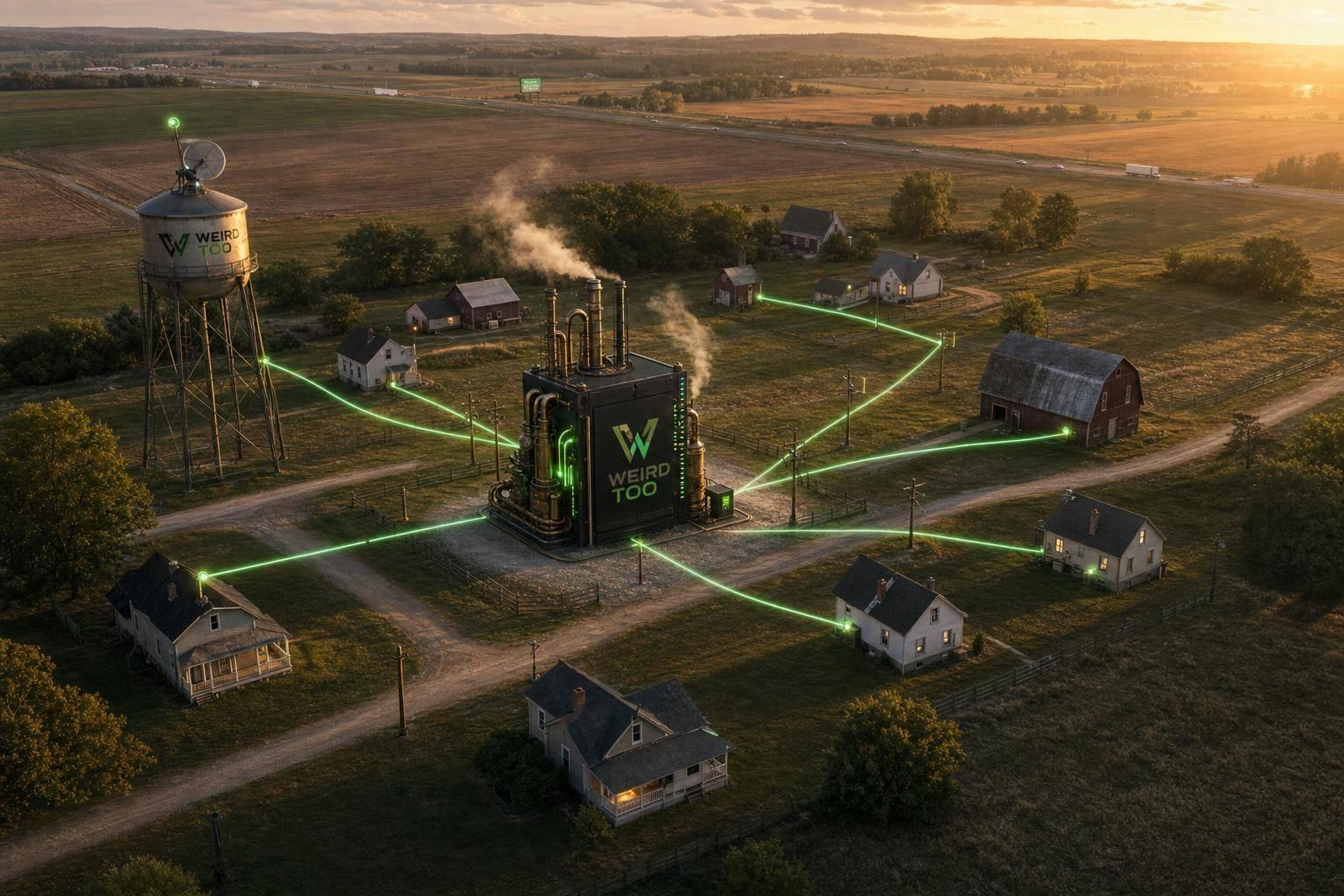
ISP Reseller Services Explained: A Guide for Startups in Rural Communities
By weirdtoo·August 1, 2026·8 min read
How rural startups can use ISP reseller programs to offer local broadband, evaluate partners, handle last-mile delivery, and scale.
ISP Reseller Services Explained: A Guide for Startups in Rural Communities
ISP Reseller Services Explained: A Guide for Startups in Rural Communities
Overview
A directory-style guide article explaining ISP reseller services for rural startup founders. It defines what ISP reselling is, why it matters for entrepreneurs in underserved areas, how to evaluate and negotiate reseller agreements, real-world use cases, common challenges, and a quick FAQ. Written in plain, actionable language tailored to rural community startups.
What is ISP Reseller Services?
ISP reseller services are programs offered by larger Internet Service Providers that allow smaller businesses or entrepreneurs to purchase internet bandwidth in bulk at wholesale rates and then resell it to end customers under their own brand or pricing. In simple terms, a rural startup becomes a middleman: it does not own the fiber, towers, or core network, but it manages the customer relationship, billing, support, and last-mile delivery while leveraging the upstream provider's infrastructure. For a startup in a rural community, this means you can launch an internet service business without the millions of dollars and years of licensing, fiber-laying, and regulatory work normally required to become a licensed ISP. Instead, you partner with an established ISP, rebrand the service as your own, and focus on serving local customers.
Why ISP Reseller Services Matters for Startups in Rural Communities
For startups in rural communities, ISP reseller services matter because they dramatically lower the barrier to entering the internet business. Building a licensed ISP from scratch requires spectrum licenses, tower infrastructure, fiber builds, and complex mobile core systems that rural entrepreneurs simply cannot afford. A reseller model lets a rural startup: - Launch quickly (often in weeks rather than years) because the upstream network already exists.
- Generate recurring monthly revenue from subscriptions, creating a stable income stream for a young business.
- Build a local brand that customers trust more than a distant national carrier, which is critical in communities where personal relationships drive business.
- Close the digital divide in their own community by bringing affordable broadband to farms, schools, and small businesses that national carriers have overlooked.
- Diversify revenue by bundling internet with VoIP, security, or cloud services under one local brand. In short, ISP reselling turns internet connectivity into a viable small business opportunity in places where it would otherwise be impossible.
Practical Examples
Real-world scenarios where ISP reseller services help rural startups: - Community WISP launch: A rural entrepreneur partners with a regional fiber provider to resell fixed-wireless broadband to farms and homes outside cable coverage, using existing satellite or fixed-wireless tech to reach customers national carriers ignore.
- Trailer park connectivity: A startup signs a wholesale agreement with a Tier-1 ISP, then installs Wi-Fi hotspots and managed routers throughout a local trailer park, billing residents monthly under its own brand.
- Event-hosting pop-up networks: A rural events startup resells mobile or fixed-wireless bandwidth to power ticketing, POS, and livestreaming at county fairs, rodeos, and outdoor weddings.
- Bundled small-business packages: A rural startup combines resold internet with VoIP phones, cloud backup, and basic cybersecurity, then sells the bundle to local shops, clinics, and home offices at a markup.
- White-label growth: A startup begins with 5 customers under a wholesale program with no minimum customer requirement, then scales to 500+ as word spreads, all while keeping its own brand on every bill and support email.
- Local marketing and SEO play: A rural reseller uses local SEO keywords like "internet provider near me" and partners with local businesses to become the de facto community ISP.
Tips for Evaluation or Improvement
Actionable tips for rural startup founders evaluating or negotiating ISP reseller services: - Research the market first: Identify gaps in service, pricing, and customer expectations in your target area before signing any agreement.
- Vet the upstream provider: Look for published uptime records, realistic SLAs (e.g., 99.9%+), and a track record of honoring credits, not just marketing claims. Ask for recent incident reports or status-page history.
- Negotiate wholesale pricing and terms: Confirm the per-line base cost, whether you can set your own retail prices, and whether there are minimum customer commitments. Prefer programs with no minimum so you can grow at your own pace.
- Check for hidden fees: Ask specifically about data caps, throttling, installation fees, and early-termination penalties, and get answers in writing.
- Confirm support and tooling: Ensure the partner provides NOC access, billing platforms, CRM, training, and 24/7 technical support for both you and your end customers.
- Plan for last-mile delivery: Even with a great upstream deal, you still need local infrastructure (fiber, wireless, or hybrid), ONT/routers, and 1–2 trained technicians for installation.
- Bundle value-added services: Increase margins by bundling internet with VoIP, security, or cloud backup rather than competing on price alone.
- Build a local marketing engine: Use local SEO, community partnerships, and social media to position your brand as the trusted local alternative to national carriers.
- Start small, scale gradually: Begin with a handful of customers, prove your support quality, then purchase additional bandwidth as demand grows.
- Review contracts carefully: Confirm contract length, termination fees, and whether the provider will "buy out" any existing agreement you may have.
Common Challenges
Common challenges rural startups face with ISP reseller services include: - Limited upstream options and capital barriers: Rural ISPs often cannot afford spectrum licenses, tower infrastructure, or complex mobile core systems, and wholesale contracts with Tier-1 carriers are expensive, rigid, and usually require scale that rural ISPs do not have.
- Regulatory compliance burden: Staying updated on local regulations regarding internet services can be complex and time-consuming for small resellers.
- Competition from major ISPs: Large ISPs have more resources, marketing budgets, and market presence, making it hard for small rural resellers to compete on visibility.
- Technical troubleshooting demands: Resellers must have (or hire) technical expertise to assist customers, since outages and service issues fall on them even though the underlying network belongs to someone else.
- Infrastructure gaps in remote areas: Even with reseller models, last-mile delivery in rural regions can be slow and costly, and national carriers often hesitate to invest in these markets.
- Customer support expectations: Rural customers expect responsive, human service, but small resellers may lack 24/7 staffing capacity.
- Pricing pressure: Balancing affordable rates for underserved customers against sustainable margins is a constant struggle.
Quick FAQ
Q: What exactly is an ISP reseller?
A: A business that buys internet bandwidth in bulk from a larger ISP and resells it to customers under its own brand, without owning the underlying network. Q: Do I need my own ISP license to resell?
A: Usually no. Most reseller and franchise programs let you operate under the upstream provider's existing license, saving you months of regulatory work. Q: How much capital do I need to start?
A: Many reseller programs can be launched with a small initial investment because the infrastructure already exists; some franchise models start in the low thousands of dollars, while others require more for equipment and local last-mile setup. Q: How fast can I launch?
A: Because the network is already built, many resellers can begin operations within weeks rather than the years a traditional ISP buildout requires. Q: Can I set my own prices?
A: Yes. Most reseller programs let you set your own retail pricing while paying a fixed wholesale cost per line, so your margin is the difference. Q: Are there data caps or throttling?
A: It depends on the upstream provider. Some wholesale programs advertise no data caps and no throttling, while others impose limits; always confirm in writing. Q: What support does the upstream ISP provide?
A: Look for partners that offer technical support for resellers, reliable network uptime, competitive wholesale pricing, billing tools, CRM, and NOC access. Q: What is the biggest risk?
A: Outages or policy changes at the upstream provider directly affect your customers and your brand, so choose your partner carefully and review the SLA.
Checklist for Implementation
- Define your goal: decide whether you want to become an ISP reseller (sell internet under your own brand) or simply buy internet from a reseller for your rural startup.
- Research the local market: identify gaps in coverage, pricing, and customer expectations in your rural area or trailer park community.
- Verify your business basics: obtain a state business license, register your business, and confirm any local permits required to operate.
- Choose a reseller model that fits your startup: White-Label (rebrand a wholesale ISP's service as your own), Direct Service Partner/Local Franchisee (manage last-mile delivery), or Affiliate Reseller (sell the provider's plans for a commission).
- Evaluate wholesale partners carefully: check uptime guarantees (aim for 99.99%+), transparent pricing, hidden speed caps, fair-use policies, data caps, and SLA terms before signing.
- Estimate startup costs: budget for ONTs/routers/CPE devices, branded marketing, training, and a small support retainer; reseller models typically require far less capital than building your own network.
- Set up billing and customer support: use plug-and-play NOC, CRM, and billing tools provided by your wholesale partner, and plan for 24/7 support via phone, chat, or email.
- Design tiered plans for your audience: offer a free or low-cost basic plan for essential tasks (job hunting, schoolwork) and premium plans for higher bandwidth needs.
- Build local partnerships: collaborate with trailer park owners, community centers, local businesses, and municipal networks for revenue-sharing, bulk agreements, and digital inclusion programs.
- Plan for rural-specific challenges: low population density, terrain, lack of backhaul, and limited infrastructure—negotiate access to vertical assets (towers, water tanks) and engage local government early.
- Bundle value-added services: combine internet with cybersecurity, VoIP, cloud storage, or managed Wi-Fi to differentiate from big ISPs.
- Launch a local marketing strategy: use local SEO, community Facebook groups, Nextdoor, and partnerships with rural real estate agents, RV/homesteading creators, and small business networks.
- Monitor and scale: track churn, customer satisfaction, and bandwidth usage; expand from 100 connections to nearby towns, gated communities, and businesses as demand grows.
- Review contracts and SLAs annually: confirm compensation clauses for downtime, clarify what is excluded (e.g., DDoS, maintenance), and renegotiate wholesale rates as you scale.
Related Resources
- FreshUpdate – ISP Resell Broadband Complete Guide Benefits and Business: https://freshupdate.co.uk/isp-resell-broadband-complete-guide-benefits/
- C Spire – 3rd Party Enablement Business Models for Rural Broadband (White Paper): https://www.cspire.com/resources/docs/rural/CRBC_BusinessModels_WhitePaper_202012.pdf
- Nomad Internet – How to Become an Internet Reseller: A Step-by-Step Guide for 2026: https://nomadinternet.com/blogs/countrynomad/how-to-become-an-internet-reseller-a-step-by-step-guide-for-2026
- Reisnet – Start Your Internet Business with a Reliable ISP Franchise Partner: https://reisnet.in/2025/08/start-your-internet-business-with-a-reliable-isp-franchise-partner/
- FinModelsLab – How Can Rural Internet Providers Develop a Business Plan for 2025: https://finmodelslab.com/blogs/write-business-plan/rural-internet-service-provider
- C Spire – Challenges and Opportunities to Sustainable Rural Connectivity (White Paper): https://www.cspire.com/content/dam/final/documents/whitepaper/CRBC_Connectivity_Challenges%20_Whitepaper_202103.pdf
- WEIRDTOO Company – How to Monetize a Micro-ISP in Trailer Parks: https://www.weirdtoocompany.com/post/how-to-monetize-a-micro-isp-in-trailer-parks
- Community Networks – Serving the Overlooked: Building Broadband for Manufactured Housing Communities (Podcast Episode 674): https://communitynetworks.org/content/serving-overlooked-building-broadband-manufactured-housing-communities-episode-674
- OneCloud Networks – Business Internet Buyer's Guide 2026: How to Size Your Bandwidth, Read the SLA, and Stop Overpaying: https://onecloudnetworks.com/business-internet-buyers-guide-bandwidth-sla-2026/
- The Daily Industry – How Community Enric Is Bringing the Internet to Rural America with Nomad Internet's Wholesale Program: https://www.thedailyindustry.com/how-community-enric-is-bringing-the-internet-to-rural-america-with-the-help-of-nomad-internets-wholesale-program/
Related ISP Concepts
- Bandwidth
- Latency
- Network Reliability / Uptime
- Data Caps and Fair-Use Policies
- Service Level Agreements (SLAs)
- White-Label ISP Models
- Wholesale Broadband Access
- Last-Mile Delivery
- Fixed Wireless and AirFiber
- Digital Divide and Digital Equity
Target Audience
- Rural Entrepreneurs
- Rural Startups
- Community Network Builders
- Affordable Internet Advocates
- Trailer Park / Manufactured Housing Community Operators
- Event Hosts in Rural Areas
- Local WISPs and Micro-ISP Founders
- Digital Nomads and Remote Workers in Rural Communities
Related Weird Too links
Keep following this lane
Current contact path
Need Weird Network WiFi, custom apparel, or scoped help?
Use the contact form; removed product, checkout, research, and newsletter funnels stay offline.