Loading…
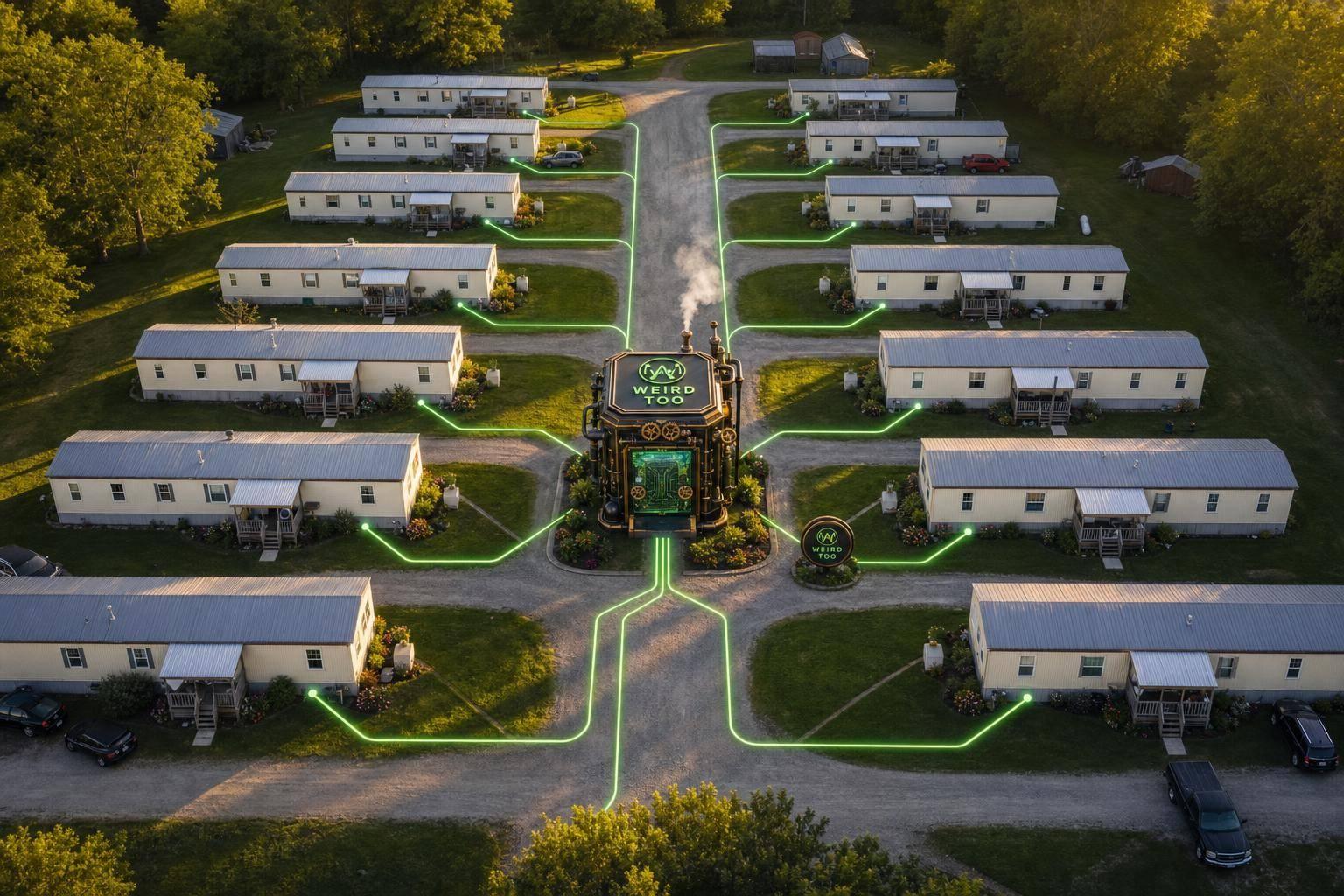
ISP Reseller Services Explained: A Guide for Small Business Owners in Trailer Parks
By weirdtoo·July 6, 2026·6 min read
Trailer park owners can convert wholesale broadband into predictable NOI while closing the local digital divide.
ISP Reseller Services Explained: A Guide for Small Business Owners in Trailer Parks
ISP Reseller Services (Bulk Internet / Micro-ISP) Explained: A Guide for Trailer Park and Manufactured Housing Community Owners
Overview
This guide details how small business owners of manufactured housing communities and trailer parks can leverage ISP reseller services, wholesale contracts, and bulk internet arrangements to build stable community broadband networks. It outlines the strategic shift from individual retail contracts to unified managed solutions, illustrating how park owners can boost their Net Operating Income (NOI), improve tenant retention, and bridge the digital divide in historically overlooked and rural locations.
What is ISP Reseller Services (Bulk Internet / Micro-ISP)?
ISP Reseller Services allow a small business owner—such as a trailer park or manufactured housing community owner—to buy high-speed internet bandwidth at wholesale rates, distribute it across their property, and resell connection plans directly to residents. Essentially, instead of residents buying individual retail plans from big-name telecom companies, the property owner acts as a localized, or "micro," Internet Service Provider (ISP), managing a single bulk connection that serves the entire park while charging residents a predictable utility fee.
Why ISP Reseller Services (Bulk Internet / Micro-ISP) Matters for Trailer Park and Manufactured Housing Community Owners
For trailer park owners and managers, reselling internet is a powerful double-win. First, it addresses digital equity: manufactured housing communities are historically overlooked by major telecom providers, leaving residents with slow, outdated, and overpriced connectivity. By using reseller services, park owners can deliver highly reliable, gigabit-speed fiber or high-speed wireless that residents otherwise could not access. Second, it establishes a highly predictable, recession-resistant stream of Net Operating Income (NOI). Property owners typically pay a wholesale rate per lot (e.g., $25/month) and bill the resident a highly competitive price (e.g., $55/month), pocketing the difference while increasing overall property valuation and long-term asset value.
Practical Examples
- The Bulk Fiber Upgrade: A 120-unit rural manufactured housing community partners with a specialized bulk provider to install an underground fiber network across the site. Instead of residents individually calling the local cable monopoly, paying $80/month, and waiting weeks for an installer, they get instant, 1 Gbps "Instant On" internet included in their utilities for $55/month. The park owner pays the managed service provider $25/month per lot, generating $3,600 per month ($43,200 annually) in new Net Operating Income (NOI).
- The Hybrid Wireless Hub-and-Spoke: A budget-friendly trailer park uses a hybrid network. The owner leases a Dedicated Internet Access (DIA) fiber line delivered to the main office. They set up weather-resistant, IP65-rated wireless access points on a central "hub-and-spoke" topology, delivering secure, wireless broadband to individual trailers without the need for costly trenching.
- Flexible Short-Term Passes: A park with a mix of permanent mobile homes and temporary RV spots uses a white-label portal. Long-term residents pay a monthly subscription, while short-term RV visitors can purchase 3-day or weekly passes on a custom login splash page, creating a secondary revenue stream.
Tips for Evaluation or Improvement
- Look for Zero-Upfront-Cost Models: Many premium managed service providers will design, trench, and install fiber networks across your entire property at no upfront cost in exchange for a multi-year exclusive bulk service contract.
- Demand a Strong Service Level Agreement (SLA): Make sure your wholesale or managed partner contractually guarantees a minimum bandwidth speed per unit (e.g., at least 50 Mbps or higher) even during peak evening hours when streaming video demands are highest.
- Adopt an MSP "One Throat to Choke" Approach: Rather than coordinating separately with a fiber provider, an installer, and a Wi-Fi hardware vendor, partner with an all-inclusive Managed Service Provider (MSP) that handles everything from the backhaul line to the individual routers and 24/7 tenant customer support.
- Evaluate Revenue Split Models: If you choose a revenue-share model instead of a flat bulk utility bill, carefully evaluate the split. Standard models range from an 85/15 split (where you do some DIY maintenance) to a fully managed 70/30 or 85/15 full-service split with monthly support fees.
- Ensure Multi-Language Support: For diverse trailer park communities, make sure your login pages and support channels are available in multiple languages to build trust and simplify onboarding.
Common Challenges
Establishing ISP reseller or bulk networks in trailer parks presents distinct hurdles:
- Contract Restrictions: Traditional residential or standard business contracts (such as basic coax plans from major cable providers) strictly prohibit the resale or redistribution of bandwidth, meaning parks that try this without dedicated reseller agreements run the risk of sudden disconnections.
- High Infrastructure Costs: Trenching fiber or setting up robust fixed-wireless equipment across an outdoor property can be capital-intensive, although many specialized providers offer zero-upfront-cost deployment models to offset this.
- Network Congestion: Peak hours (evenings and weekends) can lead to severe slowdowns if bandwidth allocation is not managed properly or if the backhaul is oversubscribed.
- Support and Maintenance: Resolving individual connectivity issues can overwhelm a park owner's staff, making it critical to partner with a managed service provider (MSP) to handle technical support.
- Outdated Infrastructure: Many manufactured housing communities suffer from aging coaxial copper cables, and updating them to modern fiber or enterprise-grade wireless is structurally challenging.
Quick FAQ
Q: Can I just share my existing business Comcast or Spectrum cable line with residents?
A: No. Standard residential and basic business-class cable contracts explicitly prohibit "redistribution" or reselling. Doing this can lead to sudden, unannounced service termination. You must use a wholesale agreement, bulk contract, or dedicated internet access (DIA) circuit specifically designated for resale or redistribution. Q: Who handles technical support if a resident's Wi-Fi drops?
A: In a professional Managed Service Provider (MSP) model, the provider handles 24/7 technical support and network monitoring directly with the residents. Your property management staff does not need to act as IT support. Q: Is participation mandatory for residents?
A: Yes, in the most successful bulk business models, participation is written into the lease or utility package for 100% of units. This ensures the revenue predictability that banks and lenders look for, while keeping individual costs for residents far lower than typical retail rates. Q: What is the typical contract length for these services?
A: Bulk and commercial wholesale agreements usually run between 5 to 10 years, ensuring long-term price stability and consistent property valuation gains.
Checklist for Implementation
- Audit Your Existing Internet Contract: Check your current agreement for any "redistribution" or "resale" restriction clauses to ensure you are not at risk of a service cutoff.
- Decide on Your Business Model: Choose between a Traditional Reseller model (buying wholesale bandwidth and managing the hardware/billing yourself), a White-Label ISP model, or an Affiliate Partner model (earning commissions by referring tenants).
- Select a Revenue-Sharing or Pricing Structure: If operating directly, determine whether you will use a full-service model (85/15 revenue split), equipment-and-support, or a DIY model to maximize profitability while maintaining network reliability.
- Establish Partnerships: Team up with dedicated MDU (Multi-Dwelling Unit) providers or wholesale networks that explicitly support community-wide redistribution.
- Create Tenant Plans: Design flexible tier pricing, trial periods, or short-term event upgrades tailored to the trailer park community's financial preferences.
- Set Up localized Technical Support: Outline first-line support channels, payment collection portals, and technical escalation paths.
Related Resources
- MDU Datacom Bulk Solutions Guide
- ISP Wholesale Networks Reseller Program Portal
- Nomad Internet Partner Program Overview
Related ISP Concepts
- Wholesale Bandwidth
- Redistribution Clauses
- White-Label ISP
- Bulk Internet Agreements
- Last-Mile Infrastructure
Target Audience
- Trailer Park Owners
- Mobile Home Community Operators
- RV Park Managers
- Micro-ISP Entrepreneurs
Related Weird Too links
Keep following this lane
Current contact path
Need Weird Network WiFi, custom apparel, or scoped help?
Use the contact form; removed product, checkout, research, and newsletter funnels stay offline.