Loading…
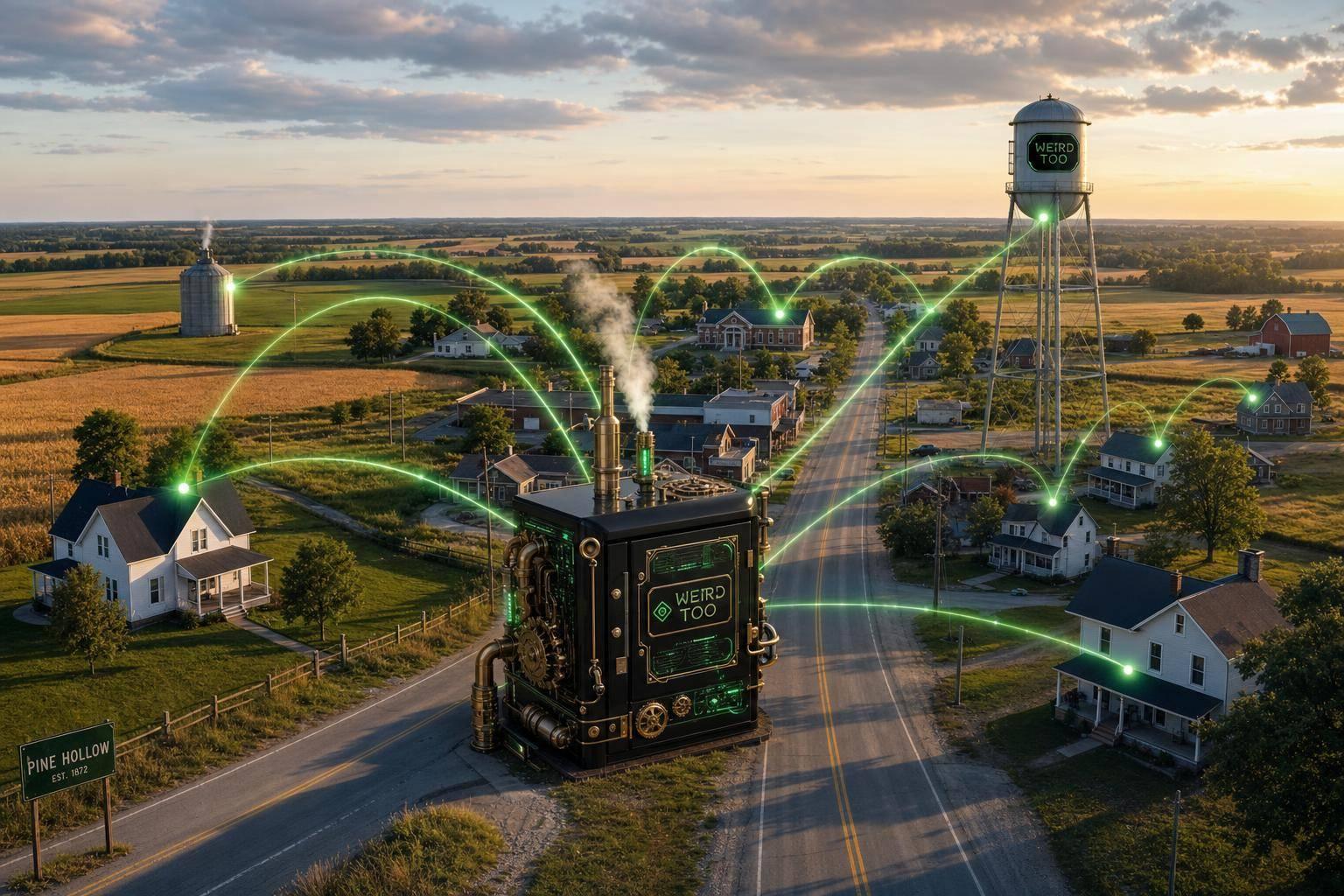
ISP Reseller Services Explained: A Guide for Rural Entrepreneurs
By weirdtoo·July 11, 2026·6 min read
Rural entrepreneurs can resell wholesale bandwidth and white-label connectivity to bridge last-mile gaps and earn recurring revenue.
ISP Reseller Services Explained: A Guide for Rural Entrepreneurs
ISP Reseller Services (also referred to as Private Label ISP, White-Label ISP, or Virtual ISP) Explained: A Guide for Rural Entrepreneurs and Local Community Network Builders
Overview
An in-depth guide explaining ISP Reseller Services specifically for rural entrepreneurs, community builders, and local networks. The guide details how purchasing wholesale network access enables small businesses to bridge the last-mile digital divide in underserved communities while building a recurring revenue stream, without the cost of laying physical infrastructure.
What is ISP Reseller Services (also referred to as Private Label ISP, White-Label ISP, or Virtual ISP)?
ISP (Internet Service Provider) Reseller Services allow entrepreneurs and small businesses to purchase internet bandwidth, mobile data, and network services at wholesale prices from major carriers or infrastructure networks, and then repackage and sell those services to end-users at retail rates. Instead of building expensive towers, fiber optic cables, or data centers from scratch, an ISP reseller leverages existing infrastructure. Under this model, resellers typically manage their own retail pricing, local billing, brand identity (often called white-labeling or private-labeling), and front-line customer relationships, while the wholesale network provider handles the underlying physical technology, network routing, and high-level technical backbone.
Why ISP Reseller Services (also referred to as Private Label ISP, White-Label ISP, or Virtual ISP) Matters for Rural Entrepreneurs and Local Community Network Builders
For rural entrepreneurs, ISP reseller services are a powerful, double-edged tool for local economic empowerment. First, rural communities are frequently bypassed by major telecom companies because laying fiber-optic cables in low-density or hard-to-reach geographic areas is not considered financially viable. An entrepreneurial resident can step in as a local reseller, utilizing wholesale satellite, fixed-wireless, or LTE networks to instantly bridge this digital divide. Second, it establishes a reliable, recurring monthly revenue stream. Because local customers pay their bills directly to the entrepreneur, the business captures upfront profits and monthly subscriber fees. This model keeps capital within the local economy, builds digital equity, and provides the modern infrastructure that neighboring local businesses (such as rural farms, remote startups, and local event hosts) need to survive and scale.
Practical Examples
Consider these real-world rural scenarios: 1. The Trailer Park Network: A local entrepreneur partners with a wholesale provider to buy high-capacity fixed-wireless bandwidth. They install a point-to-point wireless bridge and a series of rugged outdoor routers throughout a local trailer park. By setting up a captive portal, they offer cheap, high-speed, voucher-based Wi-Fi to residents, establishing a profitable business while providing internet access to families who couldn't otherwise get traditional cable hookups. 2. The Rural WISP Startup: An IT professional in a small agricultural valley realizes that local farms and houses cannot get fiber. They sign a wholesale contract with a middle-mile fiber provider (like NoaNet or a regional utility) and install a wireless transmitter on a local hill. By mounting subscriber antennas (CPEs) on rooftops, they sell high-speed fixed-wireless internet under their own local brand. 3. The Event-Based Hotspot: An entrepreneur uses a wholesale mobile virtual network (MVNO) reseller kit to secure high-speed, pooled 5G/LTE data. They set up heavy-duty portable cellular hot-spots at rural county fairs, music festivals, and horse shows, charging vendors and guests for high-bandwidth daily access in areas where standard mobile signal is completely overloaded.
Tips for Evaluation or Improvement
- Retain Customer Ownership: When selecting a wholesale partner, ensure you operate as a "Private Label" or "White-Label" reseller. This ensures that you own the customer database. If you ever become dissatisfied with your wholesaler, you can migrate your customers to another wholesale provider without losing your business. 2. Negotiate Flexible Contracts: Look for wholesale partners that offer a low cost of entry, no strict monthly subscriber quotas, and no long-term contracts. This keeps financial risk low while you build your rural customer base. 3. Verify Technical Support SLAs: Your reseller brand is only as reliable as your upstream wholesaler. Ask detailed questions about their 24/7 technical support, their average resolution times for network issues, and whether they provide automated billing integration (like WHMCS or custom APIs). 4. Map Your Line-of-Sight: If you are setting up fixed-wireless services, conduct thorough topographical surveys before committing to hardware. Ensure your distribution towers have clear line-of-sight to your targeted subscriber homes to avoid service-degrading obstacles.
Common Challenges
Rural ISP resellers face distinct, formidable challenges. Infrastructure limits are paramount; they often rely on fixed wireless bridges, satellite feeds (like Starlink), or last-mile copper, which are vulnerable to severe weather, physical obstacles like hills or dense tree canopies, and network congestion. Cost barriers are another significant obstacle. Although wholesale agreements are less expensive than laying proprietary fiber, upstream bandwidth contracts, MVNO platform fees, and physical customer premises equipment (CPE) still require upfront capital. Furthermore, technical hurdles are common: because resellers control billing and local customer service, they are on the front lines when upstream carrier outages happen. Managing customer expectations when you do not directly control the main backhaul pipe requires constant communication and robust service-level safeguards. Finally, securing regulatory business licenses and ensuring compliance with local telecommunications authorities can be complex for small startups.
Quick FAQ
Q: What is the difference between an ISP reseller and an affiliate program?
A: In an affiliate program, you refer customers to a major carrier and earn a one-time commission, but the carrier owns the customer. As an ISP reseller, you buy wholesale, set your own retail prices, bill the customer directly under your own brand, and keep 100% of the ongoing profits. Q: Do I need a technical engineering degree to start?
A: No. Many wholesale enablers provide fully managed cloud portals (BSS/OSS), automated billing software, and pre-configured hardware. However, having basic networking knowledge or partnering with a local technician is highly recommended for physical subscriber installations. Q: What physical equipment do I need to buy?
A: It depends on your setup, but typically you will need subscriber-side routers (Customer Premises Equipment or CPE), wireless distribution bridges, outdoor access points, and basic tools like fiber splicers or signal testing alignment tools. Q: Can I resell satellite internet like Starlink?
A: Yes, there are official reseller and integration channels that allow businesses to purchase high-speed satellite terminals and resell managed connectivity solutions, which is especially popular for remote communities. Q: How long does it take to launch?
A: Using virtual or private-label cellular/mobile data platforms, you can launch a branded MVNO or broadband reseller service in as little as 48 hours. Building out fixed-wireless towers or regional fiber handoffs typically takes several weeks to months.
Checklist for Implementation
- Assess Local Market Demand: Survey local residents, trailer park tenants, or regional small businesses to identify gaps in existing ISP speed, reliability, and support.
- Choose a Reseller Model: Decide between a white-label program (maintaining complete brand ownership), a franchise model, or a co-branded partnership with an established backend network operator.
- Select a Wholesale Partner: Research wholesale broadband providers (e.g., fiber, fixed-wireless, or LEO satellite providers like Starlink Business/Enterprise paired with Guest Internet Systems) that offer reliable backhaul in your region.
- Evaluate Contractual Terms and SLA: Review the wholesale agreement to verify service level agreements (SLAs), profit margins (usually 15-30% margins or tiered data rates), data caps, and support escalations.
- Deploy Management Hardware/Software: Install local gateway controllers (such as Guest Internet Systems or cloud-managed routers) to manage bandwidth distribution, set up walled gardens, and issue customer vouchers or credit card portals.
- Set Up Billing and Customer Support: Integrate a billing engine (e.g., Stripe, PayPal, or specialized ISP billing software) and establish a first-tier support line to handle basic customer inquiries, billing questions, and on-the-ground troubleshooting.
- Launch Localized Marketing: Leverage your community presence to promote high-speed, reliable connectivity tailored specifically to the unique needs of your rural neighborhood or trailer park.
Related Resources
- C Spire Rural Broadband Consortium Business Model Whitepaper
- DojoNetworks Managed WiFi Reseller Guide
- ProSat Networks Starlink and GIS Integration Systems
- FCC National Broadband Map
Related ISP Concepts
- Bandwidth Reselling
- White-Label ISP
- Fixed Wireless Access (FWA)
- Symmetric Bandwidth
- First-Mile vs Last-Mile Connectivity
- Guest Internet Gateways
- Service Level Agreements (SLAs)
- Over-Subscription Ratio
Target Audience
- Rural Entrepreneurs
- Trailer Park and RV Park Owners
- Community Network Builders
- Affordable Internet Advocates
- Local Fixed Wireless (WISP) Operators
- Small-Town Hospitality Hosts
Related Weird Too links
Keep following this lane
Current contact path
Need Weird Network WiFi, custom apparel, or scoped help?
Use the contact form; removed product, checkout, research, and newsletter funnels stay offline.