Loading…
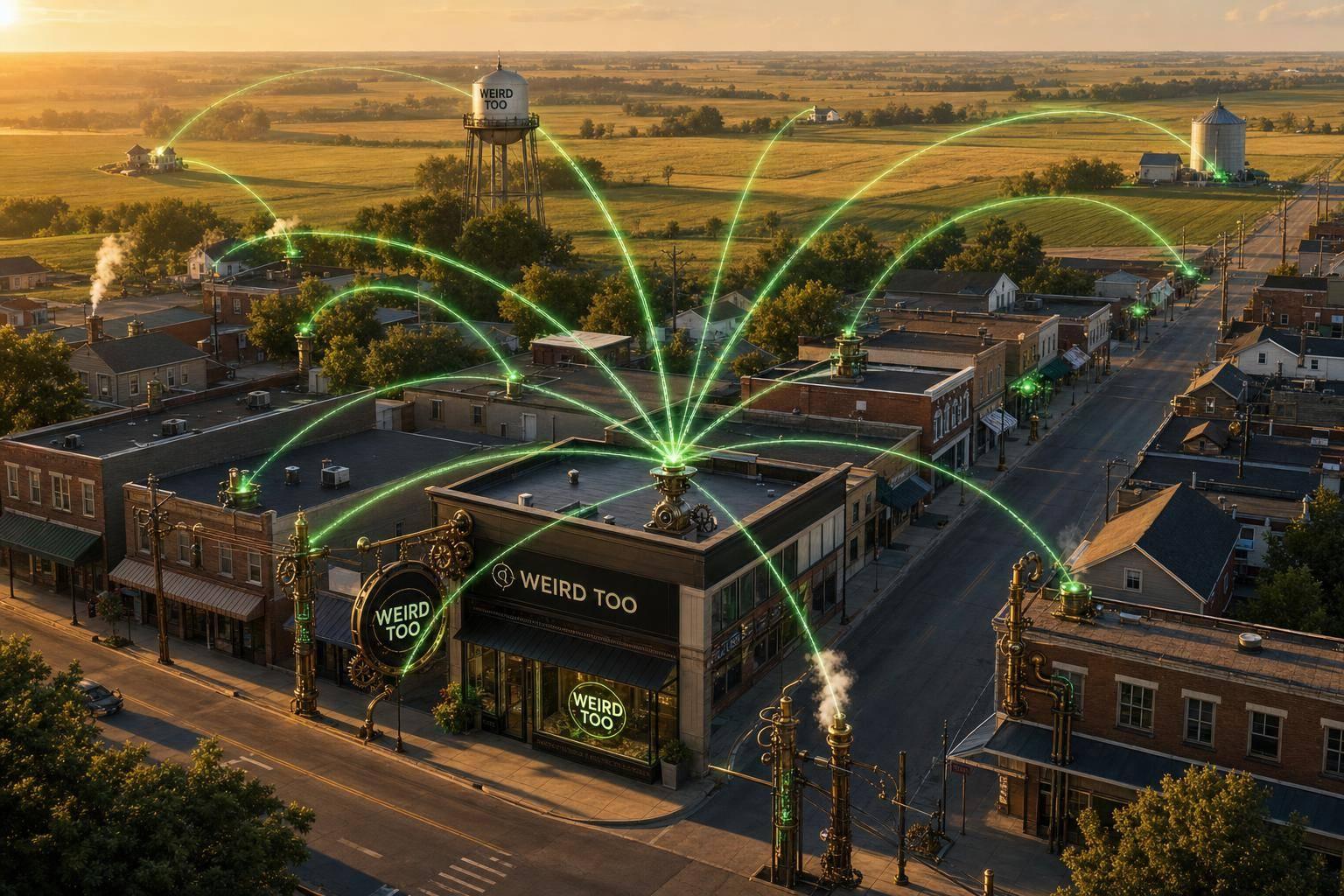
ISP Reseller Services Explained: A Guide for Local Merchants
By weirdtoo·July 25, 2026·7 min read
Local merchants can white‑label wholesale internet to earn recurring revenue and close rural broadband gaps.
ISP Reseller Services Explained: A Guide for Local Merchants
ISP Reseller Services Explained: A Guide for Local Merchants
Overview
A practical guide explaining how local merchants—such as rural shop owners, computer stores, and community-based entrepreneurs—can partner with wholesale ISPs to resell internet service under their own brand, generate recurring revenue, and bring affordable connectivity to underserved customers.
What is ISP Reseller Services?
ISP reseller services are programs that let a local merchant buy internet bandwidth in bulk from a larger, licensed Internet Service Provider (the "wholesale" or "upstream" provider) and then resell that connectivity to end customers under the merchant's own brand. The reseller handles sales, billing, branding, and first-line customer support, while the upstream provider maintains the actual network infrastructure, fiber lines, towers, and core routing. Most reseller agreements are "white-label," meaning the merchant can use their own logo, pricing, and packaging while the underlying service is delivered by someone else. In short: you become the local face of the internet without having to build towers, lay fiber, or hold a telecom license.
Why ISP Reseller Services Matters for Local Merchants
For local merchants—especially those in rural towns, trailer parks, small main-street shops, and underserved communities—ISP reseller services matter because they turn an existing storefront into a recurring-revenue digital utility. Instead of competing on thin retail margins, a merchant can earn the spread between the wholesale price they pay and the retail price they charge, every month, for the life of each subscriber. Reselling also lets merchants solve a real local problem: in places where big ISPs won't build or charge too much, a trusted local shop owner can deliver affordable, personalized internet plans that big carriers ignore. It deepens customer loyalty, brings foot traffic into the store, and positions the merchant as a community technology hub rather than just a retailer.
Practical Examples
- A rural hardware store partners with a wholesale fiber provider and sells monthly home internet plans to neighbors who currently have no broadband option, earning the wholesale-to-retail spread on every subscriber.
- A computer repair shop in a small town adds "internet service" to its menu, white-labeling a wireless ISP's signal and bundling it with device setup, Wi-Fi router sales, and on-site tech support.
- A trailer-park owner resells bulk Wi-Fi to residents under a park-branded plan, recovering the cost of the park-wide network while giving tenants a single, simple bill.
- A general store near a festival ground or event venue sells day-pass, weekend, and event Wi-Fi vouchers to visitors, turning a seasonal traffic spike into predictable revenue.
- A local merchant in an underserved community uses a Starlink-based reseller program to sell time-based or data-based Wi-Fi vouchers (e.g., hourly, daily, weekly) to neighbors, travelers, and small businesses that lack fiber access.
Tips for Evaluation or Improvement
- Compare wholesale-to-retail margins, not just headline prices: ask the upstream provider for the exact per-megabit or per-subscriber wholesale rate and model your retail price against it.
- Read the white-label agreement carefully—clarify branding rights, territory, exclusivity, support escalation (L1/L2/L3), termination and customer-handoff terms, and what happens to subscribers if you exit the deal.
- Confirm what tools the upstream provider supplies: automated billing, customer dashboards, bandwidth monitoring, payment processing, and a branded reseller portal can save you from building your own back office.
- Negotiate SLAs (uptime, install windows, repair times) and put them in writing; "best effort" support is a common pain point for small resellers.
- Start with a small, well-defined territory or customer segment (one neighborhood, one trailer park, one event venue) so you can learn operations before scaling.
- Track your own KPIs—subscriber count, churn, average revenue per user, support tickets per customer—and renegotiate terms once you have data.
- Ask about minimum monthly spend commitments (some programs require $1,000+/month) and whether you can co-brand or fully white-label the service.
Common Challenges
- Limited upstream options: in many rural areas there is only one wholesale provider, so you have little leverage on price, SLAs, or contract terms.
- Thin margins: if the wholesale rate is close to what big ISPs already charge retail, your spread disappears; you must either add value (bundles, support) or focus on customers the big ISPs won't serve.
- Regulatory and licensing complexity: depending on jurisdiction, resellers may need a license exemption or Value-Added Service (VAS) registration, and rules differ by country and state.
- Customer support burden: as the "first point of contact," the merchant absorbs billing questions, install scheduling, and outage complaints—even when the fault is on the upstream network.
- Capital and cash flow: subscriber equipment (modems, routers, CPE), deposits, and minimum monthly commitments can strain a small merchant's cash flow before revenue ramps up.
- Reliability and backhaul limits: rural resellers inherit the upstream provider's weaknesses—congested backhaul, weather-affected wireless links, or long fiber-repair windows.
- Brand risk: if the upstream provider has a major outage or billing failure, customers blame the local merchant they pay each month.
Quick FAQ
Q: Do I need my own towers or fiber to be an ISP reseller?
A: No. The upstream provider owns and operates the network. You resell the service under your own brand and focus on sales, billing, and local support. Q: How much money can a local merchant make reselling internet?
A: It depends on subscriber count and the wholesale-to-retail spread. Many reseller programs let you set your own retail price, so your margin is the difference between what you pay wholesale and what you charge customers, recurring every month. Q: Is a license required to resell ISP service?
A: In many jurisdictions, resellers operating under a licensed upstream provider only need a license exemption or simple registration (for example, a Form M / Class Licence exemption, or a Value-Added Service registration). Rules vary by country and state—check your local regulator. Q: What is "white-label" in ISP reselling?
A: White-label means the upstream service is unbranded, so you can put your own logo, pricing, and packaging on it and present it as your own product. Q: What happens to my customers if I stop being a reseller?
A: That depends on your contract. A good agreement includes a transition plan: customer communications, data export, and a defined handoff so subscribers aren't left without service. Q: What should I look for in a reseller agreement?
A: Clear wholesale pricing, SLAs, branding and territory rights, support escalation paths, termination and transition terms, and whether you can co-brand or fully white-label. Q: Can a small shop with no tech background do this?
A: Yes. Most reseller programs include onboarding, training, and a partner manager. You mainly need customer-service skills, a small workspace, and 1–2 people who can handle installs and basic networking.
Checklist for Implementation
- Define your role. Decide whether you want to be a customer of an ISP reseller (buying internet for your shop under a local brand) or to become a reseller yourself (selling internet as a side or main business). Each path has different licensing, capital, and skill requirements.
- Map your service area. Identify the wholesale providers whose fiber, fixed-wireless, or cable plant actually pass your storefront. A reseller can only sell where the upstream network reaches.
- Compare reseller vs. direct ISP pricing. Request quotes from at least three providers — including any local reseller — and compare monthly price, installation fees, contract length, and early-termination fees.
- Check the white-label and branding terms. If you plan to resell, confirm you can use your own brand, set your own retail prices, and keep 100% ownership of the customer relationship and billing.
- Review the SLA and uptime guarantee. Look for a written 99.9% (or better) uptime commitment, a defined mean-time-to-restore (MTTR), and service credits if the upstream provider fails.
- Negotiate contract terms before signing. Push for a 1-year term instead of 3 years, a 90–120 day auto-renewal notice, and a capped or declining early-termination fee.
- Plan for support hand-offs. Clarify who fields customer calls — you, the reseller, or the wholesale provider — and what hours are covered (24/7 vs. business hours).
- Budget for bandwidth growth. Make sure the reseller agreement lets you add capacity quickly as your POS, Wi-Fi, or event-streaming needs grow.
- Document security and compliance. Confirm the reseller handles DDoS protection, firewall options, and PCI-friendly segmentation if you process card payments.
- Set a renegotiation reminder. Mark your calendar 6–9 months before contract end so you can shop competitors and renegotiate from a position of strength.
Related Resources
- FCC Broadband Map — https://broadbandmap.fcc.gov (check which ISPs and resellers serve your address)
- ISP Wholesale Networks Reseller Program — https://ispwn.com/reseller-program
- D-Net Service Reseller Overview — https://dnetisp.com/reseller/index.html
- NetComTV Reseller & Dealer Program — https://net-com.tv/reseller.html
- Community Networks Podcast (rural broadband case studies) — https://communitynetworks.org
- Leonidas "Negotiate Your Business Internet Contract" guide — https://leonidastek.com/blog/negotiate-business-internet-contract
- ITG Group "How to Negotiate a Telecom Contract" — https://itggroup.com/blog/how-to-negotiate-telecom-contract.html
Related ISP Concepts
- Bandwidth
- Latency
- Network Reliability / Uptime SLA
- Data Caps
- White-Label Services
- Wholesale Broadband
- Fixed Wireless Access
- Open-Access Networks
- Service-Level Agreements (SLAs)
- Early Termination Fees (ETFs)
Target Audience
- Local Merchants (storefront retailers, cafés, restaurants)
- Rural Entrepreneurs
- Trailer-Park and Mobile-Home Community Operators
- Event Hosts and Pop-Up Vendors
- Community Network Builders
- Affordable Internet Advocates
- Small-Business Owners Considering Becoming a Reseller
- Co-Working Space and Small-Mall Operators
Related Weird Too links
Keep following this lane
Current contact path
Need Weird Network WiFi, custom apparel, or scoped help?
Use the contact form; removed product, checkout, research, and newsletter funnels stay offline.