Loading…
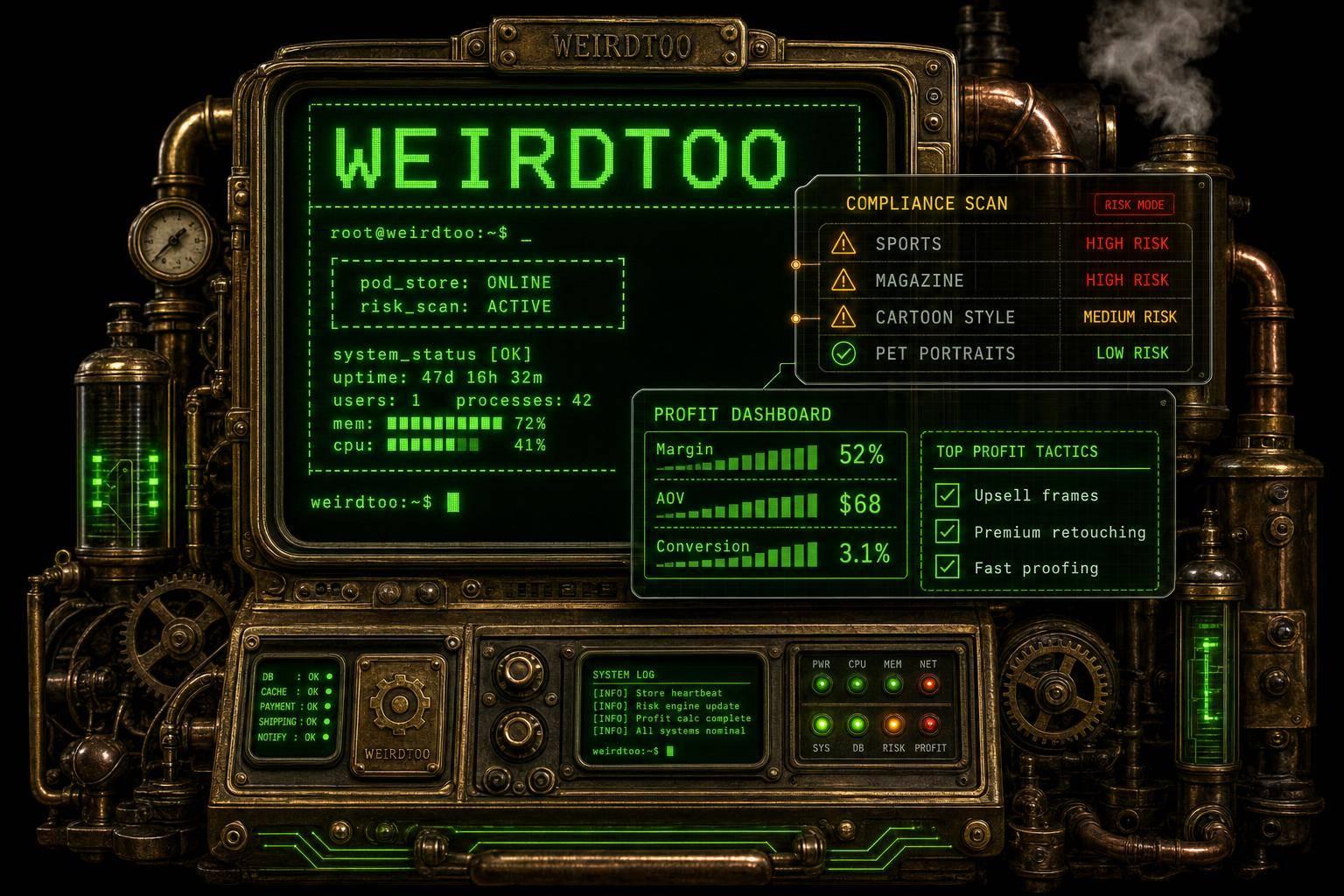
How to Run a Profitable, Risk‑Aware Print‑On‑Demand Store
By weirdtoo·August 10, 2026·10 min read
Learn 3 print-on-demand tactics top pet portrait stores use, plus trademark and copyright risks behind sports, magazine, and cartoon-style designs.
How to Run a Profitable, Risk‑Aware Print‑On‑Demand Store
A high-performing print-on-demand store can teach you a lot, even if you would never copy it line for line.
In the video, the creator breaks down a pet portrait store that appears to have reached massive scale, with tens of thousands of reviews and hundreds of thousands of customers. The real lesson is not "copy this store." It’s that creative product framing, timely themes, and familiar visual references can drive serious sales - but they can also push a small operator into legal trouble if used carelessly.
For anyone running a lean brand, especially with no room for wasted effort, this case is useful for a simple reason: it shows how profitable ideas often live right next to risky ones.
Key Takeaways
- Creative positioning sells faster than generic products. A pet portrait becomes more compelling when tied to a theme people already recognize.
- Seasonal and event-driven offers can create urgency. The World Cup example shows how current events can shape demand.
- Familiar formats lower the mental work for buyers. Magazine-style covers and character-inspired art are instantly understandable.
- Trademark and copyright risk rises fast when logos, characters, or brand lookalikes enter the design.
- "Inspired by" is not the same as safe. If a design clearly points to a known brand, character, or publication, caution is warranted.
- Small sellers should build around the strategy, not the borrowed IP. Use the format, not the trademark.
- Profit tracking matters as much as sales volume. A product that sells well can still be weak if fulfillment, shipping, and ad costs eat the margin.
- Safer stores usually win longer-term. A design that avoids takedowns, chargebacks, and platform issues is worth more than a short burst of risky sales.
sbb-itb-342b8b2
The Bigger Lesson: Why This Store Works
The store featured in the video sells personalized pet portraits, mostly as wall art. On the surface, that is not a new business model. Plenty of sellers offer pet art.
What seems to separate this store is the way it packages the same core product into high-interest concepts. Instead of offering a plain "custom pet portrait", it turns pets into:
- sports icons
- magazine cover stars
- animated character lookalikes
That matters because most print-on-demand stores fail at the offer, not the product. They sell an object - a poster, shirt, or mug - without giving the buyer a stronger reason to care.
This store appears to understand that people don’t buy wall art just because it exists. They buy it because it reflects identity, humor, fandom, or a moment that feels worth sharing.
Why Familiarity Converts
One of the strongest ideas in the video is that this store uses things that are already familiar to customers.
That is smart from a conversion standpoint. Buyers make decisions faster when they immediately "get it." A pet photo on a fake fashion magazine cover requires almost no explanation. The same goes for a dog portrait styled like a famous animated hero.
This works because familiar structures reduce friction:
- the buyer understands the joke
- the buyer can picture the final product quickly
- the buyer sees gift potential right away
- the buyer feels the product is more unique than a plain portrait
For a small brand, this is an important insight. You do not need a revolutionary product. You need a clear, emotionally easy-to-buy concept.
But that brings us to the real issue raised in the video: just because a concept converts does not mean it is safe to sell.
Tactic #1: Event-Based Designs Can Print Money - and Create IP Problems
The first example in the video is a pet portrait styled around international soccer jerseys during the World Cup.
From a marketing angle, this is sharp. It ties a personalized product to a live global event. That gives the offer built-in relevance and urgency. Someone excited about the tournament may be far more likely to buy a themed portrait now than they would six months later.
This is a strong lesson for any small seller: pay attention to what people are already talking about.
Examples of safer event-driven themes might include:
- summer road trip pets
- back-to-school family portraits
- holiday party posters
- local sports watch-party art without official branding
- graduation-themed custom prints
The problem in the video’s example is not the event itself. It’s the use of elements that appear connected to protected brands or organizations, such as:
- sportswear logos
- team crests
- official jersey styling
That is where many beginners get trapped. They think, "I’m not selling the jersey, I’m selling art." But if the art prominently includes protected logos or recognizable official assets, that may still create risk.
The video does not establish whether the store had permission or licensing. That was not specified in the video. But it correctly highlights the gray area small sellers should take seriously.
Practical takeaway for small operators
Use the theme of the event, not the protected assets.
Safer approach:
- "Turn your dog into a championship striker"
- country-color palettes
- generic stadium backdrops
- custom jersey-style text without official logos
Riskier approach:
- official team marks
- major brand logos
- exact league or federation branding
That distinction can be the difference between a durable product line and a takedown notice.
Tactic #2: Magazine Cover Concepts Are Strong Because the Format Does the Selling
The second product style in the video uses magazine-inspired covers for pet portraits. The examples appear to resemble famous fashion and culture publications while changing the names into pet-themed versions.
This is a good case study in why some offers feel immediately premium.
A fake magazine cover works because it combines several sales advantages at once:
- it looks framed and display-worthy
- it feels personalized
- it gives the pet "celebrity" status
- it turns a simple photo into a conversation piece
It also borrows authority from a format people associate with style, prestige, and editorial design.
That’s the smart part.
The dangerous part is obvious: if the layout, naming convention, typography, or overall trade dress is too close to a real publication, the seller may be leaning on someone else’s brand recognition more than their own.
Again, the video does not claim a legal conclusion, and neither should we. But for a small business owner, this is the right question to ask:
Is my product using a general concept, or is it imitating a specific brand so closely that the brand itself is doing the heavy lifting?
That question applies well beyond print-on-demand. If you run a café, clothing label, or event brand, the same rule holds. Inspiration is fine. Substitution is where trouble starts.
How to use this idea safely
If the real win is "pet as celebrity cover star", then build your own version:
- create an original magazine name
- design your own masthead style
- use your own layout system
- write custom, funny cover lines
- build a recognizable in-house visual identity
That way, you keep the conversion logic without depending on someone else’s look.
Tactic #3: Character-Inspired Art Is Effective Because It Sells Recognition
The third category in the video is the most obviously risky: pet portraits that appear heavily inspired by famous entertainment characters and Disney-adjacent visuals.
From a sales perspective, this is easy to understand. Character familiarity is powerful because it combines:
- nostalgia
- instant recognition
- gift appeal
- emotional attachment
- social shareability
If a customer sees their dog reimagined as a character they loved as a kid, the appeal is immediate.
But for a small seller, this is usually where the line gets hardest to defend. When a design clearly calls a known character to mind - through costume, name styling, background elements, fonts, or iconic imagery - the seller may be stepping into trademark, copyright, or trade dress issues.
The video repeatedly urges caution here, and that is the right emphasis.
A practical rule of thumb
If a buyer would say, "Oh, that’s basically Buzz Lightyear", or "That’s clearly Disney-style", then you should assume there is risk, even if some details have been changed.
A few altered features do not automatically make a design safe.
For a lean operator, this matters even more than it does for a big store. Larger shops may absorb disputes, redesigns, or platform interruptions more easily. A one-person business often cannot.
The Most Useful Strategic Idea in the Video: Build Products Around Recognition Triggers
The video’s best business insight is not about pet portraits specifically. It’s about recognition triggers.
Each successful product type shown uses one or more of these triggers:
- a live event people care about
- a familiar publishing format
- a recognizable pop-culture reference
In plain language: the store is not asking customers to imagine why the product matters. It hands them a reason upfront.
That is a useful framework for any small seller.
A better question than "What should I sell?"
Ask:
What instantly recognizable frame can I use to make my offer easier to understand and more fun to buy - without borrowing protected IP?
That question leads to better product development.
For example, instead of copying a famous character, you could create original categories like:
- space ranger pet
- western hero pet
- royal portrait pet
- vintage movie poster pet
- detective dossier pet
These still tap into familiar emotional territory, but they give you room to create an original brand.
Profit Matters More Than Vanity Metrics
The video mentions product pricing and raises the point that tracking profit is essential. That deserves extra emphasis.
A product priced at $39 or $79 can look attractive, but print-on-demand businesses often have hidden margin pressure from:
- fulfillment costs
- frame upgrades
- shipping
- replacement orders
- ad spend
- transaction fees
- discounting
A seller can have strong top-line sales and still run a weak business if the numbers are not monitored tightly.
For the audience this article is written for, that’s a core principle: revenue stories are cheap; profit is what keeps the lights on.
If you are testing personalized art offers, track at minimum:
- sale price
- product cost
- shipping cost
- refund/replacement rate
- average order value
- ad cost per order, if running paid traffic
- net profit by product type
This is especially important with personalized products because customer service and revision requests can quietly raise your true cost.
A Risk-Aware Way to Apply the Same Strategy
You can borrow the business logic without borrowing the legal risk.
Here’s a practical framework for building a safer print-on-demand store around the same principles.
1. Start with a proven emotional category
Choose something people already care about:
- pets
- family gifts
- local pride
- hobbies
- professions
- milestone events
2. Add a clear concept frame
Instead of "custom portrait", make it:
- championship portrait
- luxury editorial cover
- old-west hero poster
- retro travel ad
- sci-fi explorer portrait
3. Strip out protected assets
Avoid:
- official logos
- brand-specific fonts
- exact character likenesses
- trademarked names
- signature symbols tied to a company or franchise
4. Create your own visual system
Use:
- original names
- custom layout styles
- your own color treatments
- in-house headline formulas
- repeatable templates you control
5. Test whether the idea still sells without the borrowed recognition
This is the real quality check. If the product only works when it resembles a famous brand, the concept may not be strong enough on its own.
If it still works after you remove the risky elements, you may have a real business.
Red Flags Small Sellers Should Watch For
If you’re evaluating a design idea, these warning signs should slow you down:
- the product depends on a famous logo to make sense
- the joke only works because of a brand name
- the font or layout is clearly imitating one company
- the character is recognizable even after minor edits
- the design would likely be described using a trademarked name
- the store’s best-seller is something you would hesitate to show a lawyer
None of these automatically prove infringement. But they are signs that you should research carefully before investing time or ad spend.
The Long-Term Advantage of Playing It Safer
The store in the video may be doing very well. But a small operator should think beyond the immediate conversion bump.
Risky IP-based offers can create problems that are expensive in ways beginners often miss:
- listings removed after ad spend is already sunk
- payment processor issues
- marketplace or Shopify complaints
- lost time rebuilding products
- customer confusion when offers disappear
- inability to scale confidently
A safer original concept may convert a bit less aggressively at first, but it is often more valuable over time because you can keep building on it.
That’s the real difference between a hustle and an asset.
Conclusion
The video highlights a store that appears to be doing several smart things at once: personalizing a proven product, tying offers to recognizable themes, and using cultural familiarity to shorten the path to purchase.
Those are all strong lessons.
But the deeper lesson is even more useful: the best-performing idea is not always the best business model if it carries legal uncertainty you cannot afford.
For small print-on-demand sellers, the winning move is to study why these products convert, then rebuild that logic in a safer, more original way. Use events, identity, humor, and familiar formats. Just do it with concepts you can actually own.
That approach may be less flashy than leaning on big brands, but it gives you something far more valuable: a store you can grow without constantly wondering when the next problem will hit.
Source: "The Secrets Of A $50 Million Dollar Print On Demand Store" - Joe Robert, YouTube, Jul 21, 2026 - https://www.youtube.com/watch?v=DI6bZXb6YSU
Current contact path
Need Weird Network WiFi, custom apparel, or scoped help?
Use the contact form; removed product, checkout, research, and newsletter funnels stay offline.