Loading…
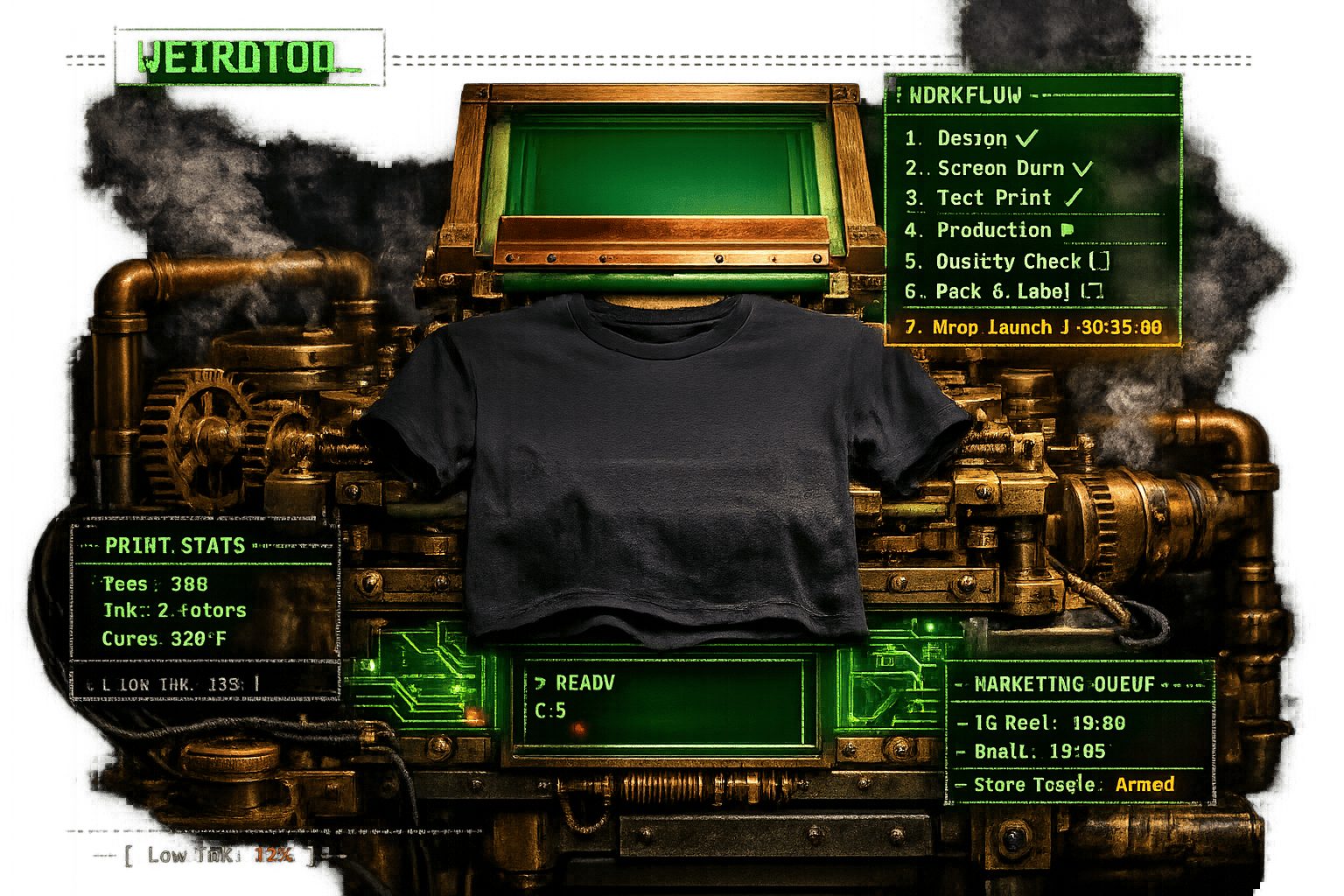
How to Launch a Clothing Drop: DIY Production & Marketing
By weirdtoo·January 30, 2026·5 min read
Learn how to launch a clothing drop with DIY production tips, screen printing techniques, and marketing strategies for success.
How to Launch a Clothing Drop: DIY Production & Marketing
Running a clothing brand is a mix of creativity, hands-on craftsmanship, and strategic marketing. For small business owners, especially those with a passion for individuality and self-expression, launching a clothing line can be a transformative journey. This article breaks down the process of creating and marketing custom apparel based on insights from a behind-the-scenes look at a DIY clothing drop. Whether you're an entrepreneur in Wyoming or a creative visionary working from your basement, this guide provides practical steps to help you succeed.
Introduction: Turning Ideas Into Wearable Art
Launching a clothing line is more than just selling shirts - it's about telling a story through wearable art. The process begins with a creative idea, but how do you turn that idea into a tangible product that resonates with your audience? In this article, we’ll walk through the key steps of DIY production, from designing and printing to packaging and marketing your apparel. Along the way, you’ll find tips to streamline the process and connect with potential customers effectively.
Whether you're starting small or dreaming big, this guide will help you navigate the journey of crafting unique, eye-catching clothing that stands out in a crowded market.
sbb-itb-342b8b2
Step 1: Designing and Preparing Your Apparel
At the heart of every great clothing brand is a strong, creative design. To launch a successful clothing drop, start by refining your vision and selecting designs that reflect your unique aesthetic.
Key Actions in the Design Phase:
- Choose a Design Theme: Decide on a concept that speaks to your brand’s identity. In the example video, the focus was on bold, unconventional designs like ribcage prints and star patterns for a grunge-inspired look.
- Experiment with Techniques: DIY production often involves a mix of methods. For instance:
- Spray Paint Effects: Use scrunching and spraying techniques to create smoky, textured designs.
- Screen Printing: Perfect for adding detailed graphics, screen printing can be done manually or with an industrial press for higher efficiency.
- Custom Cuts and Edits: Personalize garments by trimming hems or altering fits for a handcrafted aesthetic.
- Test and Refine: Before diving into production, test your designs on sample garments to ensure they translate well onto fabric.
Pro Tip:
Use heat pressing to set your designs and ensure long-lasting quality. This step helps lock in paint or screen-printed ink, preventing smudging or fading over time.
Step 2: Production on a Budget
For many small businesses, resources are limited, so affordability and efficiency are key. Here's how to execute production without breaking the bank:
- Set Up Your Workspace: Create a clean, organized area for crafting, whether it’s a spare room or a garage. Keep essential tools like screen printers, cutting mats, and heat presses within reach.
- DIY Techniques Over Machines: While industrial equipment can speed up production, manual methods can save costs while retaining a handmade charm. For example, cutting hems manually provides an unfinished, rolled-up look that many buyers find appealing.
- Experiment with Inks and Materials: Use versatile, affordable materials like oil-based ink for screen printing and fabric-specific paint. Be sure to invest in ink removers for easy cleanup during production.
Step 3: Packaging and Shipping Like a Pro
A great clothing line isn’t complete without proper packaging and shipping. First impressions matter, and thoughtful packaging can elevate your brand’s image. Here's how to handle this phase effectively:
- Prepare Your Orders: Double-check each item before packing to ensure designs are clean, dry, and free of errors.
- Labeling: Print professional labels with accurate shipping details. A simple label printer can help streamline this task and prevent delays.
- Affordable Shipping Options: For U.S.-based businesses, explore affordable shipping solutions to keep costs low, especially for rural customers. Keep in mind that cross-border shipping, like from Canada to the U.S., may incur higher fees.
Step 4: Marketing Your Clothing Drop Online
In today’s digital age, marketing is just as important as creating the product. The goal is to drive traffic to your website and entice customers to make purchases:
Strategies for Building Momentum:
- Leverage Social Media: Platforms like Instagram can be powerful tools for reaching your audience. Post reels, photos, and behind-the-scenes content to engage followers.
- Example: One statistic in the video revealed that Instagram alone drove 112 visitors to the brand’s website in just a week.
- Build an Email or SMS List: Stay connected to potential buyers by collecting their contact information. Use tools like Clavio to send updates, abandoned cart reminders, and special promotions.
- Analyze Performance: Track website analytics to understand customer behavior. Metrics like add-to-cart rates and completed purchases provide valuable insights for optimizing future drops.
Step 5: Scaling Up for Future Success
As your clothing line gains traction, consider expanding your operations to accommodate growing demand. This may involve investing in better equipment, outsourcing certain tasks, or focusing on larger-scale marketing efforts.
Key Growth Tactics:
- Improve Conversion Rates: Focus on increasing the percentage of visitors who make a purchase by enhancing website usability and offering incentives like free shipping.
- Expand Product Offerings: Introduce new designs or limited-edition drops to keep customers engaged.
- Engage Local Communities: Especially for small businesses in underserved areas like Wyoming, forming connections with local communities can boost brand loyalty and sales.
Key Takeaways
- Start Small: DIY production is affordable and allows for creative flexibility, making it ideal for budget-conscious entrepreneurs.
- Master the Basics: Heat pressing, screen printing, and spray paint effects are effective techniques for creating unique designs.
- Invest in Marketing: Social media engagement and SMS/email strategies can drive traffic and boost sales.
- Analyze Metrics: Use website analytics to identify strengths and areas for improvement in your marketing approach.
- Focus on Quality: Attention to detail in both design and packaging helps build a loyal customer base.
- Adapt for Growth: As your brand grows, consider scaling up production and diversifying product offerings.
Conclusion: Creativity Meets Strategy
Launching a clothing line is a rewarding endeavor that combines creativity with strategic thinking. By focusing on affordable production methods, leveraging social media for marketing, and analyzing your results, you can build a brand that resonates with customers and generates lasting success.
Whether you’re selling unique apparel to rural communities in Wyoming or shipping nationwide, the key is to stay authentic and connected to your audience. With dedication and the right strategies, your clothing drop can become a meaningful step toward achieving your entrepreneurial goals.
Source: "Building My Clothing Brand From Zero (First Order Shipped)" - ShakJac, YouTube, Dec 31, 2025 - https://www.youtube.com/watch?v=o94jw83GLxQ
Current contact path
Need Weird Network WiFi, custom apparel, or scoped help?
Use the contact form; removed product, checkout, research, and newsletter funnels stay offline.