Loading…
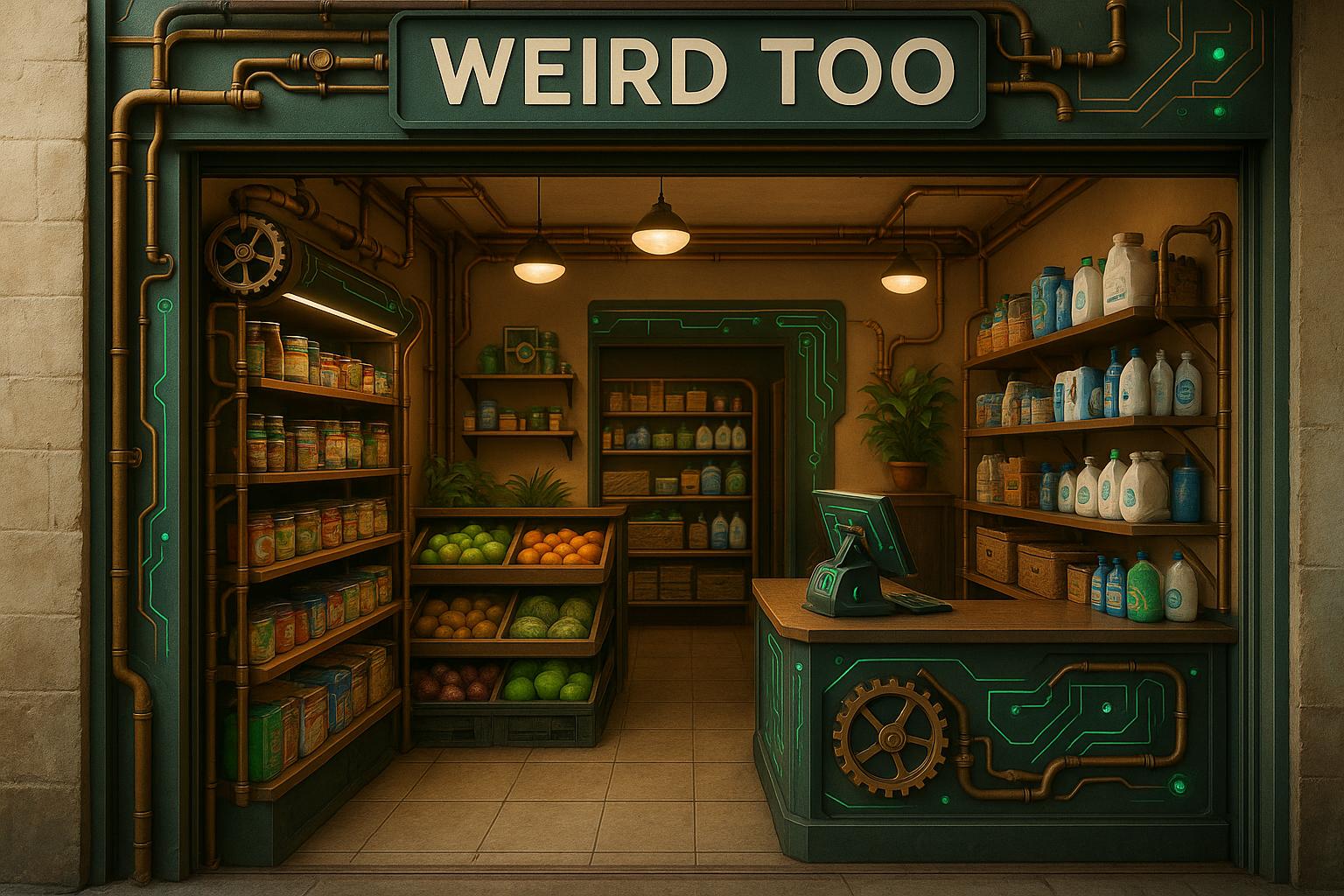
Have Product for your store for you for you setup
By weirdtoo·December 23, 2025·25 min read
Learn how to effectively stock and manage a store in underserved areas, focusing on community needs, affordable products, and strategic layouts.
Have Product for your store for you for you setup
Running a successful store in underserved areas requires understanding local needs, offering affordable essentials, and building trust. Many communities face challenges like limited access to goods, transportation issues, and tight budgets. To thrive, focus on these key areas:
- Know your audience: Understand daily routines, preferences, and challenges. Talk to locals to identify gaps in available products.
- Offer practical, affordable goods: Stock must-have items and multi-use products that improve daily life without straining budgets.
- Use tech wisely: Tools like WEIRDTOO LLC’s internet solutions and flexible websites can enhance operations and customer experience.
- Smart inventory management: Balance dropshipping and in-house fulfillment to manage costs and meet demand.
- Store layout matters: Arrange products to guide customers naturally, highlight popular items, and encourage impulse buys.
- Build community trust: Personalize service, host events, and offer flexible payment options to connect with locals.
Tips for creating community through retail
How to Pick Items for Less Served Groups
Picking items for groups that haven't got much help needs you to think hard about how cheap, needed, and useful they are. Places in the country, more than towns, come across issues that city stores do not see.
Take this, people living in the countryside make about $9,242 less per head than the usual in the country. Also, 14.6% of country families count on food aid benefits while only 10.9% of city families do. These money facts mean that what you sell must be really good for the price and fit into small budgets.
Getting to things is another big block. Indeed, 53% of folk in the countryside don’t have steady web help. Health care reach is low too; country spots have just about 39.8 primary care doctors for every 100,000 folks, less than 53.3 doctors in cities. This shows how key it is to have health care goods that help folks take care of their health when a real doctor isn’t near.
"The obstacles faced by health care providers and patients in rural areas are vastly different than those in urban areas." - National Rural Health Association [1]
Safety is very key too. More than half of car crash deaths happen in the country, and young people there are twice as likely to end their own lives than city kids [1]. Items that boost safety, look after mental health, and help families get ready for emergencies can really help these areas.
By knowing these problems, you can focus on items that make daily life better, not just fill your shelves. It's important to find the right mix of useful and cheap when picking what to sell.
Trending vs. Timeless Products: Finding the Right Mix
Country buyers often care more about useful and lasting things than short-lived trends. Always needed goods like tools, home items, and self-care products meet daily needs and sell well all year. While trendy things may catch the eye, make sure they really help before getting them.
A good plan is to stick to sure things while trying out new trends in small amounts. This cuts risk and makes sure you always have wanted, solid items. Trends come slower to country areas, so no need to hurry with them until they show they last.
Season changes matter too. For example, goods that do well in planting time might not during harvest or slow periods. Testing items in small amounts lets you adjust without taking on too much.
Private Label vs. Wholesale: Which Option Works Better?
Both private label and wholesale work well in country areas. Wholesale gives well-known brands that buyers trust. This way needs less money at first and lets you meet needs fast without the hard work of making something new.
Private label lets you make items that fit local needs. You might, for example, make a special emergency kit for country homes with a battery radio, light, and first aid stuff. While private labels can make more money and make your shop stand out, they take more time, study, and checking.
A mixed plan might start with wholesale items to learn your market and slowly bring in private label goods where the need is sure. Some shops use both, mixing trusted brands with cheap and special store-brand items.
Eco-Friendly and Green Product Options
Green items are also getting important in country spots, just like in cities. Many country folks feel a strong tie to the land due to farming, outdoor life, and community living, making them like products that are kind to the planet and easy on the wallet.
Items that save power, like LED bulbs and thermostats you can set, are smart picks that lower bills over time. Things you can use again, like strong water bottles and good storage boxes, not only make less trash but also save money long-run. Families with well water or septic tanks might like safe cleaning goods that cut down on harsh stuff.
Solar items, like lights for the garden and backup phone chargers, work well in places that often lose power. Showing how they cost less over time, last long, and work better can grab the attention of smart buyers.
As Phantila Phataraprasit, the person who started Sabai Design, puts it:
"We ourselves are part of a demographic that is very aware of our impact on the planet. The climate crisis is such a top of mind issue for us. And so being part of a demographic that's younger and so we're also on a budget, we wanted to create a solution that spoke to those values, but then also took into account accessibility and budget as well." [3]
Studies show that a lot of buyers still look for good deals when they buy things [2]. If you set fair prices for eco-friendly items and explain how they save money over time, you can link being green with being cheap. This helps serve less wealthy areas well. Each item picked should work for the area and show a deep promise to smart, working answers.
Store Setup and Layout Best Practices
The way your store is organized can have a big impact on how customers experience it - and how much they buy. Thoughtfully arranging products, creating clear pathways, and using eye-catching displays can boost both sales and customer loyalty. A well-designed layout not only showcases your products but also fosters a welcoming, community-oriented shopping experience.
How to Design a Product-First Floor Plan
An effective store layout puts your most popular and profitable products in the spotlight. Think high-visibility areas like display windows, the entrance, or central sections of the store. These placements grab attention right away and encourage shoppers to explore further[4].
To make the most of your space, map out customer flow from the entry point. Place high-margin items along these natural paths to ensure they’re seen. Flexible fixtures allow you to adjust displays based on what’s selling, and tracking foot traffic helps you refine layouts over time. A "racetrack" design - a loop that subtly guides customers through key areas - can increase exposure to a wider range of products.
For smaller spaces, get creative with vertical displays, hanging fixtures, and furniture that doubles as storage. This approach lets you feature a curated selection of high-margin items without making the space feel cramped. Lighting also plays a crucial role: use a mix of spotlights, ambient lighting, and accent lighting to make your products stand out[4].
Once your basic layout is in place, focus on adding seasonal displays to keep things fresh and engaging.
Setting Up Seasonal and Rotating Displays
Rotating displays regularly can keep your store feeling fresh and encourage repeat visits. Create a seasonal calendar tied to holidays, local events, or trending products to plan your updates. Using versatile fixtures and easy-to-change signage makes swapping displays quick and hassle-free. Limited-time offers or exclusive items in these spaces can create urgency, nudging customers to buy right then and there.
Let sales data guide your display strategy[4][5]. For example, highlight gardening supplies in the spring or summer gear when the weather warms up. Tailoring your displays to what your community needs at specific times of the year keeps them relevant and appealing.
These seasonal updates naturally lead into impulse-buy zones, which can further enhance the shopping experience.
Creating Impulse Buy Zones and Customer Paths
Impulse buys can make up a surprisingly large chunk of retail sales[4]. Position small, high-margin items - like snacks, gift cards, or batteries - near the checkout area where they’re easy to grab.
To guide customers through your store, create clear pathways that lead them past key displays and impulse zones. Use focused lighting, well-placed fixtures, and clear signage to encourage additional product discovery. Regularly analyzing customer movement patterns can help you fine-tune these paths, ensuring maximum exposure to your products[4].
These layout strategies pair perfectly with WEIRDTOO LLC's tech-enabled tools, helping you create a shopping experience that not only supports your community but also maximizes sales potential.
Inventory Management and Order Fulfillment
A dependable inventory system is the backbone of any well-run store that consistently meets customer expectations. Poor inventory management can lead to losses equating to 11% of annual revenue[7]. With the right tools and strategies, you can avoid these pitfalls and keep your customers satisfied.
Dropshipping vs. In-House Fulfillment Comparison
When it comes to fulfilling orders, you’ll need to decide between dropshipping and in-house fulfillment. Each method has its own set of benefits and challenges, which can directly affect your operations and bottom line.
Dropshipping relies on a third-party supplier to ship orders directly to your customers. You never handle the products yourself. When a customer places an order, you pass it along to your supplier, who then fulfills it. This model requires very little upfront investment since you don’t need to buy inventory in advance.
In-house fulfillment, on the other hand, puts you in charge of managing inventory and shipping. You purchase products in bulk, store them, and take care of packaging and delivery. While this gives you full control over the customer experience, it demands more capital upfront and sufficient storage space.
| Factor | Dropshipping | In-House Fulfillment |
|---|---|---|
| Initial Investment | Low – no inventory purchase required | High – must buy inventory upfront |
| Profit Margins | Lower due to supplier markups | Higher due to bulk purchasing power |
| Control Over Quality | Limited – depends on supplier | Complete control over packaging and quality |
| Shipping Times | Variable and often longer | Faster and more predictable |
| Scalability | Easier to scale initially | More challenging at first, better long-term control |
| Customer Service | More complex returns and issue resolution | More seamless customer service |
| Risk Level | Supplier dependency risk | Risk of unsold inventory |
Sharon Coburn, a former Studio Camera Operator, offers practical advice for choosing between these models:
"If you're testing the waters or want to move fast, start with dropshipping. If you're ready to scale or already have a winning product, owning your inventory can give you the control and consistency to build a stronger brand." [8]
Many retailers successfully combine both methods. For instance, you could stock your best-selling items in-house while dropshipping seasonal or specialty products. This hybrid approach allows you to maintain control over your core offerings while testing new products with minimal financial risk.
Your choice should align with your current scale, financial resources, and the demands of your product line. This decision will also shape your broader inventory strategy, including how you manage restocking and tracking.
Automated Restocking and Inventory Tracking
No matter which fulfillment method you choose, modern technology makes inventory management much easier. Using tech-driven tools can help prevent costly stockouts. In fact, 73% of retailers now rely on forecasting tools to improve inventory accuracy[7].
Start by assessing your business needs, considering factors like usage frequency, lead times, and storage costs. Inventory management systems range from basic spreadsheets to advanced barcode or RFID systems that provide real-time stock visibility.
Real-time perpetual inventory systems are especially useful for maintaining accurate data. Establish clear policies for storage, tracking, and ordering, and consider techniques like ABC analysis to focus on your most important products. Monitoring key metrics - such as turnover rates and stockout frequencies - can help fine-tune your reordering process.
For businesses aiming to minimize storage costs and waste, strategies like Just-in-Time purchasing can be effective. However, this approach requires dependable suppliers and precise demand forecasting. Regular quality control checks and thorough staff training are also essential to maintaining optimal inventory levels.
How to Handle Supply Chain Problems
Supply chain disruptions happen, but proactive planning can help you minimize their impact. Build strong relationships with your suppliers to improve communication and consider having backup suppliers in case your primary one experiences delays. Seasonal inventory planning, based on historical sales data, can help you maintain adequate stock during busy times while avoiding overstock during slower periods.
If delays occur, communicate with customers promptly and offer alternatives, such as similar products or partial shipments. Diversifying your product mix can also reduce the impact of shortages on specific items.
For slow-moving products, bundling them with best-sellers or saving them for a different season can help move inventory. Regular stock audits and physical counts ensure accuracy and catch discrepancies before they cause bigger issues.
The healthcare industry offers some useful lessons in supply chain management. Paul Walsh, Vice President of Performance Solutions at Cardinal Health, explains:
"Inventory management is not just a supply chain issue, but a financial and patient-care issue as well." [6]
Retailers can adopt similar principles to improve efficiency and reduce waste, leading to better operations overall.
Regularly reviewing your processes and metrics can help refine your inventory strategies. Develop contingency plans for critical situations, such as alternative suppliers, emergency stock levels, and clear customer communication protocols. This kind of preparation ensures you can respond quickly and effectively to supply chain challenges.
sbb-itb-342b8b2
Product Branding and Customer Engagement
Your product's brand identity plays a huge role in shaping how customers perceive and connect with your store. A strong brand is more than just a logo or a set of colors - it builds loyalty that transforms casual shoppers into devoted advocates. When customers resonate with your brand's story and values, they’re more inclined to choose your products and share their positive experiences with others. This focus on branding ties directly into earlier discussions about store design and product selection, creating a foundation that supports every aspect of your store's experience.
Creating Memorable Product Packaging
Packaging does more than just protect a product - it’s often the first impression customers have of your brand. It should blend eye-catching visuals with practical functionality, all while reflecting your brand’s personality and values. Think of it as an extension of your brand identity. From colors and materials to the overall structure, your packaging should align with your audience’s preferences and evoke the right emotions. A well-thought-out unboxing experience can leave a lasting impression and even encourage customers to share it on social media.
Make sure the packaging includes all the essentials: product names, key benefits, usage instructions, and any necessary legal details. Beyond aesthetics, functionality is critical. Packaging should protect the product during transit, be easy to open, and, if possible, offer extra value - like being reusable or serving another purpose. Testing your designs with actual customers can help you refine both the look and practicality of your packaging. When done right, packaging sets the stage for the stories your brand tells.
Using Stories to Connect with Customers
A strong visual identity is just the start - storytelling takes customer engagement to the next level. Stories help transform everyday products into meaningful experiences. Sharing your brand’s origins, challenges, and inspirations builds trust and fosters emotions like joy and empathy, which are key drivers of connection.
As Simon Sinek famously said, "People don't buy what you do; they buy why you do it" [9]. Your "why" forms the backbone of your narrative. A good story has a clear structure: a relatable challenge, a journey toward solving it, and a positive outcome. This approach ensures your message is memorable. Adding customer testimonials to your stories provides social proof and enhances credibility. Consistency is crucial - whether it’s your website, social media, in-store displays, or packaging, your narrative should feel cohesive across all platforms.
Interactive storytelling takes engagement even further by inviting customers to be part of your brand’s journey. Encourage them to share their own experiences or behind-the-scenes moments with your products. For instance, STC’s 2021 Ramadan campaign, "اليوم نقدر" ("Today We Can"), celebrated togetherness during Ramadan, creating an emotional connection with its audience [9]. Similarly, Almarai’s 2023 campaign, "قوم جيب زبادي" ("Go Get Yogurt"), used humor and relatable family scenarios to highlight its role in everyday life [9].
Appealing to multiple senses in your storytelling can enhance the experience even more. Describing textures, scents, sounds, and visuals helps customers imagine using your products, making the story more immersive. This kind of storytelling not only boosts brand awareness but also encourages customers to share your story organically.
Getting Customer Feedback and Reviews
Customer feedback is a goldmine for improving your products and building stronger relationships with your audience. Offer a variety of ways for customers to share their thoughts - email, social media, in-store forms - so you can gather insights from as many sources as possible.
Ask specific, targeted questions to get actionable feedback. For example, find out which aspects of your product customers loved most or what they think could be improved. Monitoring social media and online reviews in real time is another great way to stay in tune with customer sentiment. Starbucks, for example, uses Twitter to engage with customers, addressing concerns and celebrating positive feedback to strengthen brand loyalty [10]. Similarly, Airbnb hosts often respond publicly to reviews, offering reassurance and detailing steps taken to address issues, which shows a commitment to customer satisfaction [10].
Once you’ve collected feedback, organize it by themes or sentiments and look for recurring patterns that highlight areas for improvement. Most importantly, close the loop - let customers know how their input has influenced changes. This not only builds trust but also encourages ongoing engagement. By continuously listening and adapting, you can fine-tune your products and create a better overall experience, reinforcing your connection with your community.
Legal, Financial, and Compliance Requirements
Running a product-based store is about more than just picking great products and creating eye-catching displays. It also involves understanding the legal and financial responsibilities that come with selling physical goods. Getting these basics right from the start can shield your business from costly mistakes and help it thrive.
Product Liability and Safety Laws You Need to Know
Product liability laws hold retailers responsible for damages caused by defective products. In the U.S., there isn’t a single federal law governing product liability - rules vary by state[11][12][16]. With the average jury award for product liability cases sitting at around $5.1 million, the financial stakes are high[15].
Liability issues typically fall into three categories: defects in design (flaws in the product's blueprint), manufacturing defects (problems during production), and marketing defects (inadequate warnings or instructions)[11][12].
Retailers are also required to report unsafe products to the Consumer Product Safety Commission (CPSC) if they believe a product poses a substantial risk of injury, is unreasonably hazardous, or violates safety standards[13]. The CPSC offers a straightforward recommendation: "When in doubt, report" [13].
To safeguard your business, make sure to collect Children's Product Certificates (CPC) or General Certificates of Conformity (GCC) from your suppliers. These documents confirm compliance with safety standards[13]. You can also request written assurances from manufacturers, importers, or distributors that they’ve reported products to the CPSC. Establishing a liability prevention program - complete with supplier audits, detailed documentation, and staff training - can help minimize risks and reduce recall costs. Lastly, securing product liability insurance offers additional protection by covering expenses related to injuries or damages caused by your products[14][15].
Understanding these legal risks isn’t just about compliance; it directly impacts the overall costs tied to each product you sell.
How to Calculate Total Product Costs
Knowing your product costs involves more than just the wholesale price. The landed cost is a comprehensive figure that includes the purchase price, shipping, taxes, customs duties, insurance, and handling fees[19]. The formula looks like this: Landed Cost = Product Cost + Shipping + Customs + Risk + Overhead[17].
Each component can hide extra expenses. For instance, shipping costs may include international and local transportation, while customs duties depend on the product type and its country of origin. Identifying the correct Harmonized System (HS) code for your products is essential, as is factoring in U.S. fees like the Merchandise Processing Fee (MPF) and Harbor Maintenance Fee (HMF)[18][20][21].
Here’s a real-world example: A company imports 500 items at $20.00 per unit. With a 2% duty rate, each item incurs an additional $0.40. Insurance adds $200 plus $10 per customer order, averaging $10.40 per item, and a $2.00 payment processing fee is tacked on. The final landed cost? $34.80 per unit - 74% higher than the original wholesale price[17].
In another scenario, a business importing 1,000 units from China at $10.00 per unit faces $500 in customs duties, $250 for insurance, $500 for inland transport in China, $800 for inland transport in the U.S., and $2,000 for ocean freight. The total landed cost comes out to $14,050, or $14.05 per unit[19].
To manage these costs, consider sourcing from countries with free trade agreements, adjusting product specifications to reduce tariffs, or using Foreign Trade Zones to defer or lower customs duties[20]. Online tools like FedEx’s duty calculator or VAT calculators can also help you estimate costs accurately, even accounting for currency exchange rate changes.
Accurate cost calculations not only keep your business competitive but also ensure you’re prepared to serve your customers reliably.
State and Local Sales Tax Requirements
Sales tax compliance is one of the trickiest parts of running a retail business. With over 12,000 sales and use tax jurisdictions in the U.S., each with its own rules on taxable products, registration, and filing, the complexity can feel overwhelming[22]. Non-compliance is costly - U.S. businesses risk up to $14 billion annually in penalties, and failing to remit taxes on time can lead to fines or even jail time[22][27].
The concept of economic nexus determines when you’re required to collect sales tax in a particular state. This is usually based on your sales volume or transaction count within that state. Here’s a quick look at some common thresholds:
| State | Economic Nexus Threshold |
|---|---|
| California | $500,000 |
| New York | $500,000 and 100 transactions |
| Texas | $500,000 |
| Alabama | $250,000 |
| Mississippi | $250,000 |
| Most Others | $100,000 or 200 transactions |
Nexus thresholds and filing deadlines vary by state. Some states follow a calendar year schedule, while others use a rolling 12-month period[26]. Sales tax rates may combine state, county, and municipal taxes, meaning customers pay a total rate that reflects all applicable levels[25]. This complexity makes manual calculations nearly impossible.
The Sales Tax Institute explains:
"Sales tax compliance is preparing and filing sales and use tax returns. Once a taxpayer is registered to collect or pay sales and use taxes in a jurisdiction, returns must be filed and the tax must be remitted on a timely basis"[23].
To stay compliant, identify where you have nexus based on physical presence or economic activity[24]. Register for sales tax permits in every applicable jurisdiction and use sales tax software to automate calculations, reporting, and filing[24]. Keeping detailed records of sales, nexus activities, and taxes collected is critical. Tools like a "Tax Calendar" that tracks deadlines and filing details can help prevent missed payments[23][24]. Staying informed about tax law changes through state tax authority updates or consulting tax professionals can also make a big difference.
Modern sales tax software integrated with your point-of-sale systems and e-commerce platforms simplifies this process, automatically calculating rates, generating returns, and submitting payments. Meeting these tax obligations doesn’t just keep you compliant - it builds trust with your customers and ensures your business runs smoothly.
Growing and Expanding Your Store
Once your product lines are solid and you've met all the necessary legal requirements, the next step is to grow your store strategically. This kind of growth relies on smart timing, thorough market testing, and creative ways to attract new customers while keeping your business profitable.
When to Add New Product Lines
Deciding when to expand your product offerings is critical. The right timing can lead to sustainable growth, while poor timing could stretch your resources too thin. Here are some key signs that it might be time to introduce new products:
- Strong Financial Performance: If your current products are consistently profitable and you have enough cash flow to invest in more inventory, it could be a good opportunity to expand.
- Customer Demand: Pay attention to repeated customer requests for items you don't yet carry. These requests might highlight areas where you can meet untapped demand.
- Seasonal Trends: Certain times of the year naturally lend themselves to expansion. For example, if your store thrives during back-to-school season, consider adding holiday-themed items to keep customers engaged year-round.
- Local Market Gaps: If customers are traveling far to buy specific products, there's an opportunity to bring those items closer to home.
- Supplier Deals: Securing favorable deals on complementary products can make expansion less risky and more profitable.
However, proceed carefully. Adding new product lines requires extra space, additional marketing efforts, and staff training. It's wise to start with small test orders to gauge demand before committing fully. A healthy inventory turnover rate is another indicator that your store is ready to handle more products. Expanding thoughtfully not only increases revenue but also strengthens your connection to the community you serve.
Pop-Up Stores and Mobile Retail Options
Pop-up stores and mobile retail setups are excellent ways to test new markets or products without the long-term commitment of a permanent location. These flexible retail models allow you to explore opportunities while keeping costs manageable.
- Pop-Up Stores: Renting short-term spaces in high-traffic areas gives you a chance to test local demand. This approach is great for trying out new geographic markets or gauging interest in specific products before investing in a permanent space.
- Mobile Retail Units: Converted vans or trailers let you bring your store directly to customers at events like farmers markets, festivals, or craft fairs. You can even adjust your location based on seasonal trends, such as setting up near beaches in summer or college campuses during the back-to-school rush.
While mobile retail has its own costs - like vehicle maintenance, fuel, insurance, and permits - these expenses are often lower than renting a storefront. Success in this model depends on smart inventory planning and tailoring your product selection to the specific audience at each location.
Technology plays a big role here, too. Mobile point-of-sale systems, reliable internet, and digital payment options ensure smooth transactions. Social media can also be a powerful tool to announce your location and generate excitement.
Subscription Models for Steady Revenue
For sustained growth, subscription models offer an appealing option. They provide recurring revenue, foster customer loyalty, and make financial planning more predictable. On average, consumers spend $133 per month on subscriptions[28].
One of the biggest benefits of subscriptions is revenue stability. With a steady stream of income, managing inventory and cash flow becomes easier. From 2012 to 2023, companies in the subscription economy grew their revenues about 3.7 times faster than the S&P 500[31]. Predictable demand also helps reduce issues like overstocking or running out of stock[30].
However, subscription models come with challenges. Customer churn is a major concern, as 40% of subscribers cancel within six months[28]. This makes it crucial to consistently deliver value. Managing recurring payments adds complexity, too. Companies often lose between 1% and 4% of revenue due to failed transactions or revenue recovery efforts[29]. Revenue leakage can account for up to 1% of total sales[29].
Eric Simmons, Senior Director of Growth Marketing at Stax, highlights the potential of subscription billing:
"Value monetization is the primary driving force of every business. How to extract money for the value delivered is an age-old challenge, but subscription billing addresses this issue and provides endless opportunities, all with a few clicks. If marketing and sales can envision it, it can be billed using a modern subscription billing platform."[29]
The success of a subscription model depends on choosing the right products. Consumables, regularly replaced items, or products with ongoing value - like coffee, personal care items, or curated collections - work particularly well. Offering tiered pricing options can also attract a wider range of customers, with incentives for annual commitments encouraging longer-term loyalty.
To keep subscribers engaged, you need to demonstrate value continuously. This could include exclusive updates, early access to new products, or other perks. Making the experience user-friendly is equally important. Tools that let customers manage their subscriptions easily, paired with clear billing practices, help build trust and reduce cancellations.
Finally, ensure your subscription practices comply with consumer protection laws. Make cancellation policies straightforward and transparent to avoid potential issues. For stores selling products with predictable replenishment cycles - like pet food, beauty supplies, or cleaning products - subscriptions can be a reliable way to secure steady income.
Building a Community-Focused Store That Lasts
As discussed earlier in the sections on product selection and store layout, aligning your business strategy with local needs can make all the difference. This section dives into how you can transform your store into a true community hub. Building a store that resonates with the community means understanding local priorities, respecting cultural values, and forming meaningful relationships. This approach becomes especially important when working with underserved communities, where trust and genuine connections can determine your success.
Understanding Your Community's Unique Needs
The first step in creating a community-focused store is conducting thorough market research. It’s not just about knowing who lives nearby; it’s about understanding how they shop, what they value, and how they interact with businesses [34]. This goes beyond simple demographics to include cultural influences on buying decisions.
For example, minorities in the United States collectively hold a buying power of $3.9 trillion [32]. This presents a huge opportunity for businesses willing to invest in understanding and authentically serving these communities. But tapping into this market requires more than just surface-level changes - it calls for genuine cultural awareness and respect.
This understanding should shape every part of your business, from the products you stock to the way you communicate with customers. Whether it’s offering items that reflect local tastes, adjusting your store hours to fit community routines, or training your staff to be culturally sensitive, these efforts show your commitment to meeting the community’s needs [32].
Building Trust Through Personalized Experiences
Once you’ve gained an understanding of your community, the next step is building trust. Trust is the foundation of any community-focused business, and personalization is one of the most effective ways to earn it. Research shows that customers value personalized experiences, with many prioritizing tailored interactions over generic service [35].
To make personalization work, segment your customers based on factors like demographics, behaviors, and geographic location. This helps you fine-tune your inventory, marketing messages, and customer service to meet the unique needs of different groups in your community [35].
Creating Lasting Customer Relationships
Long-term success in a community-focused store depends on fostering customer loyalty. While high-quality products and great service are essential, how you deliver them can make or break customer relationships.
| Factors Affecting Customer Loyalty | Positive Impact | Negative Impact |
|---|---|---|
| Quality of Products or Services | Increases satisfaction, repeat business, and word-of-mouth referrals | Leads to dissatisfaction, loss of customers, and negative reviews |
| Customer Service | Boosts satisfaction, strengthens brand reputation, and encourages loyalty | Causes dissatisfaction, damages reputation, and drives customers away |
Your customer service should reflect the communication styles and preferences of your community. For example, offering multilingual support or training staff to respect cultural norms can help build stronger connections. Even small steps, like providing clear product instructions in multiple languages, can go a long way [34].
Engaging with the Broader Community
While one-on-one personalization is important, engaging with the wider community can deepen trust and loyalty on a larger scale. Hosting local events, supporting community initiatives, or partnering with local leaders shows that your business cares about more than just profits [32].
You can also offer flexible payment options, such as buy now, pay later (BNPL), to make your store more accessible. This is especially valuable in areas where traditional credit options are limited [36]. Gamifying the shopping experience - like offering rewards or interactive promotions - can also make your store more inviting and encourage repeat visits [36].
Continuous Improvement and Adaptation
A successful community-focused store doesn’t stay static. It evolves with the needs and preferences of its customers. Regularly review market trends and gather feedback to keep your business relevant [33].
One way to stay flexible is by offering modular features or customizable options. Letting customers tailor their experiences not only makes them feel valued but also gives you valuable insights into their preferences [34].
FAQs
How can store owners in underserved areas find the right balance between trendy and timeless products?
Store owners in underserved areas can find the sweet spot between trendy and classic products by taking a closer look at their customers and local tastes. Start by pinpointing your main audience and figuring out what they truly need - this will guide you in choosing staple items that consistently perform well. To keep things fresh, keep an eye on market trends, social media buzz, and seasonal patterns. Introduce small amounts of trendy items that align with your core inventory.
Another smart move? Test out new products in smaller batches to see how they perform before committing fully. By blending timeless essentials with carefully selected trends, you can appeal to a wider range of customers while keeping risks low and boosting your sales.
What are the pros and cons of combining dropshipping with in-house fulfillment for managing inventory?
Combining dropshipping with in-house fulfillment offers retailers a way to stay flexible while managing costs effectively. With dropshipping, you can test new products without taking on much risk, while in-house fulfillment lets you maintain control over items that are high-value or sell quickly. This strategy helps balance upfront expenses and simplifies logistics for different types of products.
That said, this hybrid approach isn’t without its hurdles. Managing inventory across two systems can get tricky, and ensuring a consistent brand experience for customers may take extra effort. To tackle these challenges, leveraging real-time inventory management tools and POS systems that integrate both methods is key. With the right planning and technology in place, this approach can streamline operations and enhance the overall customer experience.
How can eco-friendly products be made more attractive and affordable for customers in rural areas?
Eco-friendly products can gain traction in rural areas by making them both relatable and cost-effective. One way to achieve this is by cutting down on packaging. This not only reduces costs but also lessens the environmental footprint - a win-win for both customers and the planet.
Sourcing products locally is another smart move. It trims shipping expenses while supporting the local economy, making these products feel more connected to the community. This local touch can resonate with rural buyers, making the products more appealing.
To highlight their value, focus on the long-term savings these products offer. For instance, reusable items or energy-efficient options can save money over time. Offering bulk discounts or bundled deals on eco-friendly products can also make them more affordable and encourage people to give them a try. By emphasizing practical benefits and cost savings, eco-friendly options become a more attractive choice for rural customers.
Current contact path
Need Weird Network WiFi, custom apparel, or scoped help?
Use the contact form; removed product, checkout, research, and newsletter funnels stay offline.