Loading…

“Eco-Friendly Costume Options You’ll Love”
By weirdtoo·April 27, 2026·7 min read
Low-waste, budget-friendly costume ideas using recycled boxes, thrifted clothing, and household items—many under $20.
“Eco-Friendly Costume Options You’ll Love”
Halloween costumes generate over 35 million landfill-bound outfits annually in the U.S., with most made from synthetic materials like polyester and PVC that take 200+ years to decompose. This adds to microplastic pollution and waste equivalent to 83 million plastic bottles each year. But there’s a better way.
Instead of contributing to this waste, you can create costumes using recycled materials, old clothes, or household items. These options are budget-friendly, often costing under $20, and can be reused or repurposed after Halloween. Examples include turning cardboard boxes into Lego bricks, using old textiles for togas or mummies, and crafting scarecrow costumes from flannel shirts and overalls.
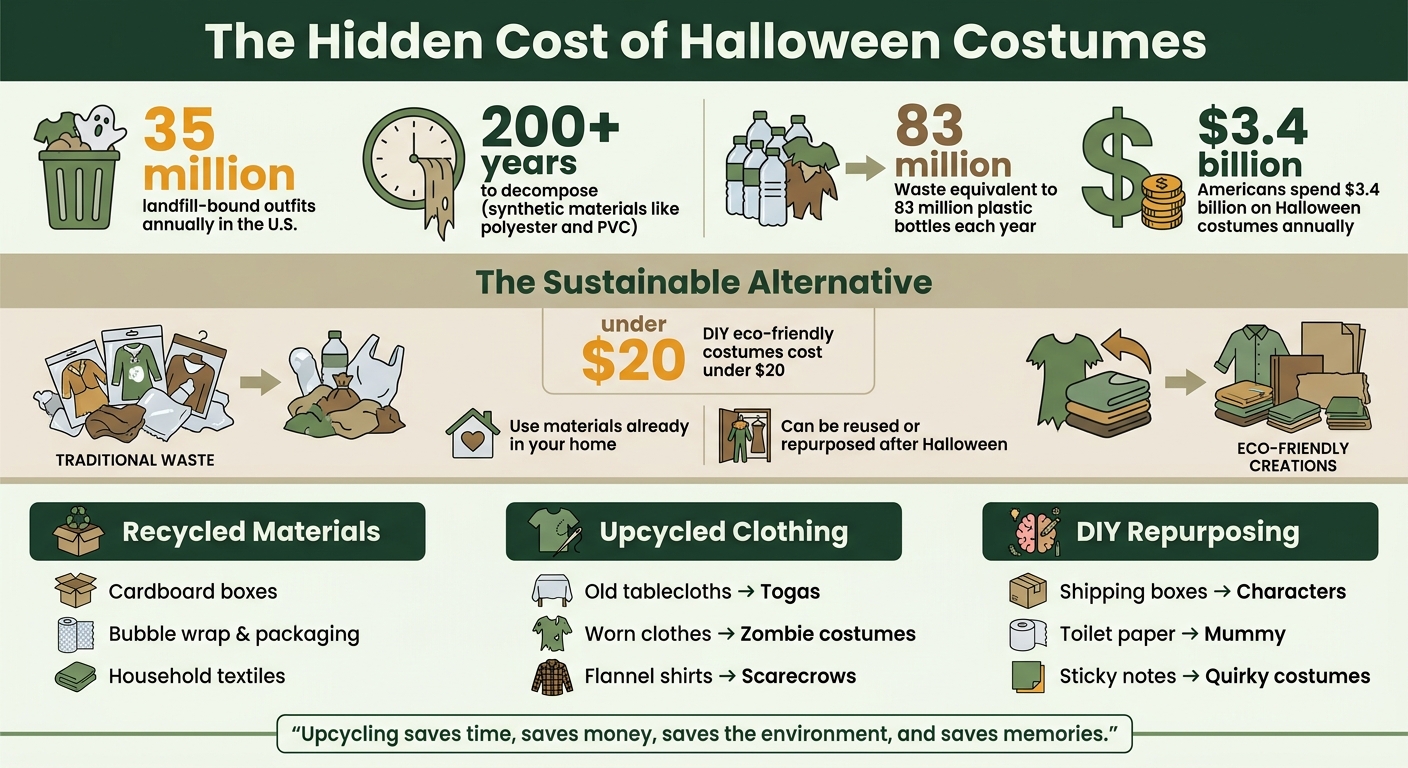
Environmental Impact of Halloween Costumes: Statistics and Eco-Friendly Alternatives
1. Recycled Materials
Cardboard Box Transformations
Got leftover shipping boxes from your latest online orders? Turn them into standout costume pieces without spending a dime. With a little cutting and painting, you can create costumes like Lego bricks, Rubik's Cubes, or even a shiny disco ball by wrapping the cardboard in aluminum foil [1]. Cardboard’s sturdiness makes it ideal for boxy characters, and the best part? You can find everything you need in your recycling bin or by asking for extras at local grocery stores [4].
Bubble Wrap and Packaging Materials
Packaging materials can do more than just protect fragile deliveries - they can add a creative twist to your costume! For example, tape bubble wrap onto white clothing for a clever "Bubble Bath" costume. Or, gather toilet paper tubes and tape them together to make binoculars for an Explorer outfit [1][3]. Not only are these materials free, but reusing them also helps keep waste out of landfills.
Household Textiles
Old textiles lying around your home can easily be turned into costumes. An old bed sheet can transform into a ghost or mummy costume - just cut and drape it, no sewing required [1]. Pillowcases? They make perfect superhero capes with just a few snips and ties [1][3]. If you’re using thrifted fabrics, be sure to give them a good wash first. However, remember that washing synthetic materials can release microplastics into the water [2][1].
Sourcing Locally
If you’re looking for additional materials, local resources can be a treasure trove. Start by checking your recycling bin for scraps. Then, head to thrift stores, especially in college towns or affluent neighborhoods, where you might find high-quality natural fabrics like cotton or wool [1]. Some communities even have curbside textile recycling bins that could supply you with fabric scraps [2]. And don’t forget about community costume swaps - they’re a fun way to pick up free materials while keeping textiles in use.
sbb-itb-342b8b2
Fancy Dress Competition - 1st prize | Easy DIY Costume for Kids | Eco-Friendly Ideas 🌱
2. Upcycled Clothing
Upcycled clothing takes everyday garments and gives them a second life as creative, sustainable costumes.
The Linen Toga
Got an old white tablecloth or curtain lying around? Transform it into a timeless toga costume with just a few folds and some safety pins. Drape the fabric over one shoulder, wrap it around your body, and secure it at the waist with a belt or rope. The best part? You won’t damage the fabric, so it can go back to its original purpose after the event. Plus, linen fabrics are much more breathable and comfortable compared to synthetic costume materials.
The Distressed Zombie
Old, stained, or worn-out clothes are perfect for a zombie costume. Grab some scissors to create jagged cuts and frayed edges, then whip up some DIY "blood" using corn syrup and red food coloring - no need for store-bought, chemical-packed versions. This works especially well with jeans, t-shirts, or button-down shirts. In this case, the more imperfections, the better. Stains and holes only add to the authenticity of the look.
The Metallic Statue
An old, monochromatic outfit can easily become a living statue costume. Use eco-friendly metallic spray paint and matching face paint to complete the transformation. According to Toxigon's sustainable costume guide from March 2026, you can create high-quality upcycled costumes for under $20 using items already in your home, with just a few thrifted extras [1].
The Stuffed Scarecrow
Turn an old flannel shirt and overalls into a scarecrow costume. Stuff the cuffs with fabric scraps or straw to give it volume, while keeping the original buttons and hems intact for added durability. This approach not only saves money but also creates a costume that’s far sturdier than most store-bought versions [4].
"Homemade DIY costumes use stronger and more durable fabric that will last through months and years of dress up and play time" - Heather from Heather Handmade [4]
These upcycled ideas prove that costumes can be both stylish and environmentally friendly, while also being tough enough to last beyond just one night.
3. DIY Repurposing
Everyday household items can become the foundation for zero-waste costumes that are both fun and easy to make. By reimagining what you already have, you can create something memorable without breaking the bank - or harming the planet.
The Cardboard Box Character
Got a large shipping box lying around? Turn it into a costume centerpiece! Boxes can be transformed into robots, arcade machines, or other structured designs. Add personality with paint, construction paper, or even markers. The key is to think beyond the box’s basic shape and let your imagination take the lead.
The Paper Mummy
An old classic with a sustainable twist: use toilet paper or gauze from your medicine cabinet to craft a mummy costume. Wrap the paper around old clothing and secure it with tape. Unlike synthetic materials that can linger in landfills for centuries, these paper products naturally break down[1]. It’s a simple, eco-friendly way to bring this spooky character to life.
The Sticky Note Person
For a quirky, last-minute idea, cover your outfit in sticky notes to become a "walking reminder board" or a "procrastinator." Write funny notes, reminders, or to-do lists on each sticky for an added comedic touch. This no-sew costume costs next to nothing if you already have sticky notes at home - and it’s a far cry from the $3.4 billion Americans spend on Halloween costumes each year[1].
These clever DIY ideas show how a little creativity can turn household items into costumes that stand out while keeping waste to a minimum.
Conclusion
When it comes to eco-friendly costumes, simple, sustainable steps can make a big difference in how we celebrate. By upcycling clothing, repurposing household items, and shopping your own closet, you can create impressive costumes while keeping textiles out of landfills. These choices not only cut down on waste but also conserve resources - and often result in outfits that hold up better than store-bought alternatives.
Making your own costumes at home is also a great way to save both time and money. Repurposing materials you already have can be surprisingly flexible and creative.
"Upcycling saves time, saves money, saves the environment, and saves memories." - Heather, Heather Handmade [4]
Start by taking a fresh look at your closet. With a little creativity, everyday items can be transformed with materials like felt, paint, or iron-on vinyl. You might even turn an old favorite shirt into a child’s costume, blending practicality with sentimental value.
So, the next time you’re planning a costume, put sustainability at the forefront. Your choices don’t just reflect your style - they contribute to a greener, healthier planet.
FAQs
How can I make a costume that won’t fall apart?
To make your costume last, choose durable, high-quality fabrics that can withstand repeated use and washing. Consider using recycled or reclaimed materials - they're not only long-lasting but also environmentally friendly. Steer clear of thin, easily torn fabrics, and take the extra step to reinforce seams or stress points with additional stitching for extra durability. A well-thought-out, sturdy design ensures your costume stays in good shape and can be reused time and time again.
What’s the easiest eco-friendly costume for a last-minute plan?
The easiest way to whip up an eco-friendly costume at the last minute is by using upcycled clothing or household items. For instance, you can transform a bed sheet into a classic ghost or mix and match items from your closet to create a unique look. These ideas are quick, simple, and help cut down on waste.
How do I wash thrifted fabrics without adding microplastics?
When washing thrifted fabrics, you can cut down on microplastic pollution by using a microfiber-catching laundry bag, such as Guppyfriend. This bag traps loose fibers, preventing them from entering waterways. Additionally, washing full loads reduces friction, which helps prevent fiber shedding. Washing less often and opting for natural fibers instead of synthetic ones are other smart choices to protect your fabrics and reduce microplastic waste.
Current contact path
Need custom apparel or scoped help?
Use the contact form; removed product, checkout, research, and newsletter funnels stay offline.