Loading…
Domain Authority Checker
By weirdtoo·July 20, 2026·2 min read
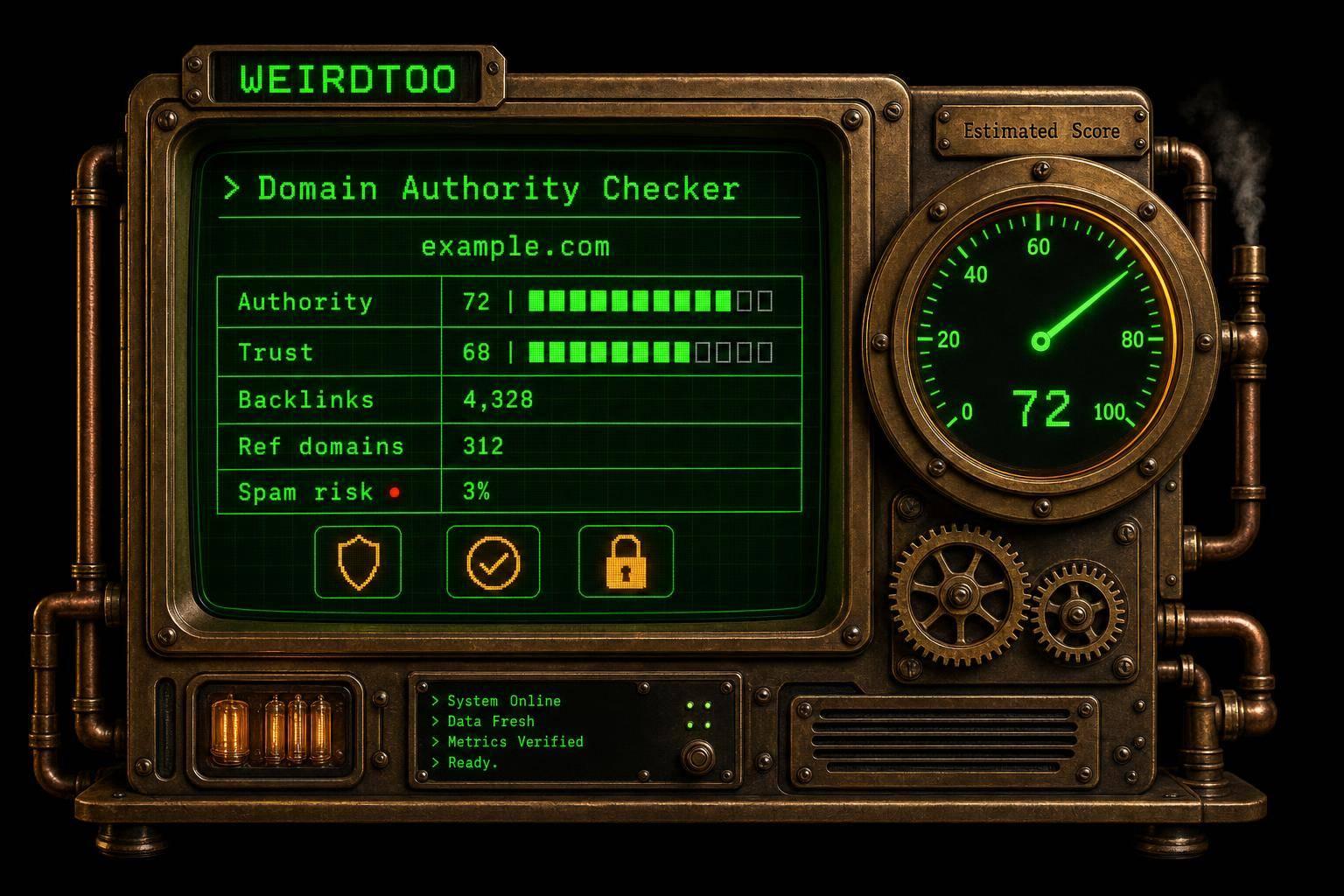
Check one domain at a time and see authority-style metrics, trust signals, and a clear estimated score based on measurable data.
Domain Authority Checker
Understand a Site’s Strength at a Glance
A Domain Authority Checker helps you estimate how strong a website looks from an SEO perspective by reviewing measurable link and trust signals. That matters when you're comparing competitors, evaluating a potential backlink source, or trying to understand why one domain tends to rank more consistently than another.
What This Tool Looks At
Instead of relying on vague claims, this checker focuses on signals that can be reviewed and explained. That may include referring domains, backlink volume, linking page diversity, follow versus nofollow balance, domain age when available, HTTPS status, and whether the homepage appears indexable. If a recognized third-party metric is available from an approved source, it should be displayed with clear attribution.
Why the Score Is Labeled Carefully
Not every site check can return a proprietary authority metric. In those cases, the tool provides an estimate built from normalized link and trust data. That distinction matters. A good website authority score should be transparent about what was fetched directly and what was calculated internally.
For SEOs, marketers, and site owners, a reliable Domain Authority Checker is most useful when it explains the "why" behind the number, not just the number itself.
FAQs
Is this the same as Moz Domain Authority or another third-party score?
Not always. If an approved external authority metric is available, the tool should show it clearly and label the source so you know exactly what you're looking at. If that data isn't available, the tool uses an internal scoring model based on measurable signals such as referring domains, backlink profile strength, trust indicators, and homepage accessibility. That internal result should be treated as an estimate, not as a replacement for any proprietary third-party metric.
What affects the authority score the most?
The strongest influence usually comes from link quality and breadth rather than raw backlink totals alone. Referring domain count, diversity of linking pages, and a healthy follow-to-nofollow mix can say more about a domain's strength than inflated link volume from a small number of sources. Trust and technical signals also matter, including HTTPS usage, whether the homepage appears indexable, and domain age when that information is available. The idea is to show a balanced view instead of making claims from one metric.
Can I use this score to compare competitors?
Yes, but it works best as a directional benchmark rather than a final verdict. If you check multiple sites using the same method, the results can help you spot gaps in link authority, trust signals, and overall domain strength. Still, authority-style metrics don't measure content quality, relevance, or business performance on their own. They're most useful when paired with rankings, traffic trends, and a closer look at the actual backlink profile.
Related Weird Too links
Keep following this lane
Current contact path
Need custom apparel or scoped help?
Use the contact form; removed product, checkout, research, and newsletter funnels stay offline.