Loading…
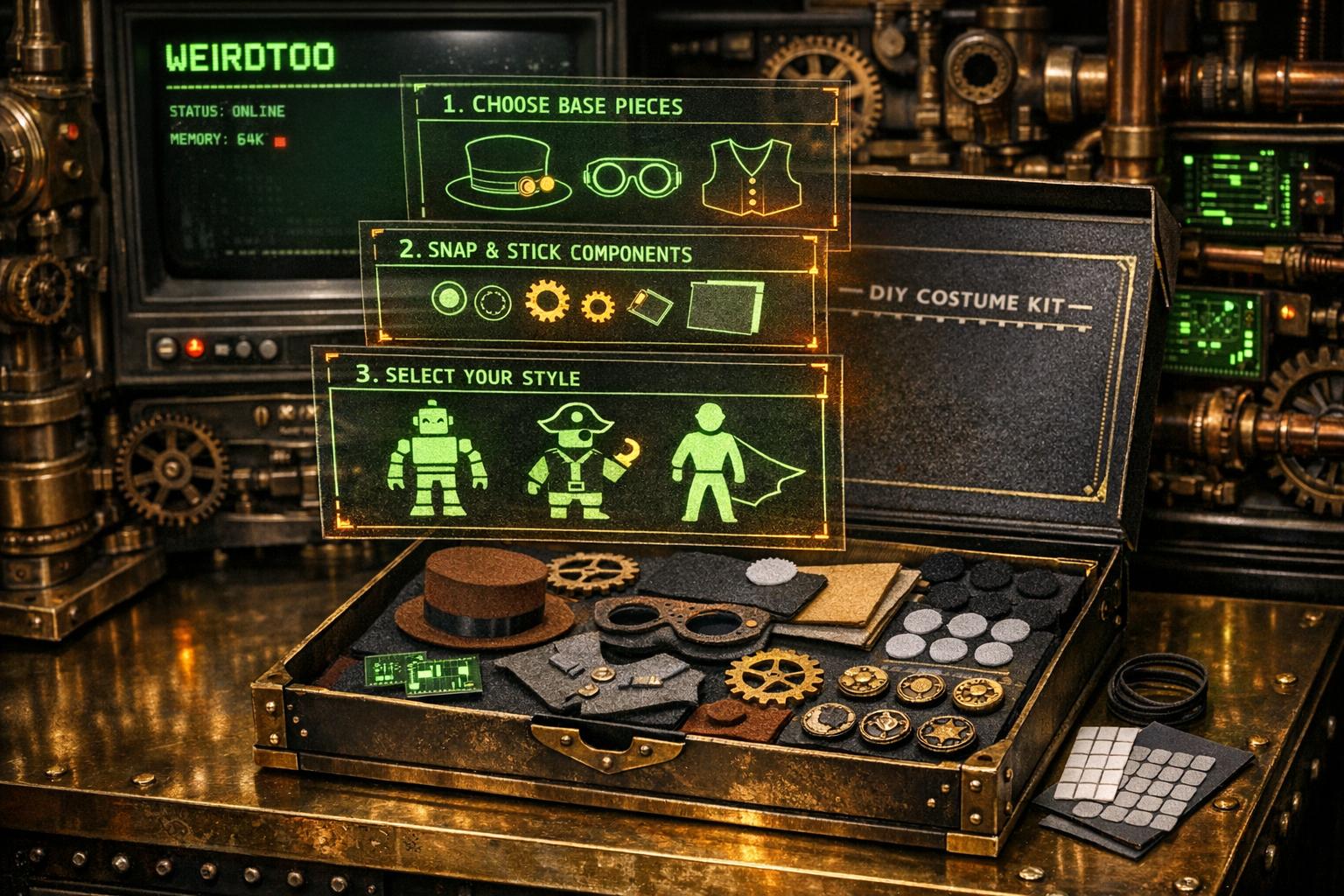
“DIY Costume Kits with a Twist”
By weirdtoo·May 1, 2026·12 min read
No-sew, customizable DIY costume kits with clear instructions, budget savings, and group-friendly themes for creative makers.
“DIY Costume Kits with a Twist”
DIY costume kits let you craft outfits that reflect your personality while staying affordable and easy to assemble. These kits include essentials like fabric, embellishments, and instructions, making them perfect for beginners or seasoned crafters. Whether you're creating a glowing headband for $18 or a $28 donut costume that doubles as a throw pillow, DIY kits transform simple materials into standout designs.
Key Takeaways:
- Customization: Personalize colors, textures, and accessories for a unique look.
- Budget-Friendly: Save up to 40% compared to pre-made costumes (e.g., a $55 DIY catsuit vs. $85 pre-made).
- No-Sew Options: Use fabric glue, knotting, or pre-sewn bases for hassle-free assembly.
- Creative Themes: From pun-based costumes like "French Kiss" to mashups like "Skeleton Mermaid."
- Group Projects: Kits work for families or groups, offering coordinated yet individual designs.
These kits are more than costumes - they’re hands-on projects that encourage self-expression, all while keeping things fun and cost-effective.
13 DIY HALLOWEEN COSTUMES | sew&tell
sbb-itb-342b8b2
Why Choose DIY Costume Kits?
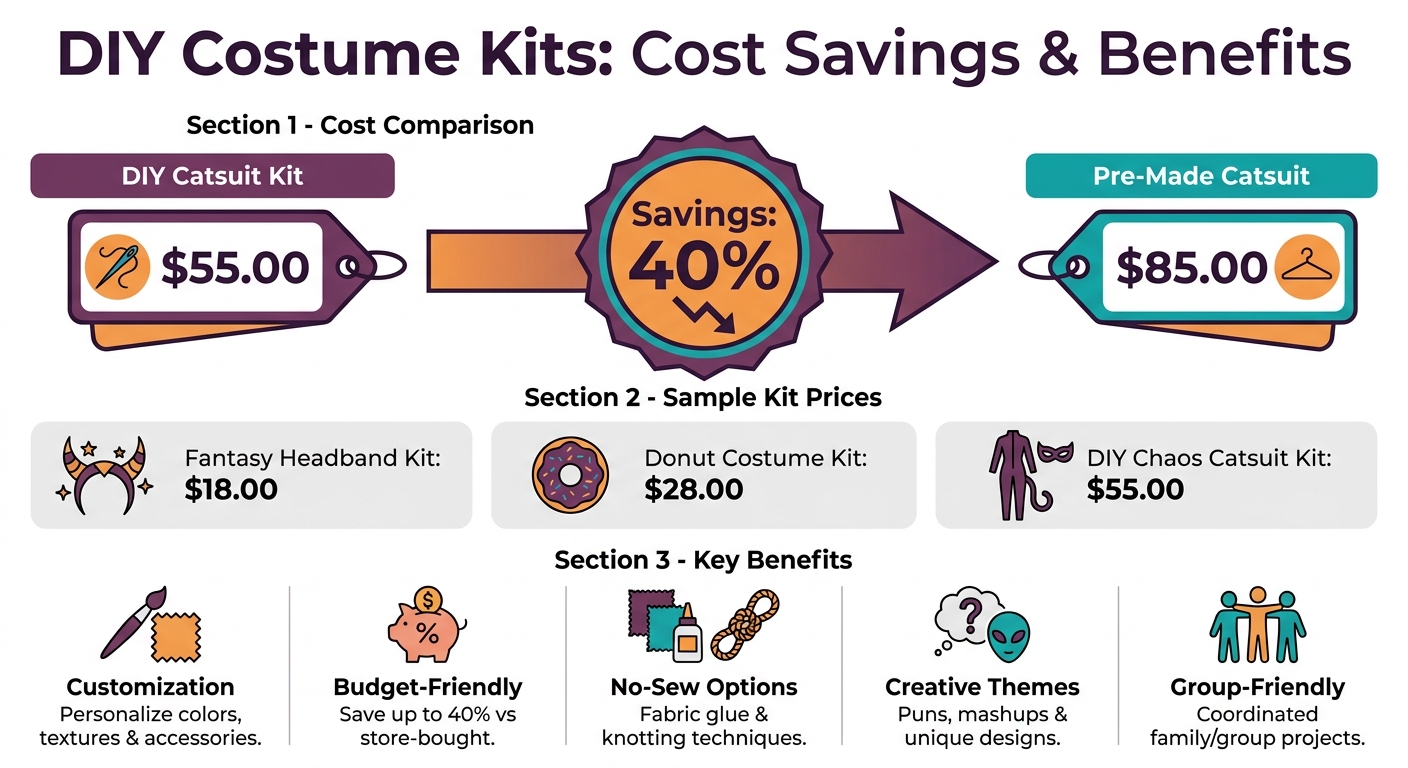
DIY vs Pre-Made Costume Cost Comparison and Kit Price Guide
The Benefits of Personalization
DIY costume kits turn the process of creating an outfit into a fun and creative adventure. Instead of settling for generic, off-the-shelf designs, you get to customize every detail - colors, textures, and even embellishments like sequins or pom-poms. Some kits even follow a "Bring Your Own Components" (BYOC) approach, where you can add your own electronics or lighting to make the design truly yours. For instance, you could attach VynEL panels to your favorite jacket or shirt rather than using a pre-made suit.
"Think of it as a blank canvas, you can bond the VynEL panels onto your outfit, light it up, and make it your own." - Ellumiglow [6]
The handmade aspect ensures your costume is one of a kind. Unlike store-bought costumes that are mass-produced, DIY kits allow you to add your personal touch through painting, cutting, and assembly. And as an added bonus, these creative choices can also help you save money.
Budget-Friendly Options for Custom Outfits
Choosing DIY over pre-made costumes often leads to significant savings. For example, a DIY Catsuit Kit costs €51.95 (around $55.00), while the finished version is €85.95 - saving you about 40% while still using the same high-quality materials [1]. Even entry-level kits are affordable: a Fantasy Headband Craft Kit is priced at $18.00, and a Donut Costume Sewing Kit goes for $28.00 [3][4].
These kits also provide access to materials that might otherwise be expensive or tricky to source individually. Items like high-quality acrylic felt, ultra-flexible VynEL™ lighting panels, and professional-grade components come pre-packaged in just the right amounts. Plus, many kits are versatile - like a donut costume that can double as a decorative throw pillow when not in use [3]. The cost savings don’t limit your creativity; instead, they give you more room to express yourself.
Encouraging Self-Expression Through Design
DIY kits are all about letting your creativity shine. While the kits provide the basic components, the design choices - like color schemes, decoration placement, or lighting setups - are entirely up to you. BYOC kits go a step further, letting you work with clothing you already own and love, ensuring a perfect fit and comfort. Whether it’s a cardboard mask or a catsuit, these kits become blank canvases for your imagination [5].
"Each flower, line, and shape is a piece of their imagination breaking through." - BeaverBot [5]
From futuristic light-up costumes to quirky handmade designs, the final result is always unique because it’s shaped by your own vision and effort. These kits not only save money but also give you the freedom to create something that truly reflects your personality. They’re the perfect starting point for exploring bold and creative ideas in costume-making.
Theme Ideas for DIY Costume Kits
Quirky and Unconventional Themes
Sometimes, the best costumes come from the simplest ideas. Pun-based and inanimate object costumes are great examples of this, turning everyday concepts into clever outfits. Take a "French Kiss" costume, for instance - just pair a striped shirt and beret with Kiss-inspired face paint. Or how about "The Black Eyed Peas"? All you need is a shirt with the letter "P" and a black circle painted around one eye. For music lovers, a "Cardigan Bee" combines a cozy cardigan with bee wings and antennae. These creative ideas are fun, easy to assemble, and often cost less than $10 to make[9].
Inanimate object costumes also let you get crafty with everyday materials. A "Spool of Thread" costume can be made with cardboard and yarn, while a "One Night Stand" involves wearing a small table around your waist. For gaming fans, a "Blue Shell" from Mario Kart can be recreated using blue fabric or foam with white duct tape. One standout example from September 2025 featured a pet-owner duo: the owner dressed as a hot dog vendor with a custom-built tray, while their pet rocked a matching hot dog suit. This interactive theme brought plenty of laughs at local Halloween events[8].
Mashup themes bring a whole new level of creativity by blending two unexpected ideas. Think "Ghost Mermaid" or "Skeleton Mermaid", which combine spooky vibes with fantasy elements. Pop culture fans might enjoy meme-inspired costumes like "Identity Thief" (covered in various name tags) or the viral "This is Fine" dog. One particularly memorable creation came from a college student in September 2025, who crafted a "Legendarily Wacky DIY Mayor McCheese" costume, complete with an oversized head, as a nostalgic nod to McDonaldland[8].
Seasonal and Event-Specific Themes
When it comes to Halloween kits, practicality meets creativity. Costumes built around warm layers like hoodies or sweatpants are perfect for colder weather. Seasonal kits also offer flexibility, letting you tweak designs for different occasions while keeping your creative flair intact.
Staying on top of trends is key with pop culture-inspired themes. Popular ideas include Taylor Swift-inspired "Swiftie" costumes, characters from kids' shows like Bluey or Despicable Me, and icons from games like Street Fighter 6 or Fortnite. You can also play with event-specific color schemes, such as pink and red for Galentine's Day or gold accents for "Olympic" or "Egyptian God" looks. These thoughtful design choices let you express yourself while staying relevant to the occasion[7][8][11].
Seasonal kits aren’t just for individuals - they can be scaled up for families or groups, creating a cohesive yet customizable experience.
Group and Family Costume Ideas
DIY kits open up plenty of possibilities for groups and families to create a unified look that still allows for personal touches.
Coordinated variations are a great way to keep everyone on theme while letting individuals stand out. For example, a "Donut Shop" theme can be adapted for all ages, with size options for infants (9.5" wide), toddlers (19" wide), and kids or adults (31" wide). Each person can choose their favorite "flavor", like Strawberry with pink icing or Chocolate with brown icing. Depending on comfort, participants can opt for a single donut (front only) or a double donut (front and back) design[3].
For dance groups or high-energy events, performance-based themes are a hit. The DIY Chaos Catsuit Kit, for instance, allows participants to create custom fringe designs with the help of video tutorials, ensuring consistency across the group[1]. Kits using fabric glue or similar adhesives make assembly quick and easy, perfect for weddings, parties, or other events where time is limited. These options ensure that everyone can join in on the fun, no sewing machine required[3][11].
How to Assemble Your DIY Costume Kit
Gathering Materials and Supplies
When putting together your DIY costume kit, you'll often find that while the basics are included, you might need to add a few extra items from around the house or your local craft store. For instance, fasteners like fabric glue (Fabri-Tac is a popular choice), grosgrain ribbons, and elastic strings are commonly needed. Decorative extras might include pipe cleaners, pom-poms, or colorful popsicle sticks to bring your costume to life [3][4].
Before heading out to shop, take a quick look through your wardrobe. Everyday clothing like black dresses, striped shirts, or white aprons can serve as a polished base for your costume, often looking much better than flimsy polyester alternatives [12]. For costumes that need stuffing - like a donut - you'll need to grab Poly-Fil, which is readily available at craft stores like Michaels, Hobby Lobby, or JoAnn's. Buying locally can help you avoid the high shipping fees that often come with bulky items [3]. If you’re in a pinch, Amazon is a reliable option for accessories, especially since orders over $35 often qualify for free shipping [3][12].
Once you've gathered your materials, lay them out in a logical order to make the assembly process smoother.
Organizing Your Kit for Easy Assembly
A well-organized kit can make all the difference when it comes to putting your costume together. The key is to group your materials by their function - base items, decorative pieces, and fasteners - so you’re not stuck rummaging through a chaotic pile mid-project [3][13]. A great example of this approach is Fashion Camp's DIY Donut Costume Kit, which costs $28.00 and includes pre-cut felt pieces for the "cake" and "icing", ribbon, and a 2-ounce bottle of Fabri-Tac. It also clearly labels what’s not included, such as Poly-Fil stuffing [3]. On the other hand, BEAVERBOT's Masque of Cocoon Breaker Material Kit takes it a step further with a 7-step illustrated guide that organizes materials by each stage of assembly and offers practical tips, like using a scoring tool for precise eye holes [5].
Before you dive in, double-check the contents of your kit and arrange everything according to the order of assembly. If your costume has multiple parts, like a tutu and a headband, tackle them one at a time to keep things manageable [2].
Adding Instructions and Inspiration
Clear instructions can turn a potentially frustrating project into a fun and rewarding experience. The best kits combine straightforward written directions with visual aids, such as sticker patterns or felt templates, to guide you through the process [2][3]. For instance, Twisted Movement's DIY Chaos Catsuit Kit, priced at around $51.95, includes a 15-minute instructional video that’s emailed to you as soon as you place your order. This lets you familiarize yourself with the steps while waiting for your materials to arrive via USPS [1].
"Put in the effort and collect the compliments! We'll supply you with helpful tips, instructions and all the goodies to create these yourself."
– Fashion Camp [2]
Look for kits that cater to different skill levels by offering various assembly options, such as machine sewing, hand sewing, or using fabric glue [3]. Some kits even go the extra mile by including ideas for reusing your costume - like turning a donut costume into a throw pillow after Halloween - or suggesting ways to play with unconventional color schemes for a fresh take on classic characters [3][14]. These thoughtful details can help you turn a standard kit into something that feels uniquely yours, making the crafting process not just about following steps but about adding your personal flair.
Tips for Customizing Your DIY Costume Kit
Once you've gathered your DIY costume kit, these tips can help you bring your vision to life with unique touches.
Using Different Materials and Textures
Incorporating a variety of materials can add depth and personality to your costume. Everyday items can be repurposed in creative ways - a men's button-down shirt can double as a lab coat, and a fuzzy blanket can provide the perfect texture for a cozy animal costume. This is especially handy in colder areas, where soft fabrics like fleece can keep you warm without the need for a bulky coat that hides your design [7].
If sewing isn't your thing, Heat Transfer Vinyl (HTV) is a fantastic, needle-free option. You can easily add skeleton designs to pajamas or create custom graphics for t-shirts. For more structural designs, materials like EVA foam and faux leather are ideal for armor-like details, while cardboard can be shaped into impressive 3D masks [5][7]. For a touch of magic, consider shimmer fabrics or glitter tulle, and fringe can bring movement to designs like catsuits [1][7].
"Small sewing moments can create great joy." - Heather, Founder, Heather Handmade [7]
With these materials in mind, you can take your costume a step further by adding personal touches.
Adding Personal Touches
Customizing colors is one of the easiest ways to make your costume stand out. Many kits offer basic color options - like strawberry pink or chocolate brown for a donut costume - but you can often request special shades that match your personal style [3]. Beyond colors, think about adapting components to suit your needs. For example, a headband piece can be attached to a hat or visor for a different look or to fit various preferences.
To make your costume even more unique, try adding mixed-media elements like snake-themed headbands or hand-cut felt details. If you're working with a t-shirt or catsuit base, fabric glue is your best friend for attaching trims, monograms, or fringe without any sewing [1][7].
While these personal touches make your costume uniquely yours, balancing creativity with practicality ensures it’s both eye-catching and functional.
Balancing Simplicity and Design
Starting with a pre-sewn base is a smart way to save time and focus on decorative details. This approach allows you to create intricate designs without the hassle of constructing the entire costume from scratch [3]. Tools like fabric glue (e.g., Fabri-Tac) and simple knotting techniques can help you achieve professional-looking textures, such as tulle tutus or fringed catsuits, without needing a sewing machine [1][3].
When working with PDF patterns for custom elements, always print them at "Actual Size" (100%) and check the registration marks to ensure everything lines up perfectly [15]. For maximum impact with minimal effort, try layering textures. For example, use acrylic felt for "icing" and add Poly-Fil for a 3D effect to make a donut costume look impressively detailed [3].
"Every item is completely unique due to the handmade nature of our custom creations." - Twisted Movement [1]
Conclusion
DIY costume kits are a fantastic way to stand out while keeping costs low. They offer a mix of practicality and fun, catering to all skill levels - from picking out vibrant colors to adding personal touches that showcase your personality.
The handmade approach ensures your costume is truly one-of-a-kind, a refreshing alternative to the cookie-cutter options found in stores [1]. Whether it's painting a mask or selecting custom accents, each kit becomes a canvas for your creativity [3][5].
These costumes often go beyond the event itself, offering surprising versatility. For instance, a donut costume can double as a quirky throw pillow, while a customized sweatshirt might find its way into your everyday wardrobe [3]. With options ranging from no-sew tutu kits to pre-sewn bases that only need decorating, there’s something for everyone, no matter their crafting experience [3][10]. Glowing reviews highlight how enjoyable and satisfying the process can be [1].
"There's no wrong way to decorate - just follow your imagination." – BeaverBot [5]
Whether you’re crafting solo or with friends, these kits encourage creative expression in a way that feels entirely personal.
FAQs
How do I choose the right kit for my skill level?
When picking a crafting or sewing kit, think about your skill level and how complex the kit is. If you're just starting out, go for kits that include pre-made pieces or come with clear, step-by-step instructions. For those with more experience, kits that provide raw materials and require more hands-on assembly can be a fun challenge. Always read the kit descriptions and reviews to make sure it aligns with your abilities in sewing, cutting, or personalizing.
What tools or supplies will I still need to buy?
To put together your DIY costume kit, you'll want to gather some basic tools and supplies. Items like scissors, pins, chalk, or a removable marking pen are great for getting started. If your costume needs adjustments, having sewing clips or needles on hand can be a lifesaver. Depending on your design, you might also need glue, extra fabric, or decorative elements to add those finishing touches. With these essentials, you'll be ready to personalize and bring your costume to life.
How can I make my costume comfortable and easy to wear?
To make your costume comfortable and easy to wear, opt for lightweight materials like soft fabric or foam padding. Include adjustable features such as Velcro straps or zippers to ensure a snug, personalized fit. Start with fitted clothing as a base to create a smooth foundation, and pick breathable fabrics to stay cool and comfortable, especially if you’ll be wearing it for long periods. Proper sizing is crucial - it allows for unrestricted movement and helps prevent any irritation.
Current contact path
Need Weird Network WiFi, custom apparel, or scoped help?
Use the contact form; removed product, checkout, research, and newsletter funnels stay offline.