Loading…
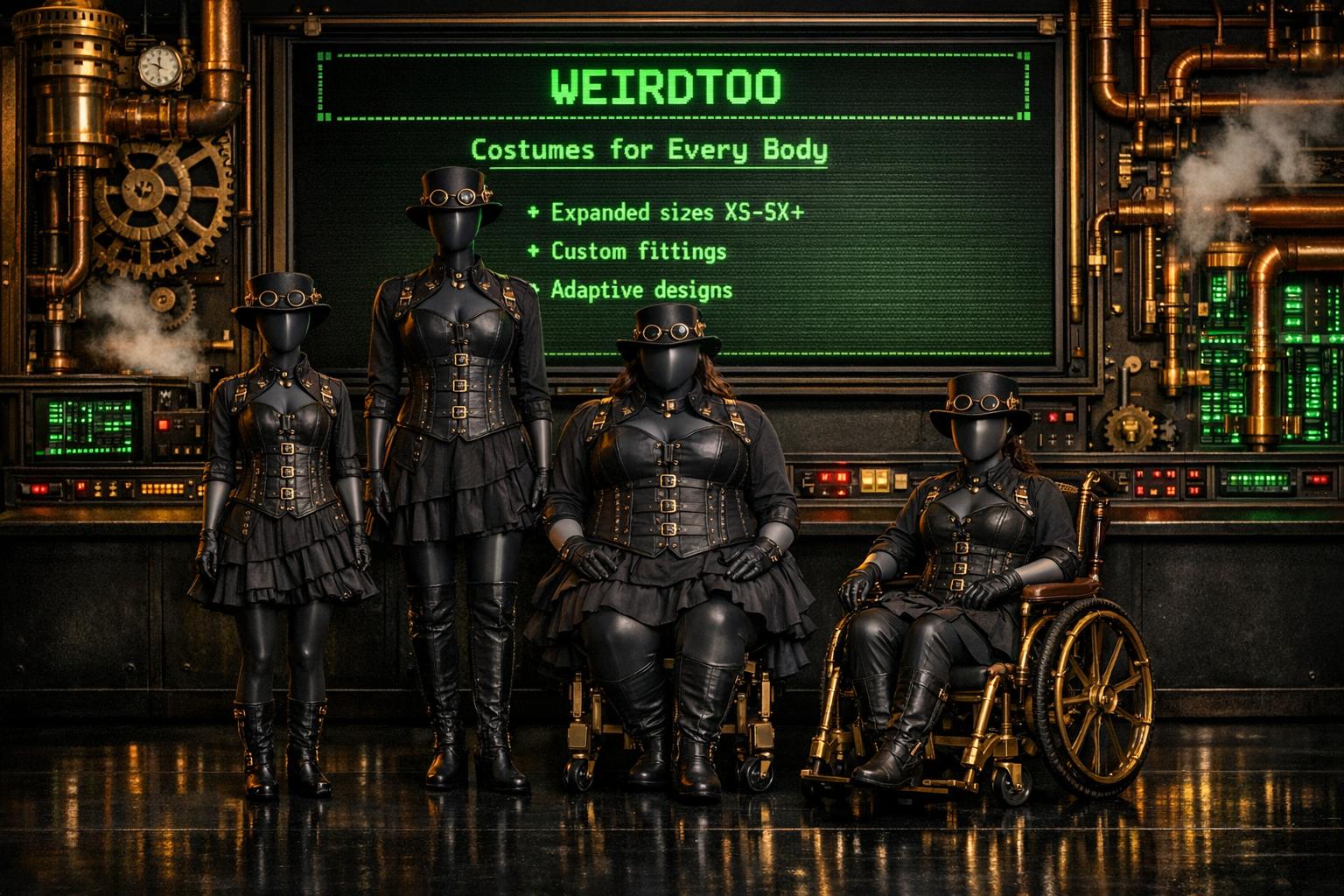
“Costumes for Every Body: Inclusive Sizing Available”
By weirdtoo·May 8, 2026·12 min read
Expanded sizes, custom fittings, stretch fabrics, and adaptive designs help costumes fit comfortably and improve accessibility for all bodies.
“Costumes for Every Body: Inclusive Sizing Available”
Costume shopping has often been frustrating for people who don’t fit into standard sizes. Many retailers ignored size diversity, leaving customers with poorly fitting options. But things are changing. Costume brands are now offering designs that cater to a wide range of body types, focusing on better fit, comfort, and flexibility.
Key takeaways:
- Retailers are expanding size ranges: Some brands now offer costumes up to size 8X, with over 1,650 styles available for plus sizes.
- Custom sizing options: Free custom measurements and tailoring services are becoming common, ensuring a proper fit.
- Improved fabrics and designs: Stretch fabrics, adjustable closures, and thoughtful design features make costumes more comfortable and wearable.
This shift ensures that everyone, regardless of size or mobility needs, can find a costume that fits well and feels good. Whether it’s for Halloween, conventions, or other events, these changes make costume shopping more accessible and enjoyable.
What Makes Sizing Inclusive: Core Components
Inclusive sizing isn’t just about adding more sizes to a chart - it’s about recognizing that bodies differ in proportions, not just overall size. It requires precise measurements, flexible fabrics, and thoughtful design elements to meet a wide range of body needs. This mindset shapes every step of costume creation, from tailoring measurements to choosing adaptable materials and incorporating versatile design features.
"Everyone deserves the perfect fit! That's why ALL styles are available up to 5XL and with custom options like long or short inseams, long torsos, and more." - The Line Up [3]
Body Measurements and Fit
Achieving the right fit starts with accurately measuring key areas like the torso, waist, and bust. For one-piece costumes like unitards or leotards, torso girth - measured around the full circumference of the torso - is the most critical measurement. It ensures the fabric doesn’t pull uncomfortably or sag awkwardly [3].
Inclusive sizing also considers that chest sizes vary independently of overall body size. Many costume makers now provide "Full" (C/D cup) and "X-Full" (larger than D cup) options for tops, so wearers don’t have to size up an entire garment just to accommodate a larger bust [3]. Additionally, options like "long torso" or "short torso" adjustments - designed for measurements that differ by at least 2 inches from standard - help costumes fit vertically as well as horizontally [3].
For the most accurate results, measure while wearing close-fitting clothing like a leotard rather than bulky streetwear. To find your natural waistline, bend to the side - the crease that forms marks the spot [3]. If your measurements fall between sizes, it’s often better to size up since it’s easier to take in a costume than to let it out [3].
Once measurements are set, choosing the right fabric is the next step toward ensuring comfort and mobility.
Fabric Selection and Stretch
Fabric choice plays a huge role in how well a costume adapts to different body types. Stretch fabrics, especially those with 4-way stretch, move with the body, offering comfort during performances or long events [4]. Unlike standard stretch fabrics, which stretch in only one direction, 4-way stretch materials expand both crosswise and lengthwise, making them ideal for accommodating various body shapes and heights.
Blends of spandex or Lycra are particularly effective because they have excellent stretch recovery - meaning the fabric snaps back to its original shape after being stretched. This helps maintain the costume’s intended look and fit over time. Heavier weight fabrics with 4-way stretch also provide better support and opacity, making them especially useful for form-fitting plus-size designs.
When working with 4-way stretch costumes, there’s flexibility to size down for a snug, compression-like fit or size up for a more relaxed feel, depending on the conditions or duration of wear [5].
Beyond fabric, design elements further enhance a costume’s ability to accommodate diverse body types.
Design Features for Different Bodies
Smart design details make costumes functional for all kinds of bodies. Adjustable elastic waistbands, side pleats in pants, and customizable lengths help garments fit and move properly on different shapes [7][8]. For those with larger chests, adding structured support in the bust area ensures both comfort and a flattering fit [7].
The placement of closures - like zippers, buttons, or elastic - is also key for ease of dressing and achieving a proper fit. Adjustable armholes and rises can accommodate various proportions, while open-back or cutout designs often allow for more flexibility in fit, especially for wearers whose torso or waist measurements exceed standard sizing by 2–3 inches [3].
These design choices aren’t just about appearance - they ensure that costumes allow wearers to sit, walk, and stretch comfortably. This is particularly important for individuals with unique mobility needs [6]. By focusing on these adjustments, inclusive sizing becomes more than just a concept - it transforms into a genuine effort to provide comfort and confidence for every wearer.
sbb-itb-342b8b2
Inclusive Sizing vs. Standard Size Charts
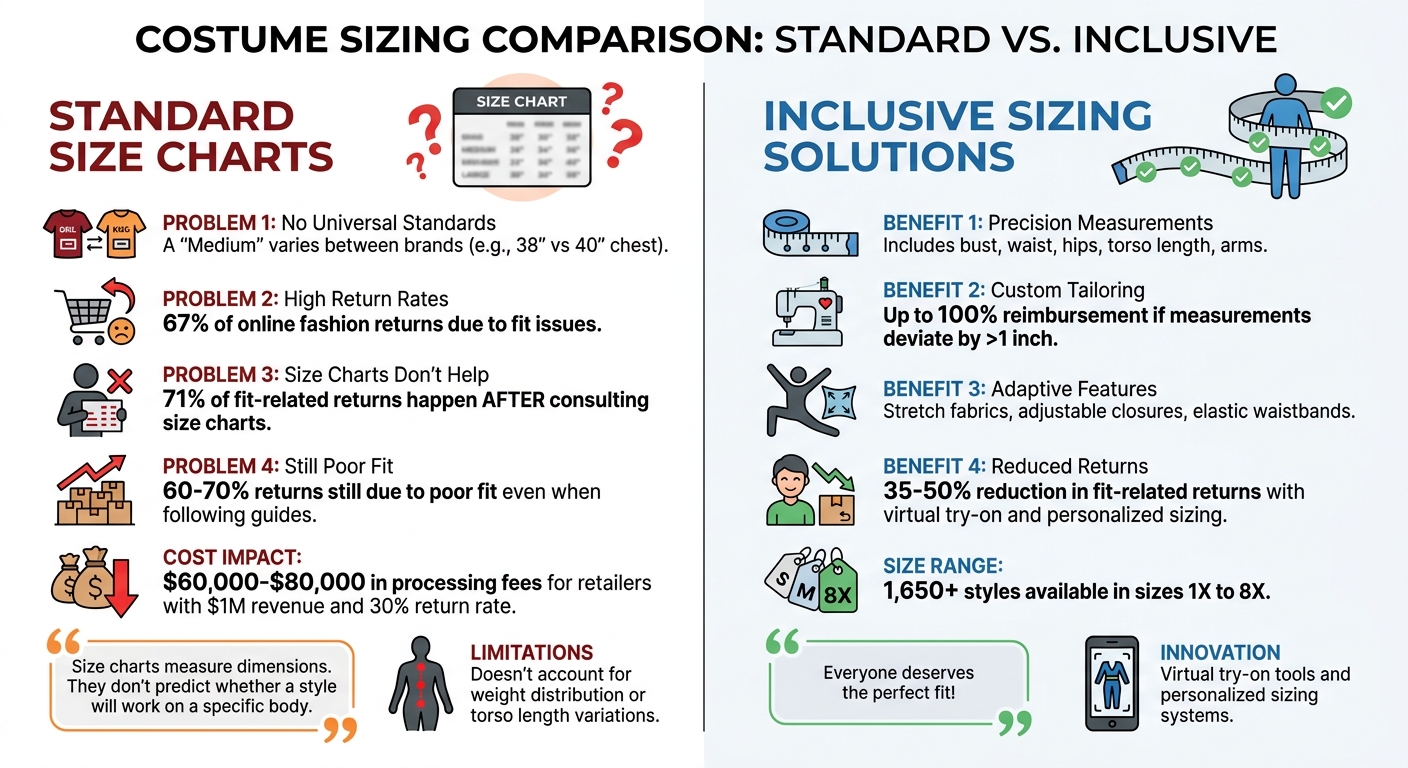
Standard Sizing vs Inclusive Sizing in Costumes: Key Differences and Benefits
Problems with Standard Size Charts
Standard size charts often create more confusion than clarity. With no universal sizing standard, a "Medium" at one brand could mean a 38-inch chest, while another brand's "Medium" measures 40 inches[9]. This inconsistency leaves shoppers guessing, even if they carefully review sizing details.
Fit issues are a major reason for online fashion returns - 67% of them, to be exact[9]. Surprisingly, 71% of these fit-related returns happen even after customers consult size charts[9]. In fact, even when shoppers follow size guides, between 60% and 70% of returns are still due to poor fit[9]. One industry expert summed it up well:
"The size chart didn't prevent the wrong choice. It just gave customers false confidence in a guess." – Styliquetechnologies[9]
The problem lies in the limitations of standard size charts. While they provide general measurements, they don't account for variations like weight distribution or torso length[9]. For instance, a chart might label you as a size Large based on your waist, but it won't tell you whether the garment accommodates your proportions or if the fabric offers the right stretch. As another expert put it:
"Size charts measure dimensions. They don't predict whether a style will work on a specific body." – Styliquetechnologies[9]
This lack of precision has real consequences. Take a costume retailer with $1 million in annual revenue and a 30% return rate - fit-related returns could cost them $60,000 to $80,000 in processing fees alone[9]. For customers, it means wasted time, extra shipping costs, and the frustration of receiving a costume that doesn't fit, especially for a special event. Inclusive sizing addresses these issues by tailoring garments to better match individual body shapes.
Benefits of Inclusive Sizing
Unlike standard sizing, inclusive sizing focuses on precision, offering custom solutions that prevent issues like gaping, pulling, or awkward proportions. Measurements include bust, waist, hips, torso length, and even arms, ensuring a much better fit[2][1]. Some brands go a step further, reimbursing up to 100% of local tailoring costs if a custom piece deviates by more than an inch from the provided measurements[2].
But the advantages don't stop at just fit. Inclusive designs often use stretch fabrics and adjustable closures - like elastic waistbands or laces - to provide flexibility and comfort that off-the-rack costumes typically lack[1]. On top of that, innovations like virtual try-on tools and personalized sizing systems can reduce fit-related returns by 35% to 50%[9], saving time and money for both customers and retailers.
Most importantly, inclusive sizing ensures everyone can step into their desired character without compromise. As one source aptly noted:
"Ready-made costumes frequently lack size diversity, leaving many individuals feeling excluded or forced to compromise on their desired look." – Crafting DIY Center[1]
Examples of Inclusive Costume Designs
Costumes for Plus Sizes
The plus-size costume market now features over 1,650 styles specifically designed for sizes ranging from 1X to 8X[10]. These aren’t just enlarged versions of standard costumes - they’re thoughtfully crafted to suit plus-size proportions.
The variety of options is impressive. For example, the Glinda the Good Witch costume combines tulle skirts for a magical feel, while the Warrior Princess costume uses faux chain mail and bold red accents for a striking look[10]. Pop culture fans can find costumes like the Plus Size Ghostbusters Jumpsuit for $79.99 or the Wonder Woman Long Sleeve Dress, which is available up to size 6X. Budget-friendly picks include the Wilma Flintstone Dress for $34.99 and the 80s Female Track Suit priced at $30.95[10].
Comfort is a key feature in these designs. Some costumes, such as PJ-style jumpsuits for characters like Stormtroopers, are made with breathable, high-quality fabrics to ensure wearability at events like conventions or parties[15,3]. For an even better fit, custom tailoring services are available. As HalloweenCostumes.com states:
"We understand that every person comes in a different shape and a different size and that shouldn't limit what sort of costumes they get to wear."[10]
Beyond size inclusivity, costume designs are also evolving to meet the needs of individuals with mobility challenges.
Costumes for People with Mobility Needs
Costumes designed with accessibility in mind combine functionality and style for people with varying mobility requirements. Many made-to-order services use detailed measurements such as "Waist to Hem" and "Strap to Hem" to create garments that accommodate mobility aids[2].
This focus on precision makes a big difference. Companies like Coscosmos, which has been producing custom costumes for about a decade, offer free custom sizing and modification services[2]. If a costume doesn’t match the requested measurements by more than an inch, some providers even offer full refunds for local alterations[2].
Comfort is another priority. Using breathable, high-quality fabrics ensures that costumes are wearable for extended periods. Accurate measurements taken from a person’s primary mobility position - whether seated or standing - help guarantee the best fit[2]. As Coscosmos explains:
"Cosplaying isn't just dressing up; it's about stepping into a different world. Our costumes allow you to fully embody your chosen character while enjoying the perfect blend of style, comfort, and authenticity."[2]
Custom solutions go a step further, offering personalized designs that cater to individual needs.
Made-to-Order and Customizable Options
Customizable costumes solve the challenges posed by standard sizing by using detailed body measurements - such as chest, waist, hips, torso length, and shoulder dimensions - to create a tailored fit that complements each person’s unique proportions[2,3].
But customization isn’t just about fit. Shoppers can choose fabrics, add stretch panels for more flexibility, adjust colors, or modify design elements to suit their preferences[1]. Stretch fabrics, in particular, provide comfort and ease of movement, addressing the limitations of rigid, mass-produced costumes[1]. High-end custom cosplay outfits typically cost between $271.99 and $389.98, with a production timeline of 15–20 business days[2].
These personalized options not only ensure a better fit but also enhance confidence. As Crafting DIY Center puts it:
"Generating custom costumes provides a solution by ensuring a comfortable and flattering fit while allowing for greater creative control."[1]
Many vendors also offer Custom Fit Guarantees or free re-shipping for adjustments, ensuring that customers get exactly what they envisioned[2]. These tailored designs allow everyone to step into their chosen characters with comfort and confidence.
How to Find the Right Costume for Your Body
How to Use Size Guides
Getting accurate measurements is key to finding a costume that fits well. Stand straight with your arms relaxed while measuring, and follow the specific instructions provided by each size guide. Keep in mind that measurement terminology can vary between makers, so it's always a good idea to confirm what they mean before commissioning custom work. As Michael MacWolff from Kilted Katana Creations explains:
"Terminology I use for the different measurements are not necessarily standard. If you are commissioning someone to make a garment for you, make sure you clarify what they mean when they ask for certain measurements." [11]
If your costume includes headwear or integrates with a wig, measure your head circumference while wearing the wig. MacWolff highlights the importance of this:
"If you need to take this measurement and your cosplay involved a wig, WEAR THE WIG when you measure. I've made my fair share of hats that fit me fine but won't stay on my head when I have the wig on underneath." [11]
Look for size guides that ask for detailed measurements, including chest, waist, hips, and lengths like "Strap to Hem" or "Waist to Hem." Brands that focus on inclusivity often provide these options. Some custom costume makers, such as Coscosmos, even offer reimbursement for local tailoring costs - sometimes up to the full product price - if the delivered item differs from your specified measurements by more than an inch [2].
Once you've taken your measurements, check out customer feedback to make a more informed choice.
Reading Customer Reviews and Photos
Customer reviews can be a game-changer when choosing a costume. They provide firsthand accounts of how costumes fit different body types and often include helpful details about fabric stretch, comfort, and whether the sizing runs large or small. Pay close attention to reviews from people with similar body measurements to yours.
Photos shared by customers are especially useful because they show how the costume looks on real people, not just professional models. Look for reviews that mention the reviewer’s height, weight, and the size they ordered - this information can help you gauge how the costume might work for you, especially when shopping online.
Shopping from Local and Small Businesses
Local and small businesses often go the extra mile to provide personalized service that larger retailers simply can't match. Many smaller vendors offer made-to-order options, free custom sizing, and direct communication with their customer service teams to address specific questions about measurements and modifications [2]. Some even have live chat or 24-hour response teams to assist with fit concerns before you make a purchase.
These businesses also tend to provide services like free alterations or reimbursements for local tailoring if the garment doesn’t meet your specifications. Warehouse pick-up options can save you shipping time and help ensure your costume arrives in perfect condition.
Conclusion
Inclusive sizing ensures that everyone can fully immerse themselves in the joy of costume play. When brands embrace size diversity, they promote body positivity and make sure no one feels excluded - or has to compromise on their character choice simply because the right size wasn't available.
With the help of detailed sizing guides and thoughtful designs, a well-fitting costume can do wonders for confidence and creativity. Whether you're gearing up for a convention, celebrating Halloween, or stepping into a character for the first time, the right fit elevates the experience. Custom sizing options combine style, comfort, and accuracy in ways that standard size charts often fall short, helping cosplayers truly embody the characters they admire [2].
By supporting brands that provide comprehensive size guides, free custom sizing, or reimbursements for local tailoring, you're encouraging a shift toward better representation in the costume industry. As one provider, Coscosmos, puts it:
"Cosplaying isn't just dressing up; it's about stepping into a different world." [2]
Inclusive sizing opens the door for everyone to participate in the world of costume wear. Choosing inclusive options helps drive greater representation and creativity in costume design.
FAQs
What measurements matter most for a costume to fit right?
The key measurements for ensuring a costume fits well are chest, waist, and hip girth. It's also crucial to match size indicators like bust, waist, and hip circumference to the wearer's actual body dimensions. Accurate measurements are essential for achieving both a great fit and maximum comfort.
How do I choose between standard sizing and custom sizing?
When deciding between standard and custom sizing, it’s important to think about your body measurements and how you want your clothes to fit. Standard sizing relies on general size charts, which can work well if your measurements match those averages. However, custom sizing is all about precision. It’s tailored to your exact measurements, offering a fit that feels more comfortable and accurate. If you’re looking for convenience, standard sizing is the way to go. But if you want a fit that’s truly made for you, custom sizing is the better choice.
What features make a costume easier to wear for mobility needs?
Costumes crafted with mobility in mind often prioritize stretchy fabrics to allow for greater flexibility and movement. Designers typically avoid restrictive features like tight corsets or heavy decorations that could hinder comfort. Instead, they incorporate adjustable elements such as velcro straps, elastic waistbands, or stretch panels to suit a range of body types.
These costumes also favor lightweight materials and accessible fastenings like zippers or hook-and-loop closures, which make them easier to put on and take off. Customizable features further enhance their practicality, ensuring they meet the needs of individuals with mobility challenges while remaining comfortable and functional.
Current contact path
Need Weird Network WiFi, custom apparel, or scoped help?
Use the contact form; removed product, checkout, research, and newsletter funnels stay offline.