Loading…
🎭 Costume Merchandise Headlines (Marketing & Product Ideas)
By weirdtoo·May 8, 2026·9 min read
Identity-focused, location-based, and tech-powered personalization tactics to boost costume merchandise sales and improve customer fit.
🎭 Costume Merchandise Headlines (Marketing & Product Ideas)
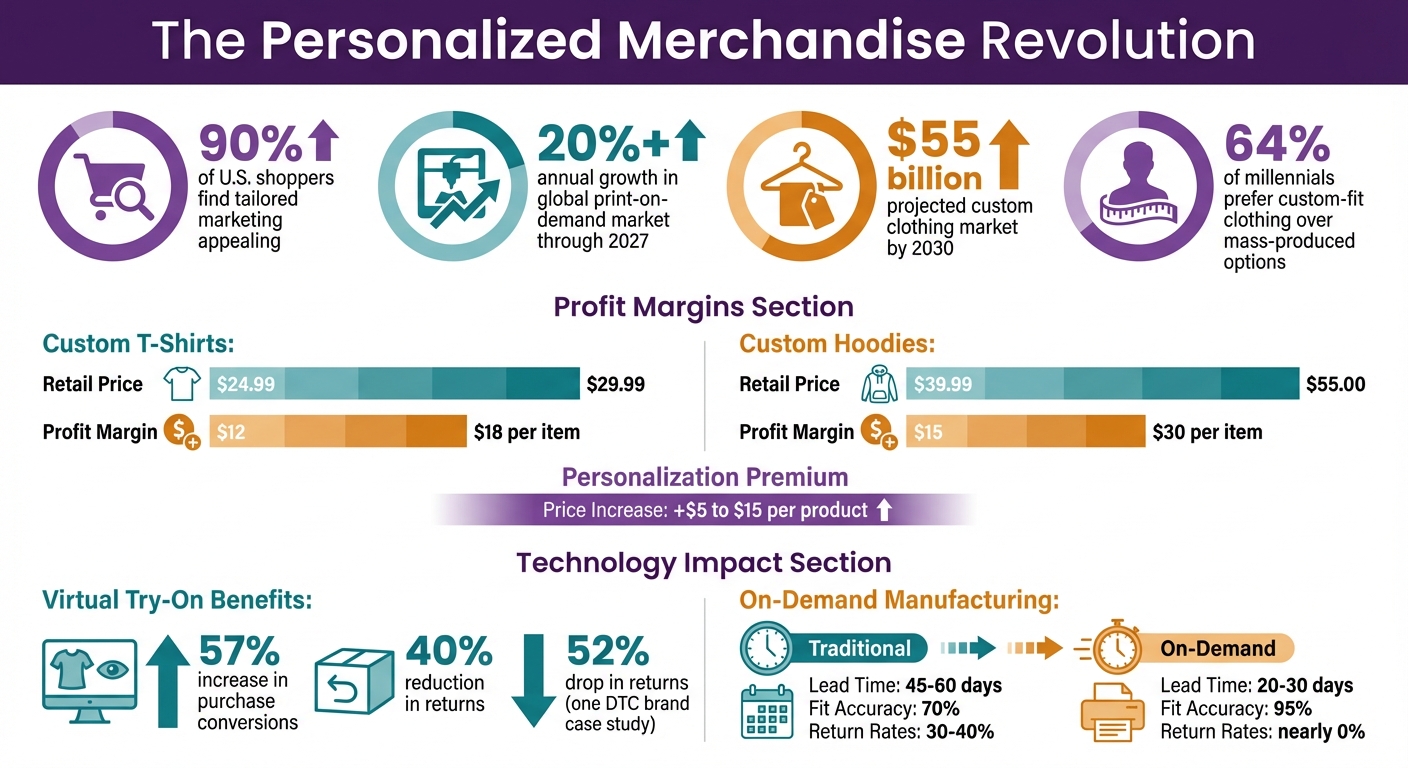
Costume merchandise isn't just about clothing - it's about identity. When someone wears a shirt that says "Plant Dad" or "Ranch Mom", it reflects who they are and what they value. Personalized products are on the rise, with 90% of U.S. shoppers finding tailored marketing appealing. The global print-on-demand market is growing by over 20% annually through 2027, showing strong demand for niche, meaningful designs.
Key takeaways:
- Identity-focused designs: Products like "Nurse Mom Who Works Night Shifts" or items tied to local landmarks create emotional connections.
- Interactive elements: Features like tactile materials (e.g., sequins) make items more engaging.
- Rural pride: Custom gear using local GPS coordinates or community symbols resonates deeply in smaller towns.
- Tech-driven personalization: AI-powered design tools, virtual try-ons, and on-demand manufacturing make customization faster and more efficient.
Whether it's a hoodie celebrating Wyoming's rodeo culture or a mug with a favorite coffee shop, these products tell stories and build connections. The future of costume merchandise lies in understanding niche needs, using technology, and making every item feel personal.
Costume Merchandise Market Statistics and Profit Margins 2025-2030
How I Created A Multi Million Dollar T-Shirt Business (Step-By-Step)
sbb-itb-342b8b2
1. Connectivity Themes
Costume merchandise has a unique way of creating instant bonds among people who share similar interests, roles, or even quirks. The secret lies in crafting products that serve as identity signals, allowing wearers to showcase their personalities or affiliations to the world. Think of a "Ranch Mom" hoodie or a "Gamer Who Lifts" t-shirt - these items act as subtle yet powerful cues that say, "This is who I am." Below are three effective design strategies that tap into these connectivity themes to make costume merchandise more impactful.
1. Identity-Signaling Apparel
Merchandise that blends two specific niches can make a strong impression. For example, a sweatshirt that says "Nurse Mom Who Works Night Shifts" or a cap reading "Veteran Who Loves German Shepherds" speaks directly to highly specific audiences. This level of precision makes customers feel the product was tailor-made for them. A great example comes from 2025, when Wicked Valley launched the "Wicked Radio Hoodie", a radio-themed graphic hoodie aimed at niche streetwear fans [5]. Typically, custom hoodies in this market sell for $39.99 to $55.00, yielding profit margins of $15 to $30 per item [1].
2. Tactile Movement Features
Adding interactive, tactile elements to costume merchandise can enhance engagement and make designs more memorable. Materials like sequin panels that flip with a touch or move in the wind create a sensory experience that stands out in a world dominated by LED screens. Mark Cowan, Operations Director at Radiant Manufacturing, explains:
"Where a lot of people might see a regular flat print on a billboard, we add an extra dimension and a unique movement that doesn't require power" [3].
One standout example is from 2018, when Major League Soccer partnered with Radiant Manufacturing to create a 25-foot-tall trophy for the MLS Cup in Atlanta, Georgia. The trophy, built entirely of sequins using patented SolarRay panels, caught the eye without relying on electricity [3]. This kind of approach is especially effective for outdoor or rural events where power sources might be limited.
3. Location-Based Personalization
Tying designs to specific places can deepen the personal connection customers feel toward merchandise. By incorporating elements like local GPS coordinates, zip codes, or iconic landmarks, products become symbols of community pride and personal history. For instance, a t-shirt featuring Wyoming’s exact coordinates or a mug showcasing a favorite neighborhood coffee shop transforms an everyday item into something meaningful. Thanks to print-on-demand technology, designers can easily include these custom touches, often allowing for a premium price increase of $5 to $15 per product [1]. Custom t-shirts in this category generally sell for $24.99 to $29.99, with profit margins ranging from $12 to $18 [1].
2. Rural Community Focus
Rural communities have rich identities shaped by their traditions, landmarks, and shared experiences - elements that often go unnoticed by mainstream platforms. By tailoring products to reflect these unique aspects, businesses can create merchandise that resonates deeply with rural customers. Below are three strategies that draw from rural heritage to create meaningful and appealing products.
1. Rural Sequin Mascot Gear
Taking inspiration from Rock Springs' famous "Cowboy Joe" sequin sculpture, this concept uses weather-resistant sequin panels to design striking costumes for rural mascots, parade floats, or community displays. These patented "SolarRay" sequin panels, produced by Radiant Manufacturing in Rock Springs, have been used by global brands like Disney and the NFL, employing up to 65 people at a time [3]. The panels move naturally with the wind, creating a dynamic visual effect without requiring energy. Mark Cowan, Operations Director at Radiant Manufacturing, describes their impact:
"people will stop, sit, and watch as the wind moves across our displays. They have a very pleasing visual effect" [3].
This approach blends local craftsmanship with visual appeal, making it a standout option for rural communities.
2. Upcycled "Community Heritage" Costume Kits
Inspired by the Dolores Booster Club's "Under the Moonlight" initiative in March 2026, this idea involves repurposing formal wear into themed costume kits for local events like festivals, proms, or theater productions [6]. The Booster Club collaborated with the LOR Foundation to host a fashion show featuring students and teachers as models, with clothing donations collected at schools and libraries. Donors were rewarded with free tickets to the $5 event [6]. This model not only makes costumes affordable but also brings the community together, turning neighbors into active participants. It transforms donated items into wearable symbols of local pride, reinforcing the shared stories and traditions of rural life.
3. Geographic "Identity Signaling" Apparel
Celebrate rural professions and traditions by designing apparel that incorporates hyper-local details. For example, clothing could feature regional slang, references to local events, or unique symbols tied to the area. In Cody, Wyoming, home to the nation's longest-running nightly rodeo (held every evening from June through August), apparel could include coordinate-based designs that honor this beloved tradition [7]. These personalized touches foster a sense of pride and connection, allowing locals and visitors alike to embrace the unique identity of the area.
3. Customization & Technology Integration
Advancements in technology have reshaped how costume merchandise is designed, previewed, and produced, making it more personalized and efficient. Businesses now offer hyper-customized products that not only cater to individual preferences but also help reduce waste and cut costs. The global custom clothing market is expected to hit $55 billion by 2030 [9], and 64% of millennials are leaning toward custom-fit or unique clothing over mass-produced options [10]. These innovations combine creativity with efficiency, while still honoring local identity.
AI-Powered Design Generators
AI design tools are revolutionizing the creative process by analyzing market trends and material properties to produce thousands of costume variations from a single idea. This eliminates the need for hours of manual drafting [8][9]. These systems also fine-tune color schemes and patterns to appeal to specific niche audiences [1]. Importantly, AI enhances human creativity rather than replacing it. As Fexwear puts it:
"AI in fashion isn't about robots designing your wardrobe. It's about augmenting human creativity" [9].
Virtual Try-On Technology
In February 2026, One Hour Tees introduced NextDayTees.com, a platform featuring real-time custom apparel previews. Using a "Good, Better, Best" pricing structure, the site offers options like standard t-shirts starting at $24.99 and premium hoodies priced between $39.99 and $55.00 [1][4]. Ryan Barkan, CEO of Next Day Tees, shared:
"We built NextDayTees.com to remove the complexity of ordering a custom t-shirt. Customers don't want to wait days for proofs and prices... They want clarity, speed, and reliability" [4].
Virtual try-on tools are a game-changer, increasing purchase conversions by up to 57% and cutting returns by 40% [12]. In fact, one direct-to-consumer brand saw a 52% drop in returns after adopting 3D virtual try-on technology [9]. With average e-commerce apparel return rates hovering between 30–40%, custom-fit tools can bring that number down to nearly zero [9]. This technology also supports the efficiency of on-demand production models.
On-Demand Manufacturing
On-demand production models ensure costumes are made only after orders are confirmed, cutting lead times from 45–60 days down to 20–30 days and boosting fit accuracy from 70% to 95% [10]. Thanks to these efficiencies, entry-level custom shirts now start at around $80 [9]. Automated cutting and precise sublimation printing make it easier for businesses to handle smaller orders and quick reorders, enabling them to serve niche markets without overstocking [11].
Smart Textiles and Embedded Technology
Smart fabrics are bringing a futuristic edge to costume design, with features like temperature regulation and biometric data tracking through embedded sensors [11]. Additionally, businesses can now include QR codes in garment labels, linking customers to videos that showcase the production process or highlight the artisans behind the work [9]. This blend of technology with storytelling helps create a deeper emotional connection with customers, aligning perfectly with the values of rural Wyoming and personalized merchandise.
Conclusion
Costume merchandise offers more than just clothing - it becomes a way for people to express their identity. As Brenda Barron from The Digital Inkwell puts it:
"A hoodie with 'Plant Dad' on it is more than fabric - it's a flag someone waves to say, 'This is who I am.'"
By focusing on niche targeting and personalization, you're not just selling designs; you're creating products that feel personal and meaningful to your audience. This approach helps you stand apart from generic competitors and builds a loyal customer base. Data backs this up: personalization can increase retail prices by $5–$15 per item [1].
Thanks to technology, delivering this level of customization is easier than ever. AI tools can generate countless design variations, while pricing models like "Good, Better, Best" simplify choices for customers [4]. Pairing these tools with strategies like targeting micro-communities or catering to hyper-specific interests can foster emotional connections. These connections transform casual buyers into loyal fans.
Tactics such as limited editions, seasonal drops, and community participation - like letting customers vote on designs - can add urgency and engagement [2]. Start small with 3–5 designs, test with modest ad budgets, and use user-generated content to build credibility. Bundling items is another way to increase order value while reinforcing the sense of belonging customers crave.
Whether you're reaching rural Wyoming or niche hobbyists across the country, the key is understanding your audience and staying authentic. People aren’t just buying merchandise - they’re buying a way to connect and celebrate who they are. The tools and strategies are ready; now it’s your turn to create products that your community will wear with pride.
FAQs
How do I choose the right niche for identity-based merch?
To find the right niche, start by identifying a specific audience that shares your brand’s values. Dive into trends within hobbies, subcultures, or particular demographics to uncover areas that might be overlooked. Go beyond basic demographics and explore psychographics - things like interests, behaviors, and lifestyles - to create designs that feel meaningful and connected to a community. Look at successful examples for inspiration, and keep an eye on emerging trends to ensure your merchandise strikes a chord. The key is blending thorough research with a genuine enthusiasm for the audience you want to reach.
What’s the simplest way to add personalization (like GPS coordinates)?
The easiest way to include personalization, like GPS coordinates, is by using tools such as Google Maps to pinpoint the exact location. Once you have the coordinates, you can add them to your product as text or design elements. This can be done manually or with the help of a design platform. It's a great option for print-on-demand services, which can directly print these custom coordinates onto items like clothing, mugs, or posters.
Which tech should I use first: AI design, virtual try-on, or on-demand printing?
On-demand printing is a smart way to dive into offering unique, customizable designs without the need for large upfront inventory. This approach is perfect for testing niche or seasonal trends - like Halloween-themed designs - and gauging customer preferences in real time. Once you've gained traction, you can explore tools like AI design to simplify the creation of visuals and incorporate virtual try-on features to enhance customer engagement and build confidence in their purchases. Starting with on-demand printing lets you quickly launch products and test the market with minimal risk.
Current contact path
Need Weird Network WiFi, custom apparel, or scoped help?
Use the contact form; removed product, checkout, research, and newsletter funnels stay offline.