Loading…
Complete Guide to Print on Demand for Small Shops
By weirdtoo·April 25, 2026·5 min read
Learn how to set up a print on demand store, explore pros and cons, and grow your small business with hassle-free product fulfillment.
Complete Guide to Print on Demand for Small Shops
A Beginner's Guide to Print on Demand for Small Business Success
For small business owners, artists, and creators looking to expand their product offerings without the logistical headaches of managing inventory, print on demand (POD) presents an exciting opportunity. Whether you’re a boutique shop owner, an Etsy seller, or an entrepreneur eager to dive into merchandise sales, understanding the mechanics of POD is essential. This guide explores how POD works, its advantages and drawbacks, and how integrating it into your business can help you scale with ease.
What Is Print on Demand?
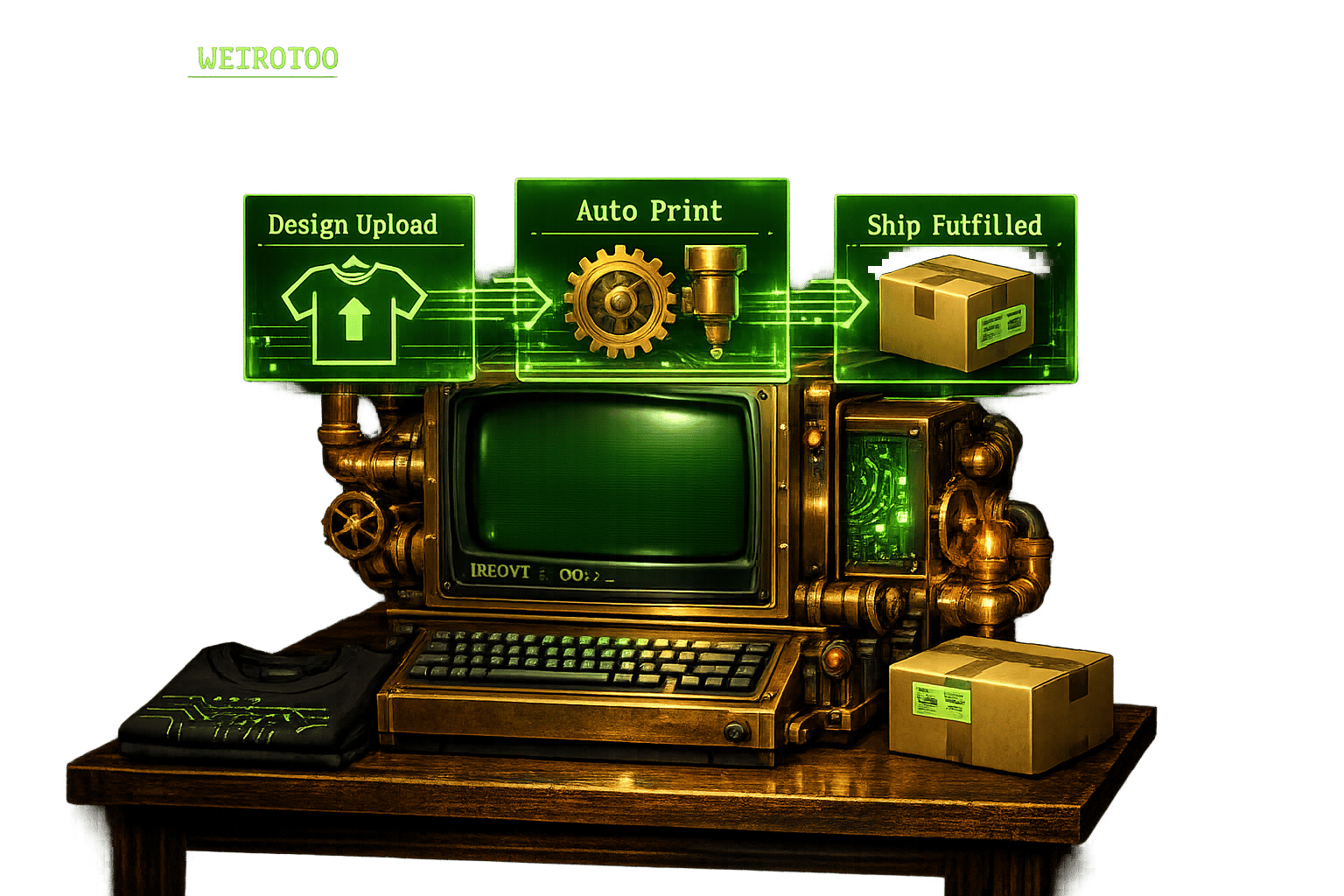
Print on demand (POD) is a fulfillment model where products - such as apparel, mugs, or tote bags - are only printed once a customer places an order. This eliminates the need for inventory management, upfront costs, and production equipment. A POD service handles printing, packaging, and shipping, allowing business owners to focus on creating designs and marketing their products.
This model is particularly appealing for businesses that want to diversify their offerings without significant financial or logistical commitments. From small handmade businesses to large online stores, POD offers flexibility and scalability.
Why POD Is Perfect for Small Businesses
Small business owners often face challenges related to inventory management, production costs, and storage space. For those running operations out of their homes or working with limited resources, POD provides an effective solution. Here’s why:
- No Inventory Hassles: Traditional retail requires managing stock in various sizes, colors, and designs. With POD, each item is made to order, eliminating the need for storage and reducing the risk of unsold inventory.
- Low Startup Costs: Since there’s no need to purchase bulk items or invest in expensive printing equipment, POD significantly lowers the financial barrier to entry.
- Scalability: Whether you’re fulfilling one order or hundreds, the POD model adapts seamlessly to growing demand.
- Focus on Creativity: Business owners can concentrate on designing unique, personalized merchandise instead of worrying about production logistics.
- Simplified Shipping: The POD provider ships directly to the customer, saving you time and effort.
Setting Up Your Print on Demand Store
Launching a POD store may sound daunting, but it’s a straightforward process. Here’s a step-by-step overview to help you get started:
1. Choose the Right POD Service
Selecting the right POD platform is critical. Look for a service that fits your business needs. For example:
- Integration: Ensure the POD provider integrates easily with your existing e-commerce platform, such as Shopify or Etsy.
- Product Variety: Check if they offer a range of customizable products, such as t-shirts, sweatshirts, mugs, and tote bags.
- Quality Control: Research reviews to ensure the provider delivers high-quality products.
2. Create Unique Designs
Your designs are what set your products apart. Whether you create hand-drawn illustrations or use design tools like Canva, ensure your work aligns with your audience's preferences. Double-check licensing if you use third-party assets to avoid legal complications.
3. Set Up Your Store
Once you’ve chosen a POD service, connect it to your e-commerce platform. Services like Ninja Transfers make this process seamless, with easy-to-follow guides to integrate with Shopify or other platforms.
4. Add Products
Upload your designs, choose product types, and customize options like colors and sizes. Many POD platforms provide mockup tools to showcase your design on products, offering a professional touch.
5. Price Strategically
Consider base production costs, platform fees, shipping, and your desired profit margin when pricing your products. Transparency and fair pricing will build trust with your customers.
6. Market Your Products
Promote your store using social media, email marketing, and word-of-mouth campaigns. Ordering samples is a great way to showcase your merchandise and verify quality. Plus, wearing or using your designs can help spark interest from potential customers.
Pros and Cons of Print on Demand
Before diving into POD, it’s essential to weigh its advantages and limitations.
Advantages:
- Flexibility: Experiment with new designs without committing to bulk production.
- Cost Efficiency: Only pay for production when a sale is made.
- Simplicity: Focus on design and marketing rather than production and shipping.
- Product Range: Customize a wide variety of products beyond apparel, such as mugs, bags, and hats.
Drawbacks:
- Higher Per-Unit Costs: POD services charge a premium for handling production and fulfillment, potentially reducing profit margins.
- Limited Branding Control: Custom packaging and branding options may be restricted.
- Quality Variability: As production is outsourced, you must trust the provider’s quality assurance.
- Reliance on Third Parties: Any delays or issues with the POD provider can impact your customer experience.
Can POD Work for You?
The versatility of POD makes it suitable for many small businesses. However, it’s not a one-size-fits-all solution. Consider blending POD with your existing handmade products to create a hybrid model. For example:
- Keep high-value, handmade items for a personal touch.
- Use POD to expand your offerings with complementary items like branded t-shirts or mugs.
This approach allows you to retain creative control over key products while leveraging POD for scalability.
Key Takeaways
- Eliminate Inventory Hassles: POD removes the need for stocking items, making it perfect for small businesses with limited space or resources.
- Focus on Design and Marketing: Leave the logistics of production and shipping to your POD provider.
- Start Small: Test with a few designs to gauge customer interest before expanding your offerings.
- Choose the Right Partner: Look for POD services that align with your business goals, such as integration options, product quality, and variety.
- Blend Models: Combine POD with handmade products for a balanced approach that supports creativity and scalability.
- Verify Quality: Order samples to ensure products meet your standards before promoting them to customers.
Conclusion
Print on demand is an excellent way for small business owners to grow their offerings and simplify their operations. Whether you’re a Wyoming entrepreneur looking to serve rural markets or a creative shop owner wanting to bring your designs to life, POD offers flexibility, affordability, and scalability. By carefully selecting your provider, creating compelling designs, and marketing effectively, you can tap into new revenue streams while maintaining your unique brand identity.
Explore what POD can do for your business, and start turning your creative ideas into tangible, sellable products. Whether you’re just starting or looking to expand, print on demand could be the game-changer your business needs to thrive in today’s competitive market.
Source: "Print on Demand Start Guide: What is POD and Why Should You Try It?" - Angie Holden, YouTube, Jan 22, 2026 - https://www.youtube.com/watch?v=lQ3DuuDebuE
Current contact path
Need Weird Network WiFi, custom apparel, or scoped help?
Use the contact form; removed product, checkout, research, and newsletter funnels stay offline.