Loading…
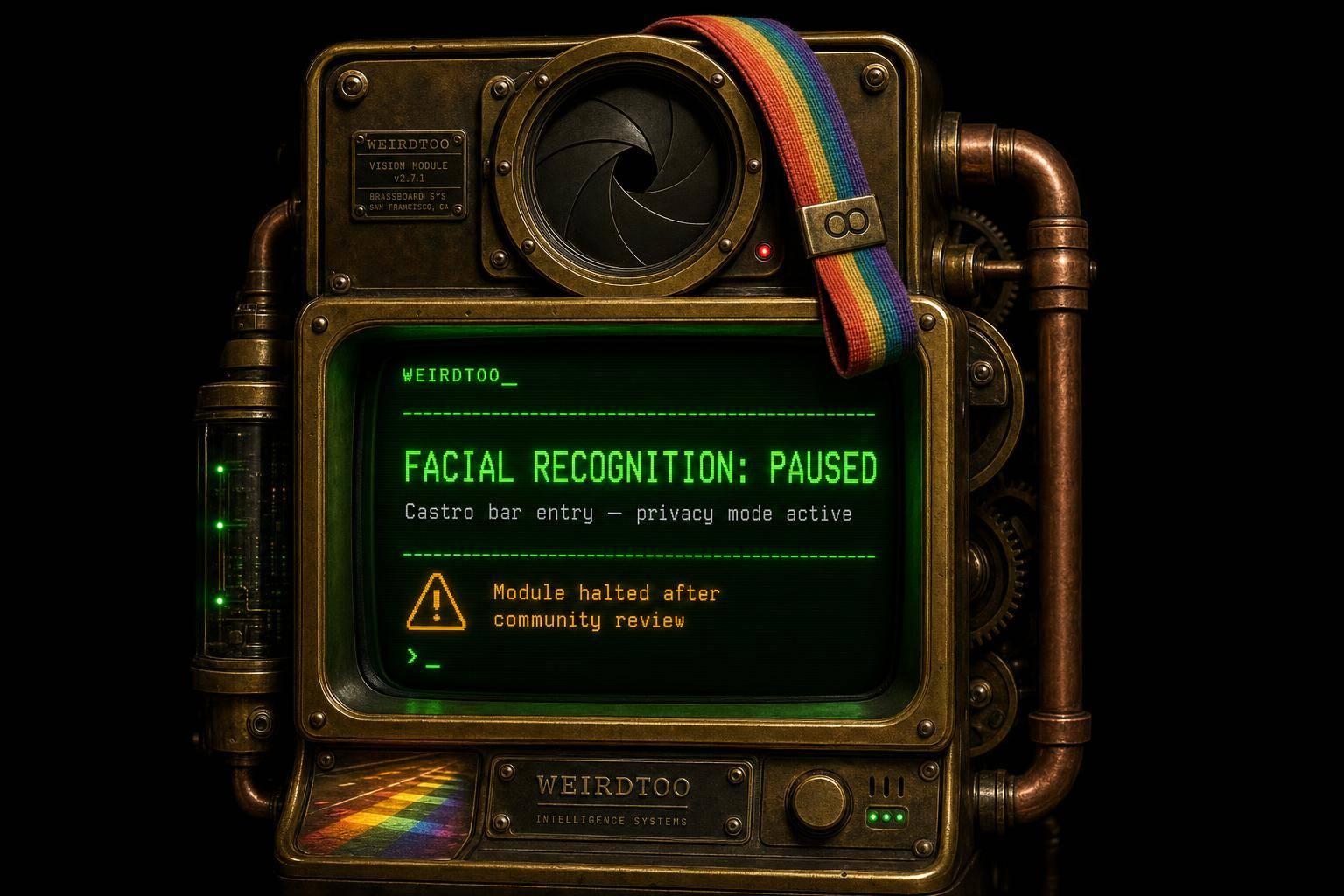
Castro bars halt PatronScan facial recognition after backlash
By weirdtoo·August 10, 2026·5 min read
Badlands and Toad Hall pause Patronscan facial recognition after LGBTQ+ and digital-rights campaign in San Francisco.
Castro bars halt PatronScan facial recognition after backlash
Two prominent gay bars in San Francisco’s Castro District have stopped using PatronScan, an AI-powered ID verification and facial scanning system, after a growing backlash from LGBTQ+ advocates, musicians and digital rights groups.
Badlands and Toad Hall said they were immediately pausing the technology after Fight for the Future organized a campaign urging artists and patrons to boycott venues using what critics described as invasive surveillance. The move, first reported by Gazetteer SF, came after hundreds of musicians and artists pledged to avoid venues employing facial recognition and similar systems.
The decision marked a notable reversal, especially for Badlands. Gazetteer SF reported that the bar’s director of operations had said in June that the venue planned to keep using PatronScan despite concerns. Shortly after the publication reported on the boycott campaign, both bars announced they would stop using the system while reviewing their security practices.
"We have heard the concerns regarding the use of PatronScan at Badlands and Toad Hall in San Francisco, and we are listening", Brian Aranda, director of operations at both bars, said in a statement obtained by Gazetteer SF. "Effective immediately, we are pausing the use of PatronScan while we review our ID verification and security practices."
Aranda said the bars would switch back to traditional checks.
"Our security teams will continue to thoroughly check IDs manually during this time", Aranda said. "We appreciate everyone who has shared their concerns and remain committed to providing a safe and welcoming environment for all."
Artist boycott helped drive pressure
According to Gazetteer SF, more than 300 artists nationwide joined the campaign, including Tune-Yards, Deerhoof and other Bay Area musicians. Reem Suleiman, a campaign director for Fight for the Future, told Gazetteer SF that 342 artists had signed the organization’s pledge nationwide, with more than half joining during the previous two months.
Fight for the Future’s campaign asks performers to require venues to disable facial recognition and other invasive surveillance technology during their appearances or refuse to perform at venues that will not comply.
The organization focused particular attention on the Bay Area and the Castro, describing the use of facial recognition in LGBTQ+ spaces as especially troubling.
"There is something really powerful and symbolic and scary about the fact that these are bars in the Castro", Suleiman told Gazetteer SF. "The queer community has been on the receiving end of the worst of what surveillance can do."
sbb-itb-342b8b2
Privacy concerns in LGBTQ+ spaces
The dispute centered on broader concerns over how privately operated facial recognition systems collect, store and allow access to biometric data. Privacy and civil rights groups have also raised concerns about whether patrons meaningfully consent to that collection and how long the data remains available.
Those issues, the article noted, can carry particular weight in LGBTQ+ venues because biometric surveillance can potentially create records of who enters spaces associated with sexual orientation, gender identity or political activity.
Fight for the Future Director Evan Greer, a transgender musician and longtime digital rights advocate, said the outcome at the Castro bars showed organized pressure could change business decisions.
"AI surveillance technology is creepy for anyone going to a show or a club, but it’s particularly dangerous for members of the LGBTQ+ community who are facing increased attacks on our rights and safety", Greer said.
Greer said LGBTQ+ patrons should not have to hand over biometric information to enter community spaces.
"The backlash from the community has been swift and severe", Greer said. "Queer and trans people want to be able to dance and gather and party without fear."
Greer also said the campaign would continue beyond Badlands and Toad Hall.
"Our boycott campaign has already pushed two of the most prominent venues using this stalker-tech to abandon it", Greer said. "We won’t stop until gay bars across the country commit to never using this type of invasive and discriminatory surveillance tech at the door."
Other venues still use face-scanning technology
According to Fight for the Future and the Club 1984 project created by AI Action Now, other San Francisco venues continued using the technology after the two Castro bars paused PatronScan. The San Francisco Chronicle reported Sunday that Mix, Oracle Park and 1015 Folsom remained among locations using face-scanning technology.
Other venues have moved in the opposite direction. Gazetteer SF reported that DNA Lounge, Cheaper than Therapy and El Rio joined a pledge against using the technology.
The controversy also follows earlier reporting by the Vanguard on concerns about private surveillance after revelations that Madison Square Garden Entertainment kept an internal database containing information about LGBTQ+ celebrities, activists and critics while also using facial recognition at its venues. That database included Greer, who was identified internally as a facial recognition activist.
Greer told the Vanguard that the issue extended beyond one company.
"I think what it illuminates for folks is that we think of surveillance as something that the government does", Greer told the Vanguard. "And increasingly we’re heading into a future where in fact, private companies and even wealthy individuals are building surveillance capabilities that rival some nation states."
Greer said private surveillance can be especially troubling because of the limited rules governing it.
"There are actually far fewer regulations and rules in place that govern how those private companies and individuals can use surveillance technologies", Greer said.
The article said the retreat by Badlands and Toad Hall provided an early test of a strategy aimed at turning privacy and civil liberties concerns into direct economic pressure on businesses that deploy facial recognition technology. It also framed the dispute as part of a broader question about safety in community spaces as surveillance tools become more accessible to private businesses.
As Greer told the Vanguard in its earlier reporting, the question reaches beyond any one venue’s intentions.
"I think the bigger question here is what are we going to do as a society to put some rules in place so that wealthy and powerful individuals and companies can’t leverage their surveillance capabilities to suppress dissent, to discriminate against marginalized communities, or to otherwise consolidate their power and undermine our democratic institutions that are supposed to hold the powerful to account?"
Current contact path
Need Weird Network WiFi, custom apparel, or scoped help?
Use the contact form; removed product, checkout, research, and newsletter funnels stay offline.