Loading…
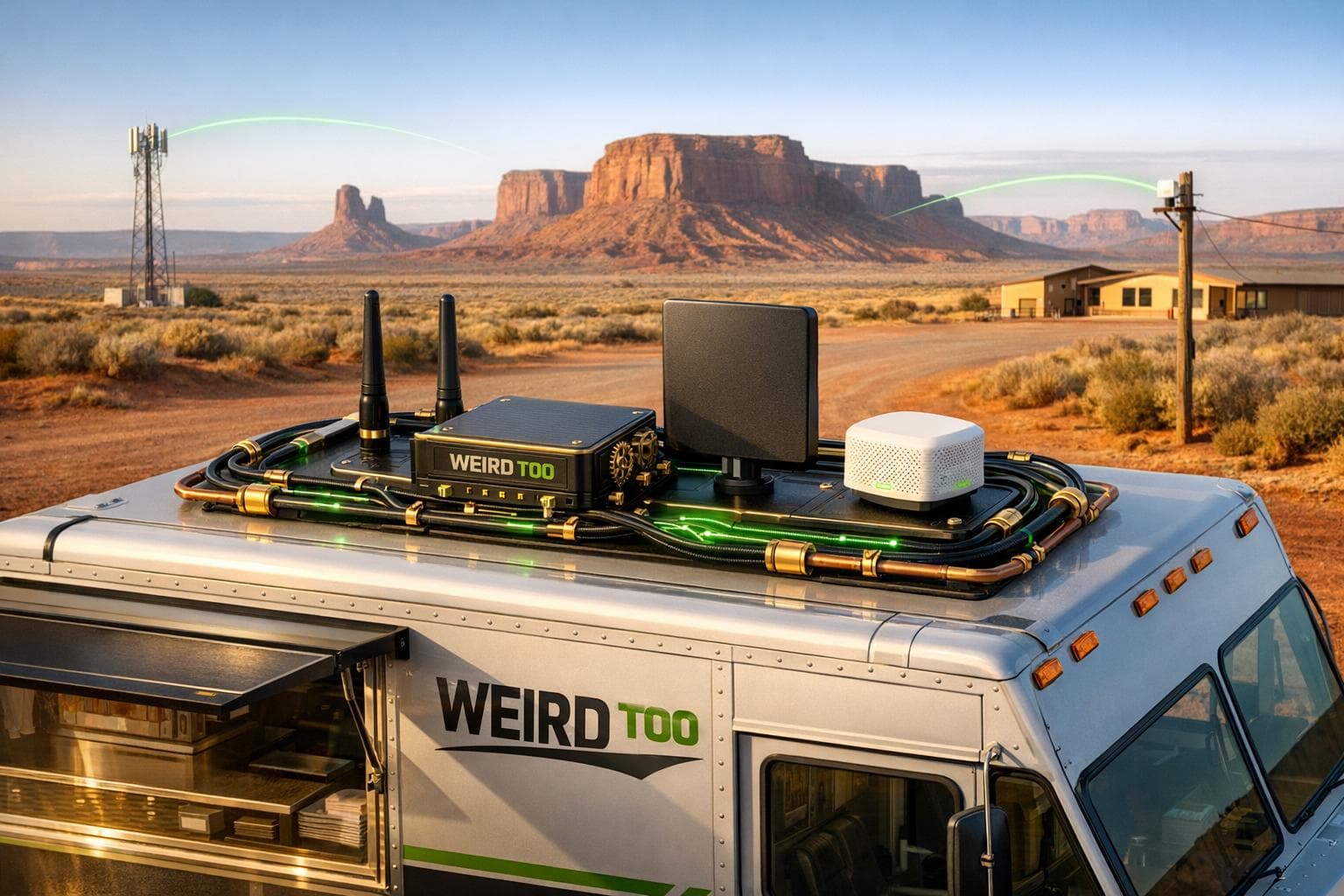
Affordable Network Equipment for Food Trucks Owners in Native American Reservations
By weirdtoo·June 6, 2026·5 min read
Budget-friendly cellular and mesh networking advice for food trucks on tribal lands: routers, antennas, failover, and setup tips.
Affordable Network Equipment for Food Trucks Owners in Native American Reservations
Affordable Network Equipment for Food Trucks Owners in Native American Reservations
Directory-style guidance for Native reservation food-truck owners: affordable, reliable connectivity for mobile ordering/POS and guest Wi‑Fi, with equipment choices suited to rural/remote coverage constraints and power/installation realities on tribal lands.
Business Type
Food Truck
Region
Native American reservations / Indian Country (remote tribal lands)
Region-Specific Connectivity Challenges
Remote tribal lands often have patchy coverage and limited “last-mile” infrastructure, so food trucks need connectivity designed for weak-signal areas (external antennas, resilient cellular links, and failover). Tribal connectivity planning may also require considering local spectrum/telecom deployment constraints and partnering with local or tribal network efforts rather than assuming standard wired broadband availability.
Types of Network Equipment Covered
- 5G/LTE Router
- Automotive Switch (with PoE+)
- Cellular Antenna (rugged/multi-band)
- Wi-Fi Extender / Mesh Wi‑Fi (coverage expansion)
- Failover Router (dual-WAN)
- Wireless CPE / Antenna-based access for shared/tribal distribution
Recommended Products
- Teltonika RUTM30 5G router
- Teltonika TSW101 automotive switch
- Sierra Wireless AirLink RV55 router (Wi‑Fi capable variant)
- Mobile Mark LTM502 rugged multi-band diversity antenna
- Peplink Surf SOHO (dual-WAN failover router)
- Ubiquiti (mesh system / mesh networking approach)
- Cisco/MuralNet-style tribal wireless setup (antenna-on-water-tower approach)
Key Features
- Dual SIM / automatic cellular failover (where supported)
- Secure, always-on connectivity for mobile POS and in-vehicle devices
- Rugged, vehicle-ready hardware
- External antenna support for weak-signal areas
- Separate guest Wi‑Fi and business network considerations
- Mesh networking with seamless roaming vs. extenders (where whole-area coverage is needed)
- Use of wireless CPE and antenna-based distribution models in tribal builds
Product Recommendations & Rationale
- For the truck’s core connectivity (mobile POS + guest Wi‑Fi): use a rugged cellular router such as Teltonika RUTM30 (5G/LTE) as the in-vehicle “core connectivity device,” and pair it with an automotive PoE+ switch (Teltonika TSW101) to power critical gear like cameras and POS devices via Ethernet. This setup is specifically positioned for mobile businesses needing always-on connectivity and Wi‑Fi access inside the vehicle. 2) For a proven food-truck cellular approach: choose a Wi‑Fi-capable LTE router like Sierra Wireless AirLink RV55, and improve signal reception with a rugged, multi-band diversity antenna such as Mobile Mark LTM502, mounted for better over-the-air coverage at events and varying parking locations. 3) For reservation areas with intermittent service: add a dual-WAN cellular failover strategy using a failover-ready router (example given: Peplink Surf SOHO) so the business can switch to backup connectivity when the primary link drops. 4) For Wi‑Fi coverage for customers across event/service areas: if you just need limited extension, an extender can work; but for broader, smoother roaming across locations/devices, mesh is generally better because extenders aren’t seamless and can slow performance depending on which node you connect to. 5) For shared/tribal distribution models when wired service is scarce: consider antenna-based wireless access concepts used by tribes (e.g., installing antennas on community infrastructure to broadcast internet sourced from a fiber connection, enabling users with the right router to connect). This can inform how a truck’s equipment may be optimized to reach a local wireless service point if an on-reservation network is available.
Performance Metrics
Typical affordable setups for moving food businesses rely on cellular-based connectivity: mobile hotspots or 4G/5G routers, which trade higher variability (signal coverage) for portability and lower cost; satellite can be used when other options aren’t available but may have higher latency.
Setup Difficulty
Moderate
Step-by-Step Setup Instructions
- Pick your internet method first (mobile hotspot/4G-5G router vs. satellite vs. fixed wireless). For most food trucks on the move, start with a 4G/5G router so you can plug it in reliably and avoid the random power issues that come with basic phone-style hotspots.
- Place the router for best cellular reception: keep it near a window or roof area when possible, and avoid metal blocking the signal.
- Set up Wi‑Fi using the router’s setup/app. Create one SSID/password for staff/admin access.
- If you have a fixed location during service and need more coverage inside the truck, add Wi‑Fi extenders only if the signal from your router is already strong; their effectiveness depends on the original signal strength.
- For security and business continuity, change default router/admin passwords immediately and ensure you’re using the latest router firmware (so settings and security patches are up to date).
- Test from every important point in the truck (POS terminal, payment devices, and any guest Wi‑Fi). If you notice dead spots, reposition the router and/or add a properly placed mesh/extender node rather than buying higher-spec internet immediately.
- Keep a spare plan for connectivity gaps: if cellular coverage is poor at certain stops, consider having a backup option (e.g., satellite) ready, since remote areas can be harder to serve with only cellular.
Troubleshooting Tips
- If speed is inconsistent, move the 4G/5G router location to improve signal (windows/less obstruction) and confirm you’re using the correct AP/router placement.
- If Wi‑Fi range is the issue, extenders may disappoint when the original signal is weak—solve by improving the router’s placement or using whole-home style mesh where appropriate.
- If internet drops during peak times, check whether your selected cellular plan has enough data and whether tower congestion is affecting service; consider more robust plans or backup connectivity.
- If your network setup feels unreliable, verify that firmware is current and re-check your Wi‑Fi configuration (SSID/password, admin password, and security settings).
- For remote/underserved stops where wired options are difficult, expect variability and plan for redundancy (e.g., a backup satellite option) so POS/payment doesn’t fail.
Price Range
$ (budget-friendly setups with 4G/5G routers and mobile hotspots; satellite is typically higher-cost)
Total Cost of Ownership (Estimated 3 Years)
$300
Cost Comparison
Budget-friendly options for food trucks generally center on mobile hotspots and 4G/5G routers (lower upfront cost than satellite), while satellite internet is typically more expensive in both equipment and monthly service fees and may add latency in remote areas.
Scalability Advice
- As you add more truck events/stops, standardize on one main 4G/5G router model and ensure your data plan matches your busiest service patterns.
- If you operate from a semi-fixed kitchen/commissary with stronger service, upgrade indoor coverage using mesh/extenders sized for whole-truck coverage rather than repeatedly swapping extenders.
- If cellular coverage proves patchy across your route, scale by adding a backup connectivity method (e.g., satellite) or by using multiple cellular/plan options so critical systems (POS/payment) remain online.
Support and Warranty
The sources for this specific directory article emphasize device and service choice and don’t provide specific warranty/coverage terms for individual router brands; rely on the manufacturer’s support/warranty for the exact router model you buy, and keep firmware updated.
Where to Buy
Related Weird Too links
Keep following this lane
Current contact path
Need Weird Network WiFi, custom apparel, or scoped help?
Use the contact form; removed product, checkout, research, and newsletter funnels stay offline.