Loading…
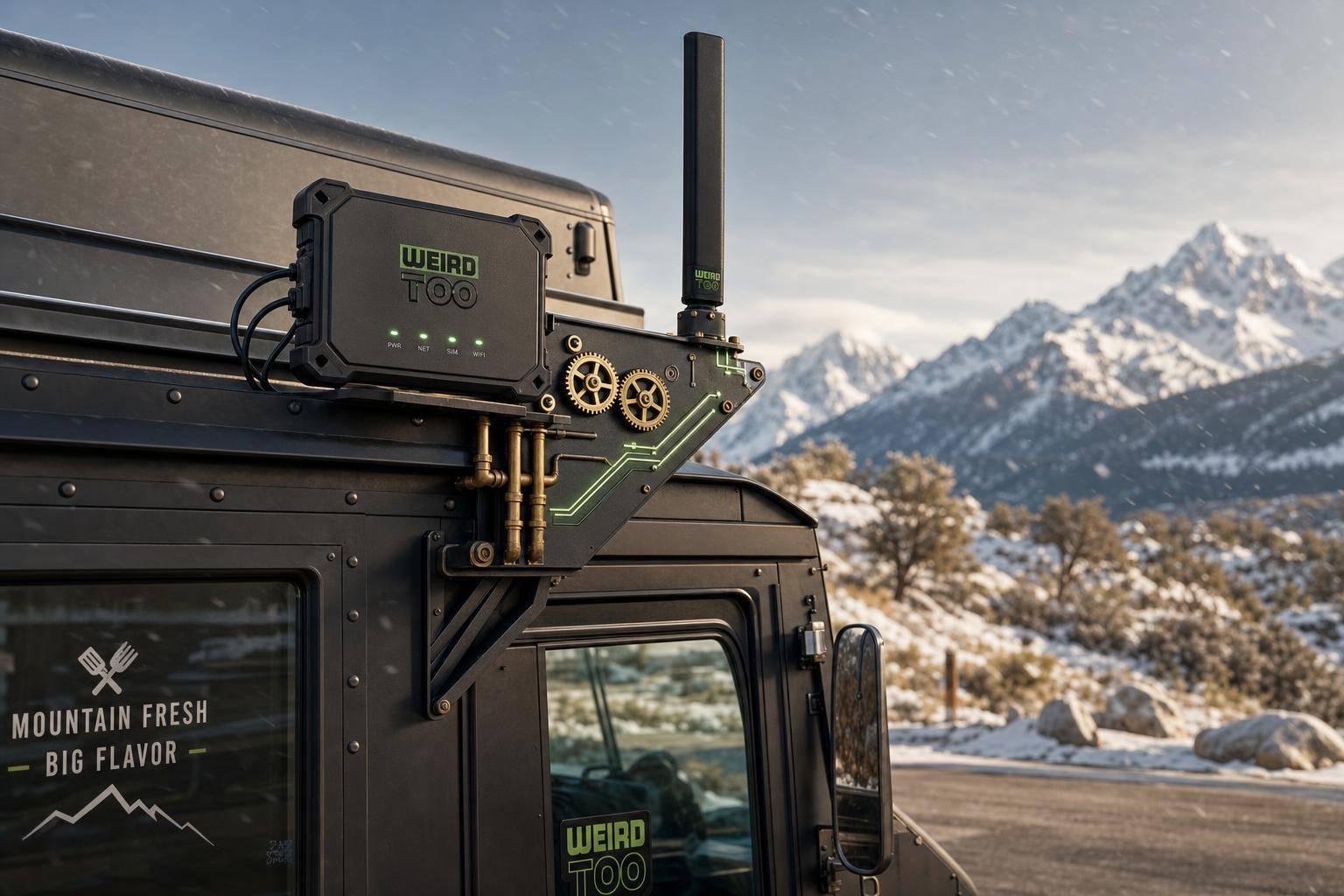
Affordable Network Equipment for Food Trucks Owners in Mountain West Regions
By weirdtoo·June 20, 2026·5 min read
Rugged, low-cost cellular routers and extenders to keep Mountain West food trucks online in remote, cold, and windy conditions.
Affordable Network Equipment for Food Trucks Owners in Mountain West Regions
Affordable Network Equipment for Food Trucks Owners in Mountain West Regions
An article aimed at food truck owners in the Mountain West, focusing on affordable network gear and practical connectivity guidance for mobile operations in high-altitude, windy, cold, and often rural/underserved settings.
Business Type
Food Truck
Region
Mountain West Regions
Region-Specific Connectivity Challenges
Mountain West food trucks often deal with patchy rural coverage, long distances from service centers, and harsh operating conditions such as high altitude, wind, cold, and winter weather. Those conditions can reduce generator output, complicate power and equipment reliability, and make dependable cellular or fixed broadband access harder to obtain, so rugged gear with cellular backup and easy management is preferable.
Types of Network Equipment Covered
- Router
- Wi-Fi Extender
- Mesh Wi-Fi Extender
- Cellular Gateway
- Access Point
- Security Device
Recommended Products
- MOFI6500-5GXeLTE-7411
- Verizon Router
- Fios Extender
- TP-Link RE715X AX3000 Mesh Wi-Fi 6 Extender
- TP-Link RE315
- Asus RP-AX58
- Cradlepoint E3000
- Cradlepoint IBR900
- Peplink MAX BR1 Mini
- Pepwave MAX BR1 Pro 5G
Key Features
- 4G/5G cellular connectivity
- SIM support
- Mesh support
- Dual-band Wi-Fi
- Wi-Fi 6
- App-based management
- WPA2/WPA3 security
- Failover / backup connectivity
- Cloud management
- Ethernet LAN ports
Product Recommendations & Rationale
For a Mountain West food truck, the best low-cost core is a rugged 4G/5G mobile router or cellular gateway, such as the MOFI6500-5GXeLTE-7411 for budget-conscious North American users needing reliable LTE performance and cloud management, or a Peplink/Pepwave mobile router when dual-SIM failover and vehicle-grade reliability matter more. If the truck regularly serves near a fixed signal source or commissary, a simple extender like the TP-Link RE315 can be the cheapest coverage boost, while the TP-Link RE715X or Asus RP-AX58 are better when you need stronger dual-band Wi-Fi and easier app-based setup. Verizon’s business router/extender lineup is another straightforward option if the operation is tied to Verizon’s Fios ecosystem and wants easy plug-and-play expansion. For larger or more critical setups, Cradlepoint-class cellular gateways and outdoor APs provide stronger business continuity, but they move beyond the lowest-budget tier.
Performance Metrics
Rugged mobile router options in this category typically support 4G/5G cellular WAN, dual SIM failover, Gigabit Ethernet, and Wi-Fi for multiple devices. Examples in the source set include up to 300 Mbps router throughput on the Peplink MAX BR1 Mini class, up to 3.4 Gbps theoretical 5G downlink on the BR1 Pro 5G, up to 15 hours of battery runtime for portable kits, and Wi-Fi 6 support with up to 64 clients on the Airgain kit.
Setup Difficulty
Moderate
Step-by-Step Setup Instructions
- Mount a rugged mobile router inside the truck and power it from the vehicle’s 12V system so it stays on while you drive and serve customers.
- Insert one or two SIM cards from carriers with the best coverage in the Mountain West route you use most often, and turn on cellular failover if the router supports it.
- Connect the router to a Wi-Fi 6 access point or its built-in Wi-Fi so your POS terminal, tablet, and customer Wi-Fi share one secure network.
- If signal is weak at a fixed stop, add an external antenna or a weather-resistant outdoor gateway to improve reception and coverage.
- Use a simple mobile management app or web portal to check signal strength, data usage, and connected devices before each shift.
- Keep a small backup plan ready, such as offline payment mode on your POS app, so sales can continue during temporary outages.
Troubleshooting Tips
- If internet drops in rural or mountainous areas, move to a location with better line-of-sight to cellular towers and recheck carrier signal strength.
- If customer Wi-Fi is slow, reduce the number of connected devices or switch noncritical traffic off the network during peak service.
- If the router will not connect, verify the SIM is active, the data plan is enabled, and the antenna connections are firmly attached.
- If you need to cover a larger serving area, add a Wi-Fi extender or a higher-gain antenna rather than replacing the whole system.
- If weather or vehicle vibration causes instability, use rugged equipment designed for mobile or outdoor deployments and confirm power connections are secure.
Price Range
Budget to Mid-range
Total Cost of Ownership (Estimated 3 Years)
$1548
Cost Comparison
For food trucks, a dedicated mobile router is usually better value than trying to rely on a phone hotspot: it is built for vehicle power, multiple devices, and failover, but costs more upfront than a simple extender or consumer hotspot. Budget-friendly choices like the Peplink MAX BR1 Mini class are around the low-to-mid hundreds, while more feature-rich 5G or all-in-one rugged kits cost more but add carrier failover, cloud management, and stronger reliability. Wi-Fi extenders can help inside a truck or at a fixed stop, but they do not replace a cellular backhaul, so they are usually an add-on rather than the core connection.
Scalability Advice
Start with a cellular router that supports at least one spare SIM or eSIM profile, then expand by adding a second carrier for failover as sales volume grows. If you add more terminals, printers, or cameras, use a router or gateway with extra LAN ports or a small switch. For larger service footprints, add Wi-Fi extenders or move to a mesh-capable business gateway. As the business becomes more dependent on connectivity, upgrade to cloud-managed gear so you can monitor multiple devices remotely across routes and events.
Support and Warranty
Support is generally vendor- or reseller-assisted, with Peplink pointing customers first to the place of purchase and also offering forums and direct support tickets. Peplink’s BR1 Mini line includes a 1-year warranty/PrimeCare coverage that can be extended, and Airgain’s Go-Kit Pro lists a 1-year limited warranty with remote cloud management included for 1 year. TP-Link’s ER706W-4G lists a 1-year limited warranty.
Where to Buy
Related Weird Too links
Keep following this lane
Current contact path
Need Weird Network WiFi, custom apparel, or scoped help?
Use the contact form; removed product, checkout, research, and newsletter funnels stay offline.