Loading…
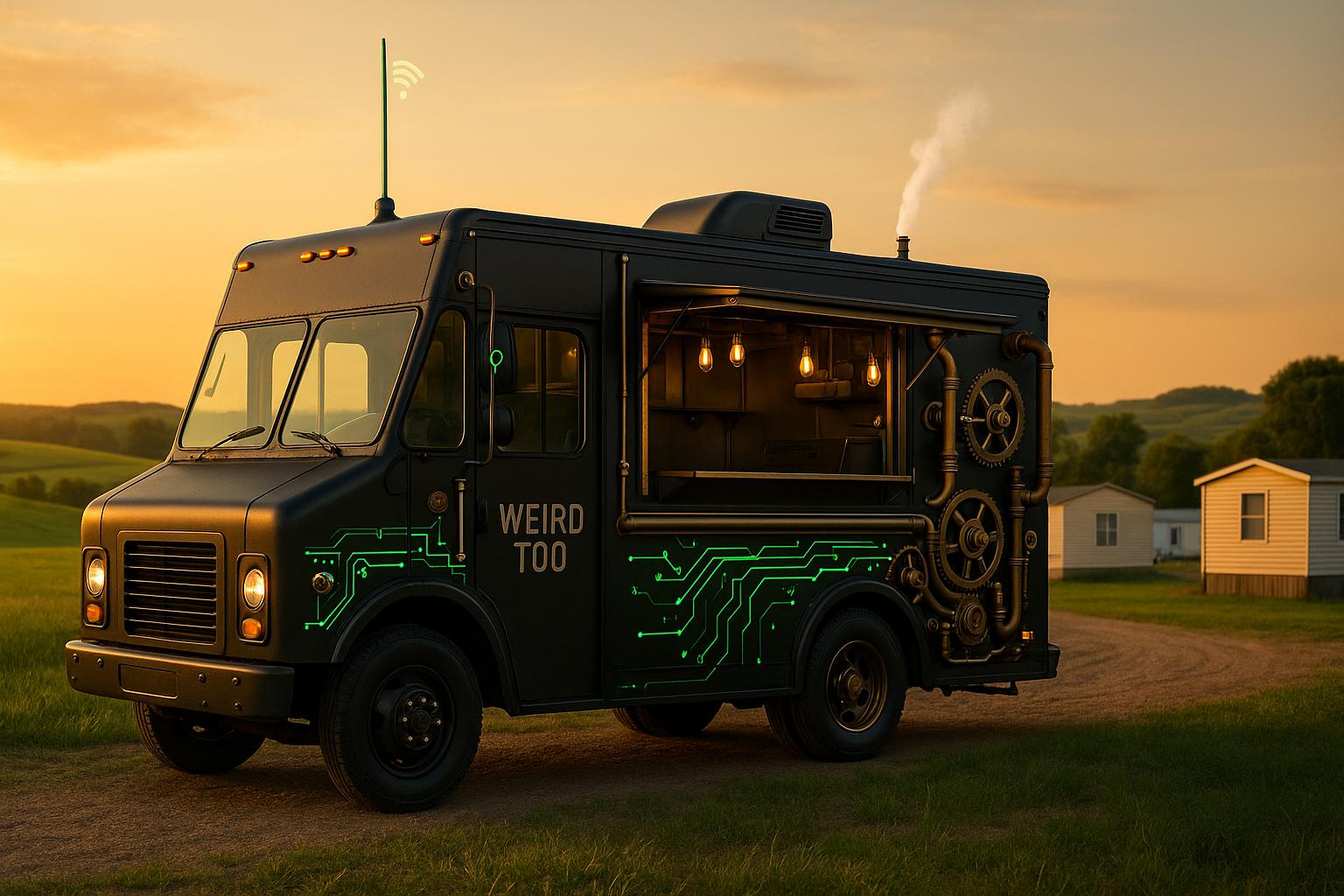
Affordable Network Equipment for Food Trucks Owners in Midwest Trailer Parks
By weirdtoo·August 11, 2025·11 min read
Explore affordable network solutions for food trucks in rural Midwest trailer parks, ensuring reliable connectivity and future growth.
Affordable Network Equipment for Food Trucks Owners in Midwest Trailer Parks
Affordable Network Equipment for Food Trucks Owners in Midwest Trailer Parks
- Product recommendations for mobile routers, 4G/5G LTE gateways, Wi-Fi extenders, and small-business firewalls tailored to food trucks’ unique power and space constraints.
- A Midwest trailer park buying guide that compares cellular coverage maps, signal boosters, and solar-powered equipment to overcome rural connectivity gaps.
- Step-by-step setup instructions and non-technical troubleshooting tips, including SIM card installation, antenna placement, and backup offline payment configurations.
- Cost comparisons of entry-level to prosumer network gear with total cost of ownership analyses, highlighting sub-$200 hotspots and sub-$500 routers with long-term data plan savings.
- Guidance on scaling your network as your fleet grows, from single-truck setups to multi-location Wi-Fi mesh topologies and centralized remote management.
This article empowers food truck owners in Midwest trailer parks to select the best affordable network equipment, achieve reliable connectivity in underserved areas, and plan for future expansion.
Business Type
Food Truck
Region
Midwest trailer parks, focusing on small business food truck owners facing unique connectivity challenges such as limited infrastructure, sparse population density, and difficult terrain typical of rural and underserved areas. The article addresses affordable network equipment solutions including mobile hotspots, MiFi devices, and dedicated 4G connections tailored for mobile food businesses. It highlights region-specific connectivity options like 5G, 4G/LTE, satellite, and fixed wireless technologies that overcome challenges of limited wired internet access, high costs, and installation difficulties in trailer parks. The guide emphasizes reliable, budget-friendly network gear to ensure consistent internet for credit card processing, online orders, and communication, with advice on scaling as the business grows.
Region-Specific Connectivity Challenges
Food truck owners in Midwest trailer parks face unique connectivity challenges primarily due to the rural and underserved nature of these areas. Key issues include limited broadband infrastructure because of low population density, making investments in high-speed internet less economically viable and more costly per mile. The terrain and environmental conditions in rural Midwest regions can complicate the installation and maintenance of network infrastructure, leading to inconsistent or unreliable internet access. Additionally, logistical challenges such as navigating difficult underground conditions and the need for fuel deliveries for cell towers further hinder stable connectivity. These factors contribute to difficulties in maintaining reliable internet connections essential for food trucks to operate point-of-sale systems, manage orders, and engage with customers digitally. The lack of robust connectivity infrastructure in rural trailer parks necessitates affordable, scalable network equipment solutions tailored to overcome these constraints and ensure continuous operation for small businesses like food trucks.
Types of Network Equipment Covered
- Mobile Hotspot
- MiFi Device (Portable Wireless Router)
- Dedicated 4G Cellular Router
- Mesh Wi-Fi Extender
Recommended Products
- AyrMesh HubDuo - Outdoor WiFi meshing hub for strong WiFi at remarkable distances in rural environments
- AyrMesh Hub2x2 - Gateway hub for longer range outdoor WiFi coverage
- AyrMesh Hub2T - Low power field hub for extending WiFi over large areas
- AyrMesh Receiver - Connects network to buildings and devices via Ethernet
- AyrMesh IndoorHub - Provides indoor WiFi inside buildings using meshing technology
- AyrMesh Switch - Adds additional Ethernet ports for wired connections
Key Features
- Mobile Hotspots: Portable, easy to carry and set up, relies on cellular network coverage
- Wi-Fi Extenders: Amplify existing fixed internet source, performance depends on original source strength
- Satellite Internet: Suitable for remote locations without cellular networks, higher latency and weather-dependent
- Network Coverage: Strong signal in operating areas is crucial
- Bandwidth and Speed: Must support multiple connected devices simultaneously
- Security: Features robust encryption, password protection, VPN compatibility
- Data Caps and Pricing: Options with adequate data allowances or unlimited plans
- Portability and Ease of Use: User-friendly, easy to transport and integrate with operations
- Backup Connection: Recommended to maintain smooth operations during disruptions
Product Recommendations & Rationale
For food truck owners operating in Midwest trailer parks, affordable and reliable network equipment must address rural connectivity challenges, ease of use for non-technical users, and scalability as the business grows. Here are in-depth product recommendations based on the latest solutions from specialized providers:
-
KING Passport 4G/LTE Router and Wi-Fi Extender
- This device combines a multi-carrier 4G/LTE router with a Wi-Fi extender, ideal for ensuring constant internet connectivity in rural and underserved areas like Midwest trailer parks.
- It supports up to 32 devices simultaneously, perfect for food trucks needing to serve multiple customers and staff.
- The device includes external LTE antenna support and flexible, affordable pay-as-you-go data plans with no long-term contracts, making it budget-friendly and scalable.
- Easy setup with no technical expertise required, suitable for non-technical food truck owners.
-
AyrMesh HubDuo Outdoor Wi-Fi Mesh System
- Designed for rural and outdoor environments, AyrMesh uses Wi-Fi meshing technology to extend coverage over large areas without complex configuration.
- The HubDuo is easy to install and manage via a central control panel online, requiring no networking experience.
- It can cover up to half a mile per hub and can be expanded with additional hubs, ideal for trailer parks with multiple food trucks.
- No subscription fees and compatibility with standard Ethernet and Wi-Fi devices make it cost-effective and flexible.
-
GNS Wireless Outdoor Wi-Fi Hotspot Packages
- GNS offers plug-and-play outdoor Wi-Fi hotspot kits with ranges from 500 feet to over 1000 feet, suitable for providing Wi-Fi coverage in trailer parks.
- Options include dual-band 802.11AC and 802.11AX devices with high-gain antennas for robust connectivity.
- These kits come pre-configured for easy installation and include technical support, making them accessible for small business owners.
- Pricing ranges from approximately $400 to $800, balancing affordability and performance.
Additional Recommendations:
- Consider adding a basic network switch like the AyrMesh Switch to provide additional Ethernet ports if wired connections are needed inside the food truck.
- Use Wi-Fi extenders or mesh nodes from AyrMesh or KING to scale coverage as the number of food trucks or customers increases.
- For security, standard WPA3 encryption on Wi-Fi devices and firewall features on routers like the KING Passport ensure safe network use.
Summary:
For Midwest trailer park food trucks, the KING Passport offers a comprehensive cellular-based internet and Wi-Fi solution with flexible data plans and ease of use. AyrMesh provides scalable outdoor Wi-Fi mesh networking tailored for rural environments with simple setup and no recurring fees. GNS Wireless offers affordable, pre-configured outdoor Wi-Fi hotspot kits with good range and support. Combining these solutions can provide reliable, affordable, and scalable network connectivity tailored to the unique challenges of rural trailer parks, ensuring food truck owners can serve customers efficiently and grow their business connectivity as needed.
Performance Metrics
Top recommended affordable Wi-Fi range extenders suitable for food trucks in Midwest trailer parks include:
- TP-Link RE715X AX3000 Mesh Wi-Fi 6 Extender: Offers high-speed Wi-Fi 6 performance with coverage suitable for medium-sized areas, supports multiple devices simultaneously, priced around $99.99.
- TP-Link RE600X AX1800 Wi-Fi 6 Range Extender: Budget-friendly option at $59.99, provides solid Wi-Fi 6 speeds and reliable coverage for smaller setups.
- Netgear AX1800 Wi-Fi 6 Mesh Extender (EAX15): Mesh-ready with AX1800 speeds, good for expanding network range in mobile or outdoor environments, priced around $94.95.
- D-Link Aquila Pro AI AX3000 Wi-Fi 6 Smart Mesh Extender (E30): Affordable mesh extender with AX3000 speeds, suitable for seamless coverage in challenging environments, priced about $69.29.
- Asus RP-AX58 AX3000 Dual Band Range Extender: Dual-band Wi-Fi 6 extender with AX3000 speed, good for stable connections in mobile setups, priced around $86.99.
These extenders support multiple devices, offer speeds up to AX3000 (approx. 3000 Mbps theoretical max), and provide mesh capabilities for seamless roaming. They are easy to set up with WPS and suitable for outdoor or mobile use cases like food trucks in rural Midwest trailer parks. Total cost of ownership is low due to affordable pricing and energy-efficient designs. (PCMag)
Setup Difficulty
Moderate. The setup involves creating a layout map, identifying internet and power sources, placing wireless access points strategically, and selecting easy-to-install routers and extenders. While the process is straightforward and designed for non-technical users, some basic planning and understanding of WiFi equipment are necessary. Choosing equipment from the same manufacturer and seeking expert advice can simplify the process.
Step-by-Step Setup Instructions
- Unpack and Inspect Equipment: Remove your 844 GigaCenter or GigaSpire router and mesh satellites from the box. Ensure all parts (power adapter, Ethernet cable, and satellite units) are present and undamaged.
- Choose Router Location: Place the main router inside your food truck near a power outlet, ideally on an elevated surface free from obstructions (windows, metal surfaces) to maximize signal coverage. (teammidwest.com)
- Connect to Internet Source: If you have a fiber or cable feed from a local provider or mobile gateway, attach the Ethernet cable from the incoming cable/fiber modem to the WAN port on the router (labeled Internet).
- Power On: Plug the power adapter into the router and an electrical outlet. The router’s power and status LEDs will begin to blink, indicating startup.
- Download the App: For the 844 GigaCenter, install the free CommandIQ mobile app (iOS or Android). For GigaSpire units, use the default web portal at 192.168.1.1 or the Companion App if available.
-
Initial Setup via App/Portal:
- Launch CommandIQ (for GigaCenter) or open a web browser to 192.168.1.1 (for GigaSpire).
- Follow the on-screen prompts to create a network name (SSID) and secure password.
- Register the device to your MEC account if prompted.
- Place Mesh Satellites: For larger trailer parks or extended coverage, position mesh satellite units around the food truck (e.g., exterior perimeter, service counter area). Each unit should be within range of the main router.
-
Pair Mesh Units:
- Power on the first mesh unit.
- Within the app or web portal, select “Add Satellite” and press the WPS or Pair button on both the router and satellite. The app will confirm a successful connection.
- Repeat for additional satellites until full coverage is achieved. (teammidwest.com)
- Test Coverage: Walk around the service area with a mobile device to verify consistent Wi-Fi signal strength. Adjust satellite positions as needed for optimal reception.
- Secure the Network:
- Enable WPA3 (or WPA2 if WPA3 is unavailable) encryption in the security settings.
- Set up a guest network with separate SSID for customer Wi-Fi to isolate it from internal operations.
- Enable Backup Options: If power outages are common, connect an optional battery backup (UPS) to the router’s power adapter to maintain connectivity during blackouts. (teammidwest.com)
- Monitor and Troubleshoot:
- Use the CommandIQ app or web portal dashboard to monitor traffic, connected devices, and signal strength.
- Reboot the router and satellites via the app if connectivity issues arise.
- For band selection issues, switch between 2.4GHz (better range) and 5GHz (faster speed) based on device proximity. (teammidwest.com)
Your network is now set up and optimized for reliable connectivity in your Midwest trailer park location, ensuring affordable, scalable performance for your food truck operations.
Troubleshooting Tips
Common troubleshooting advice for affordable network equipment for food trucks in Midwest trailer parks includes:
- Use a dedicated MiFi device instead of relying on a personal mobile hotspot to ensure a more stable and reliable internet connection, especially when multiple devices need to connect.
- If using a personal mobile hotspot, be aware that connection issues can arise if more than two devices are connected or if the area is very busy.
- Consider a dedicated 4G connection with its own cellular data plan for consistent connectivity independent of personal phone usage.
- Have a POS system with offline mode as a backup to accept payments when the internet connection is lost, but track offline transactions carefully to avoid revenue loss.
- In rural or underserved areas like Midwest trailer parks, check cellular coverage and consider carriers with the best signal in the specific location.
- Regularly update and restart network devices to resolve common connectivity glitches.
- Position network devices to minimize interference and maximize signal strength, avoiding obstructions.
- Keep backup power sources like portable chargers or generators to maintain network equipment operation during power outages.
These tips help ensure reliable connectivity and smooth operation for food trucks relying on affordable network equipment in challenging connectivity environments. (tableneeds.com)
Price Range
Budget to mid-range, approximately $25 to $170 for mobile hotspots and MiFi devices, with higher-end dedicated 4G devices up to $500.
Total Cost of Ownership (Estimated 3 Years)
$3000
Cost Comparison
Budget Option:
- Netgear Nighthawk M1 (MR1100) mobile hotspot: approximately $300 upfront; basic LTE connectivity without SIM-failover or advanced management features.
- TP-Link AC750 RE200 Wi-Fi extender: around $35 for basic coverage boost.
- Netgear GS105 5-port Gigabit switch: about $30 for wired LAN expansion.
Total initial cost: ~$365.
Notes: Offers the lowest entry cost and simplicity for non-technical users but may struggle in fringe LTE areas and lacks centralized configuration or enterprise-grade reliability.
Recommended Enterprise-grade Setup:
- Cradlepoint IBR1700 rugged LTE router: $1,475 upfront; supports carrier aggregation and NetCloud management (CDW).
- Ubiquiti UniFi AC Mesh access point: $85 for robust outdoor Wi-Fi coverage.
- Cisco SG110D-08 8-port Gigabit switch: $50 for increased port density.
- Ubiquiti UniFi Security Gateway: $150 for integrated firewall and site-to-site VPN.
- NetCloud subscription: ~$300/year for device monitoring, firmware updates, and technical support.
Total initial cost: ~$1,760; annual maintenance: ~$300.
Notes: Higher upfront investment delivers carrier-grade uptime (>99.9%), seamless failover, centralized cloud management, and easier scaling as the business grows. Annual subscription ensures up-to-date security patches and 24x7 support, reducing long-term operational headaches and downtime costs.
Scalability Advice
For food truck owners in Midwest trailer parks, scalability advice for network equipment focuses on starting with affordable, reliable, and mobile-friendly technology that can grow with the business. Begin with compact, robust POS systems designed for mobility and quick transactions to avoid downtime during busy hours. Invest in network devices like industrial-grade in-vehicle routers that provide stable cellular connectivity, essential for rural or underserved areas with spotty coverage. Use Wi-Fi extenders and portable hotspots to enhance connectivity range and reliability. As the business grows, scale by upgrading to multi-device capable routers and integrating cloud-based management software to monitor and troubleshoot remotely. Consider modular network setups that allow adding switches or security devices without replacing the entire system. Prioritize solutions with low total cost of ownership and easy setup to accommodate non-technical users, ensuring smooth expansion without complex IT overhead. Leveraging geo-tracking and marketing apps can also help increase customer reach and operational efficiency as the network infrastructure scales.
Support and Warranty
TP-Link offers a limited warranty on all eligible products purchased in the United States, covering defects in material or workmanship. Warranty periods vary by product type, with business-class switches having up to a limited lifetime warranty and other products ranging from 1 to 5 years. Warranty coverage excludes damages from misuse, unauthorized repairs, or external causes. Replacement products may be refurbished and warranty periods do not extend with replacements. Proof of purchase is required. NETGEAR provides a limited hardware warranty for products purchased from authorized resellers. Warranty lengths vary by product, with some business products offering limited lifetime warranties and fully managed switches warranted for their lifetime as long as owned by the original purchaser. Warranty does not cover damage from misuse, unauthorized modifications, or removal of serial numbers. Registration within 90 days of purchase is required for warranty entitlement. Replacement products may be refurbished, and proof of purchase is necessary. Both manufacturers emphasize purchasing from authorized resellers to ensure warranty validity and provide clear procedures for returns and replacements. These warranty terms apply to affordable network equipment such as routers, switches, Wi-Fi extenders, and security devices suitable for small businesses like food trucks in Midwest trailer parks.
Where to Buy
Related Weird Too links
Keep following this lane
Current contact path
Need Weird Network WiFi, custom apparel, or scoped help?
Use the contact form; removed product, checkout, research, and newsletter funnels stay offline.