Loading…
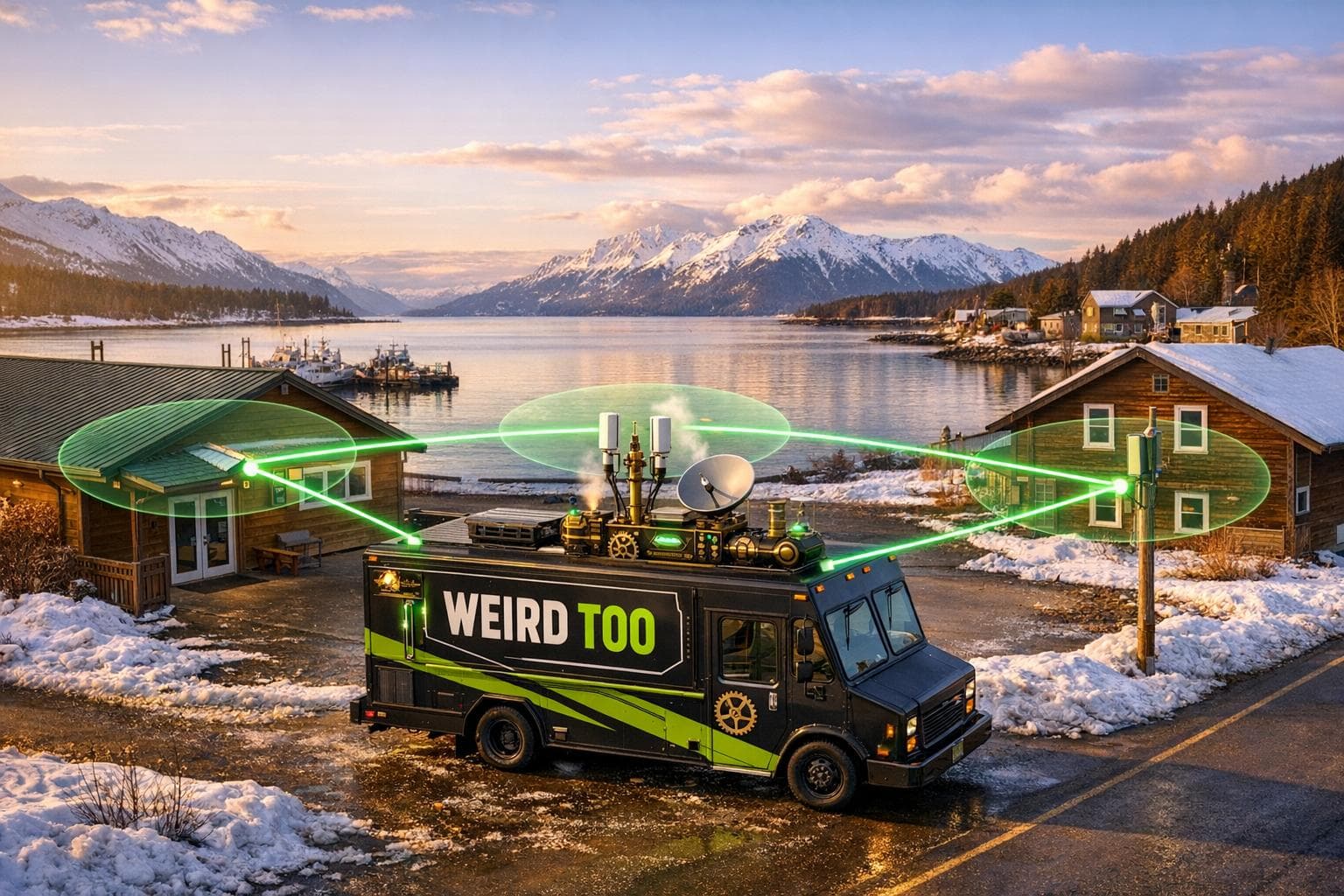
Affordable Network Equipment for Food Trucks Owners in Alaskan Communities
By weirdtoo·June 1, 2026·5 min read
Practical guide to rugged, affordable cellular routers, mesh Wi‑Fi, and satellite/LTE backup for food trucks in remote Alaskan communities.
Affordable Network Equipment for Food Trucks Owners in Alaskan Communities
Affordable Network Equipment for Food Trucks Owners in Alaskan Communities
A practical buying guide for food truck owners in Alaska that recommends affordable mobile networking gear for POS, customer Wi‑Fi, and remote/off-grid operations, with emphasis on rugged cellular connectivity, mesh expansion, and backup options for harsh conditions and limited infrastructure.
Business Type
Food Truck
Region
Alaskan Communities
Region-Specific Connectivity Challenges
Alaskan communities combine remote locations, limited infrastructure, severe cold, heavy snow, high winds, and high shipping/equipment costs, so food trucks need connectivity that works off-grid or on the move. The source material also notes that Alaska startup and equipment costs run above national averages because of shipping, and that remote villages can have slow, unreliable internet and no road access in some cases.
Types of Network Equipment Covered
- Router
- Wi-Fi Extender
- Security Device
- Access Point
- Satellite Internet Kit
- Fixed Wireless CPE
Recommended Products
- Peplink MAX BR1 Mini Rugged LTE/5G Router
- TP-Link RE715X AX3000 Mesh Wi-Fi 6 Extender
- Ubiquiti UniFi Security Gateway (USG)
- Firewalla Red Network Security Device
- Starlink dish + router
- Cambium Networks 2.5GHz ePMP fixed wireless solution
Key Features
- 4G/5G cellular support
- Rugged/mobile-ready design
- Mesh Wi-Fi support
- App-based setup
- VPN/firewall security
- Battery or solar power compatibility
- LTE backup/failover
- Scalable coverage
Product Recommendations & Rationale
For a food truck in Alaska, the best budget-minded core choice is a rugged 4G/5G router such as the Peplink MAX BR1 Mini so the truck can keep POS and business traffic online while moving between locations. Pairing it with a TP-Link RE715X extender can improve coverage around the truck or serving area, while a Ubiquiti UniFi Security Gateway or Firewalla Red helps protect payment and business data. For the most remote stops, Starlink-based kits or a fixed wireless solution like Cambium ePMP become stronger options because Alaska’s geography can make cellular service inconsistent; rental or preconfigured kits with LTE backup and solar/battery support reduce setup burden for non-technical users. The article framing suggests starting simple with one mobile router and then scaling to mesh, extra access points, or backup links as the business grows.
Performance Metrics
Budget routers like the TP-Link TL-R605 provide up to 3 WAN connections, load balancing, and firewall protection for reliable failover. The ER706W supports AX3000 Wi‑Fi 6 speeds up to 2402 Mbps on 5 GHz and 574 Mbps on 2.4 GHz, plus 1 SFP and 5 RJ45 ports, USB LTE backup, centralized cloud management, VPN, and mesh expansion. Alaska’s small-business managed Wi‑Fi offerings emphasize seamless wired/wireless coverage, guest Wi‑Fi, strong security, automatic resiliency, and support for more devices at once.
Setup Difficulty
Moderate
Step-by-Step Setup Instructions
- Pick a primary internet connection that fits Alaska’s rural reality: cellular/LTE if there is usable coverage, or a local business internet plan with backup connectivity if available. Alaska Communications notes its business service includes unlimited internet and managed Wi‑Fi, and GCI says its rural business plans support long-term growth in Alaska.
- Use a rugged router/gateway as the core of the truck’s network. A good budget-friendly option is TP-Link’s ER605/TL-R605, which offers up to 3 WAN ports, load balancing, and SPI firewall protection; a slightly more capable option is the ER706W, which adds Wi‑Fi 6, 6 gigabit ports, VPN support, and LTE backup via USB dongle.
- Add a Wi‑Fi extender or mesh device only if customer or staff coverage is weak around the service window, prep area, or parked queue. Food-truck buyers commonly need portable Wi‑Fi that is simple to set up and reliable in variable outdoor locations.
- For security devices, enable the router’s built-in firewall/VPN features, and if you need managed security or guest Wi‑Fi, choose a provider bundle such as ACS SmartBiz, which includes integrated cybersecurity, guest Wi‑Fi, and a mobile app for remote management.
- Mount equipment in a protected, dry area inside the truck, connect power, then test WAN failover and Wi‑Fi coverage before service hours. In Alaska’s remote settings, local support and quick reconfiguration matter because weather and logistics can delay repairs.
- If the truck operates in a community with weak terrestrial service, consider a cellular-first setup with LTE backup or a fixed wireless partner in town and use that as the main uplink when parked. Alaska deployments in remote areas commonly combine fiber, microwave, or Starlink backhaul depending on feasibility.
- Keep the configuration simple: one router, one primary uplink, one backup uplink, and only add more devices when you have a clear coverage or security need. This reduces setup time for non-technical users.
Troubleshooting Tips
- If speeds are inconsistent, move the truck or antenna setup to the clearest available spot and test again; rural Alaska often depends on terrain, weather, and backhaul availability.
- If the internet drops, use the router’s failover/load-balancing settings so traffic can switch to a backup WAN or LTE source automatically.
- If guest Wi‑Fi is slow or unstable, reduce the number of connected devices and prefer a router/gateway with built-in guest network and centralized management.
- If you cannot get enough signal from the carrier, switch to a higher-gain or outdoor antenna option, or use a provider-backed backup service.
- If warranty or repair help is needed, TP-Link/Omada requires contacting technical support and working through the warranty/RMA process. Alaska Communications also advertises local Alaska-based support and 24-hour repair coverage on business internet services.
Price Range
Budget to Mid-range
Total Cost of Ownership (Estimated 3 Years)
$360
Cost Comparison
The most affordable core-router option found here is TP-Link’s TL-R605/ER605 at about $59.99, which is a strong budget choice for multi-WAN failover and firewall protection. The ER706W costs more but adds Wi‑Fi 6, more wired ports, VPN features, and LTE-dongle backup, so it is better value if the truck needs an all-in-one gateway instead of a separate router plus extender. Alaska Communications’ managed Wi‑Fi and business bundles cost more than a standalone router, but they reduce setup burden and include support, security, and resiliency features that can lower hassle-based ownership costs for owners who are not technical.
Scalability Advice
Start with a multi-WAN router and one backup connection, then add mesh access points or a managed Wi‑Fi solution only when the truck’s serving area grows or you need more staff/guest coverage. For Alaska specifically, scale connectivity in layers: cellular backup first, then a second WAN or provider link, then provider-managed Wi‑Fi or mesh if the truck expands into a larger operation, a second vehicle, or a fixed kiosk.
Support and Warranty
TP-Link/Omada provides formal warranty and RMA support through its support portal and requires technical support troubleshooting before replacement in some regions. Alaska Communications emphasizes Alaska-based expert support and a 24-hour repair guarantee for business internet services.
Where to Buy
Related Weird Too links
Keep following this lane
Current contact path
Need Weird Network WiFi, custom apparel, or scoped help?
Use the contact form; removed product, checkout, research, and newsletter funnels stay offline.